
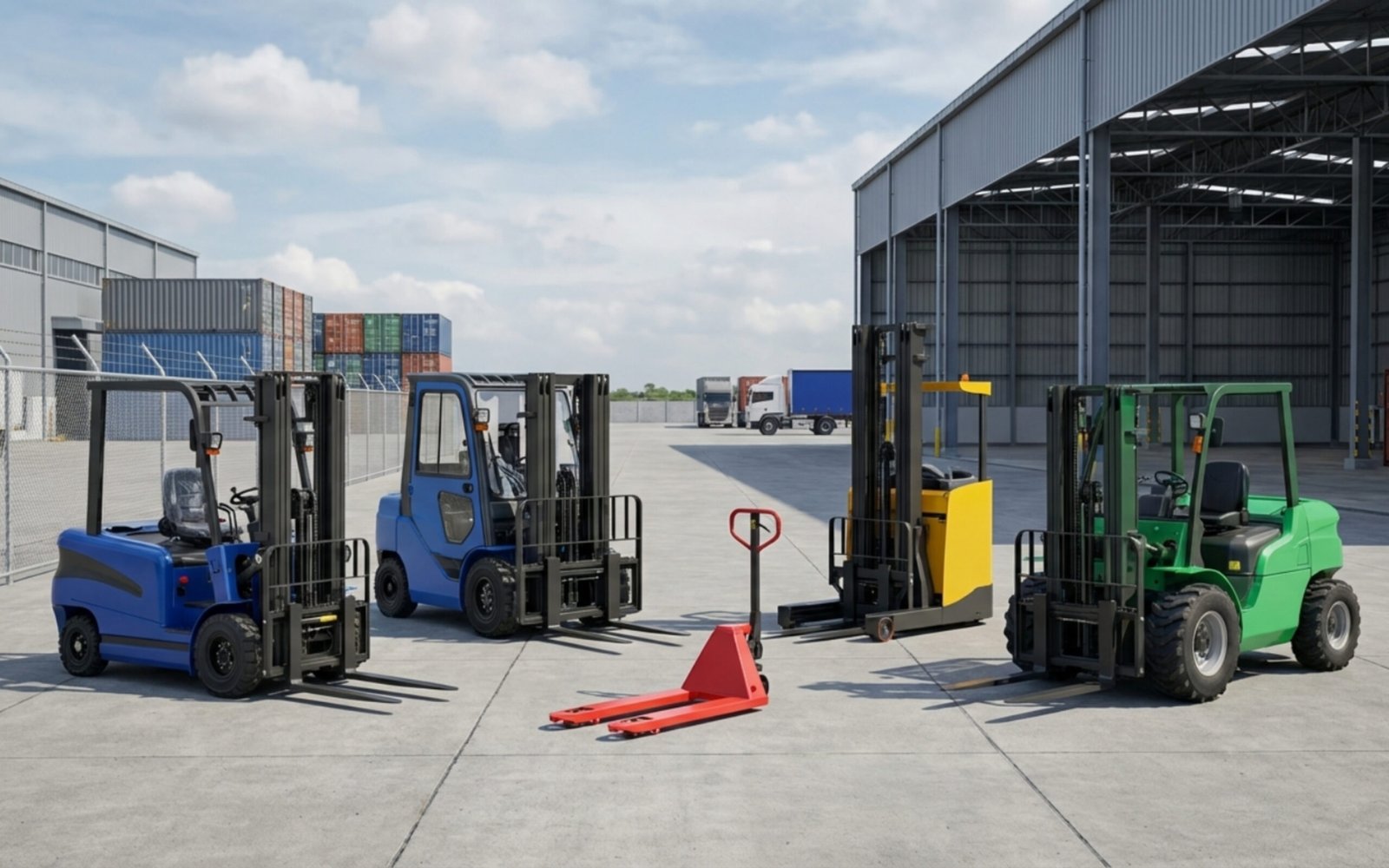
Types of Forklifts and Their Uses
Different industries require different types of forklifts to handle materials safely and efficiently. Forklifts are essential machines used in warehouses, factories, construction sites, and shipping centers. However, not all forklifts are the same. Each type is designed to perform specific tasks depending on the working environment, load size, and lifting height requirements.
Choosing the right forklift is very important for improving productivity and maintaining safety. Using the wrong forklift for a task can slow down operations, increase maintenance expenses, and create safety risks for workers. On the other hand, selecting the correct forklift type helps businesses move materials faster, reduce labor effort, and improve storage efficiency.
In this blog, we will explore the most common types of forklifts and their uses. Understanding these forklift types will help businesses choose the best machine for their needs and working conditions.
Why Choosing the Right Forklift Matters
Before discussing the different types of forklifts, it is important to understand why selecting the correct forklift is essential. Each work environment has unique requirements, such as narrow aisles, heavy loads, or uneven surfaces. Using the wrong forklift can reduce performance and increase the risk of accidents.
Factors to Consider When Choosing a Forklift
Businesses should consider several factors when selecting a forklift:
- Working Environment—Indoor or outdoor use
- Load Weight – Maximum weight capacity required
- Lifting Height – How high materials need to be lifted
- Aisle Width – Space available for forklift movement
- Surface Conditions—Smooth floors or rough terrain
- Fuel Type—Electric, diesel, or gas
By understanding these factors, businesses can select the right forklift type that matches their operational needs.
Common Types of Forklifts
There are several types of forklifts available, each designed for specific tasks. Below are the most widely used forklift types and their common applications.
1. Counterbalance Forklift
The counterbalance forklift is the most common and widely used forklift type. It features a heavy counterweight at the back that balances the load lifted at the front. This design allows the forklift to carry heavy materials without tipping forward.
Counterbalance forklifts are simple to operate and highly versatile. They are available in both electric and fuel-powered models, making them suitable for various working environments.
Key Features
- Counterweight located at the rear
- Easy maneuverability
- Available in electric, diesel, or gas models
- Suitable for both indoor and outdoor use
- Simple design with straightforward controls
Best Used For
Counterbalance forklifts are commonly used in the following:
- Warehouses
- Indoor material handling
- Loading and unloading trucks
- Manufacturing plants
- Distribution centers
Advantages
- Easy to operate
- Suitable for general-purpose tasks
- Reliable performance
- Available in different sizes and capacities
Limitations
- Requires wider aisles than some other forklift types
- Limited reach compared to specialized forklifts
Because of their versatility, counterbalance forklifts are often the first choice for many businesses.
2. Reach Truck
Reach trucks are specially designed for warehouses with narrow aisles and high shelving systems. Unlike standard forklifts, reach trucks can extend their forks forward to reach loads stored at greater heights.
These forklifts are ideal for maximizing vertical storage space. They allow operators to stack goods higher while maintaining stability.
Key Features
- Extendable forks for reaching high shelves
- Compact design for narrow aisles
- High lifting capacity
- Excellent vertical reach
- Designed mainly for indoor use
Best Used For
Reach trucks are commonly used in:
- High-storage warehouses
- Narrow aisle operations
- Distribution centers
- Cold storage facilities
- Logistics centers
Advantages
- Maximizes storage space
- Suitable for tight warehouse environments
- Efficient handling of high loads
- Improves warehouse organization
Limitations
- Not suitable for outdoor use
- Requires smooth indoor flooring
- Higher cost than basic forklifts
Reach trucks are essential for modern warehouses that require efficient use of vertical space.
3. Pallet Jack
A pallet jack, also known as a pallet truck, is a smaller and simpler type of forklift. It is mainly used to move pallets over short distances. Pallet jacks are available in manual and electric versions.
Although pallet jacks cannot lift loads very high, they are extremely useful for transporting goods quickly within small spaces.
Key Features
- Compact and lightweight design
- Simple operation
- Low lifting height
- Available in manual and electric models
- Easy to maintain
Best Used For
Pallet jacks are commonly used in:
- Retail stores
- Supermarkets
- Small warehouses
- Delivery operations
- Loading docks
Advantages
- Affordable compared to larger forklifts
- Easy to operate
- Requires minimal training
- Suitable for small spaces
Limitations
- Limited lifting height
- Lower load capacity than larger forklifts
- Not suitable for stacking high loads
Despite their simplicity, pallet jacks play an important role in daily material handling tasks.
4. Rough Terrain Forklift
Rough-terrain forklifts are designed for outdoor use on uneven surfaces. They feature large tires, strong suspension systems, and powerful engines that allow them to operate in challenging environments.
These forklifts are commonly used in construction and agriculture, where smooth flooring is not available.
Key Features
- Large pneumatic tires
- Strong suspension system
- High ground clearance
- Durable frame design
- Powerful engine performance
Best Used For
Rough-terrain forklifts are commonly used in:
- Construction sites
- Outdoor environments
- Lumber yards
- Mining operations
- Agricultural fields
Advantages
- Excellent performance on uneven surfaces
- Strong lifting capability
- Durable design for tough conditions
- Reliable outdoor operation
Limitations
- Not suitable for indoor use
- Higher fuel consumption
- A larger size requires more space
Rough-terrain forklifts are essential for industries that require heavy lifting in outdoor settings.
5. Electric Forklift
Electric forklifts are becoming increasingly popular due to their environmental benefits and low noise levels. These forklifts run on rechargeable batteries instead of fuel engines.
Electric forklifts are ideal for indoor operations where air quality and noise reduction are important.
Key Features
- Battery-powered operation
- Quiet performance
- Zero emissions
- Lower maintenance requirements
- Smooth and precise control
Best Used For
Electric forklifts are commonly used in the following:
- Indoor warehouses
- Food storage facilities
- Pharmaceutical industries
- Retail distribution centers
- Cold storage warehouses
Advantages
- Environmentally friendly
- Quiet operation
- Lower operating costs
- Reduced maintenance needs
Limitations
- Limited battery life
- Requires charging time
- Higher initial purchase cost
Electric forklifts are a great choice for businesses focused on sustainability and indoor safety.
Additional Forklift Types Worth Knowing
Although the five types above are the most common, there are other specialized forklifts designed for specific tasks.
Side Loader Forklift
Side loaders carry loads sideways instead of forward. They are ideal for handling long materials such as pipes, wood, or steel bars.
Telescopic Handler
Also known as a telehandler, this forklift includes an extendable arm that allows it to lift materials to very high positions. It is commonly used in construction.
Order-picker forklift
Order pickers allow operators to lift themselves along with the load. They are widely used in warehouses for picking items from high shelves.
Understanding these additional types helps businesses select equipment that matches specialized tasks.
Benefits of Using the Right Forklift Type
Choosing the correct forklift type offers several advantages for businesses and workers.
1. Improved Efficiency
Using the right forklift allows workers to move materials quickly and accurately, reducing delays in operations.
2. Increased Safety
Forklifts designed for specific environments reduce the risk of accidents and equipment damage.
3. Better Storage Management
Specialized forklifts, such as reach trucks, help maximize vertical storage space.
4. Reduced Operating Costs
Proper forklift selection reduces maintenance needs and improves fuel or battery efficiency.
5. Enhanced Productivity
Workers can complete tasks faster when using forklifts designed for their specific needs.
These benefits highlight the importance of selecting the correct forklift type.
Tips for Selecting the Best Forklift
Choosing the right forklift requires careful planning and evaluation.
Helpful Selection Tips
- Evaluate the working environment
- Measure aisle width and storage height
- Determine maximum load weight
- Choose the appropriate fuel type
- Consider long-term maintenance costs
- Ensure proper operator training
These steps help businesses invest in forklifts that provide reliable performance.
Conclusion
Understanding the different types of forklifts and their uses is essential for improving efficiency and maintaining workplace safety. Each forklift type is designed for specific environments, load capacities, and operational requirements.
From counterbalance forklifts used in warehouses to rough-terrain forklifts designed for outdoor construction sites, every forklift plays an important role in modern industries. By selecting the proper forklift type, businesses can increase productivity, reduce costs, and ensure safer operations.
As industries continue to grow and technology advances, forklifts will remain vital tools for material handling and logistics. Investing in the right forklift not only improves performance but also supports long-term operational success.
Comments
Add a Review Cancel Reply
Your email address will not be published. Required fields are marked*


nuna
It really good