
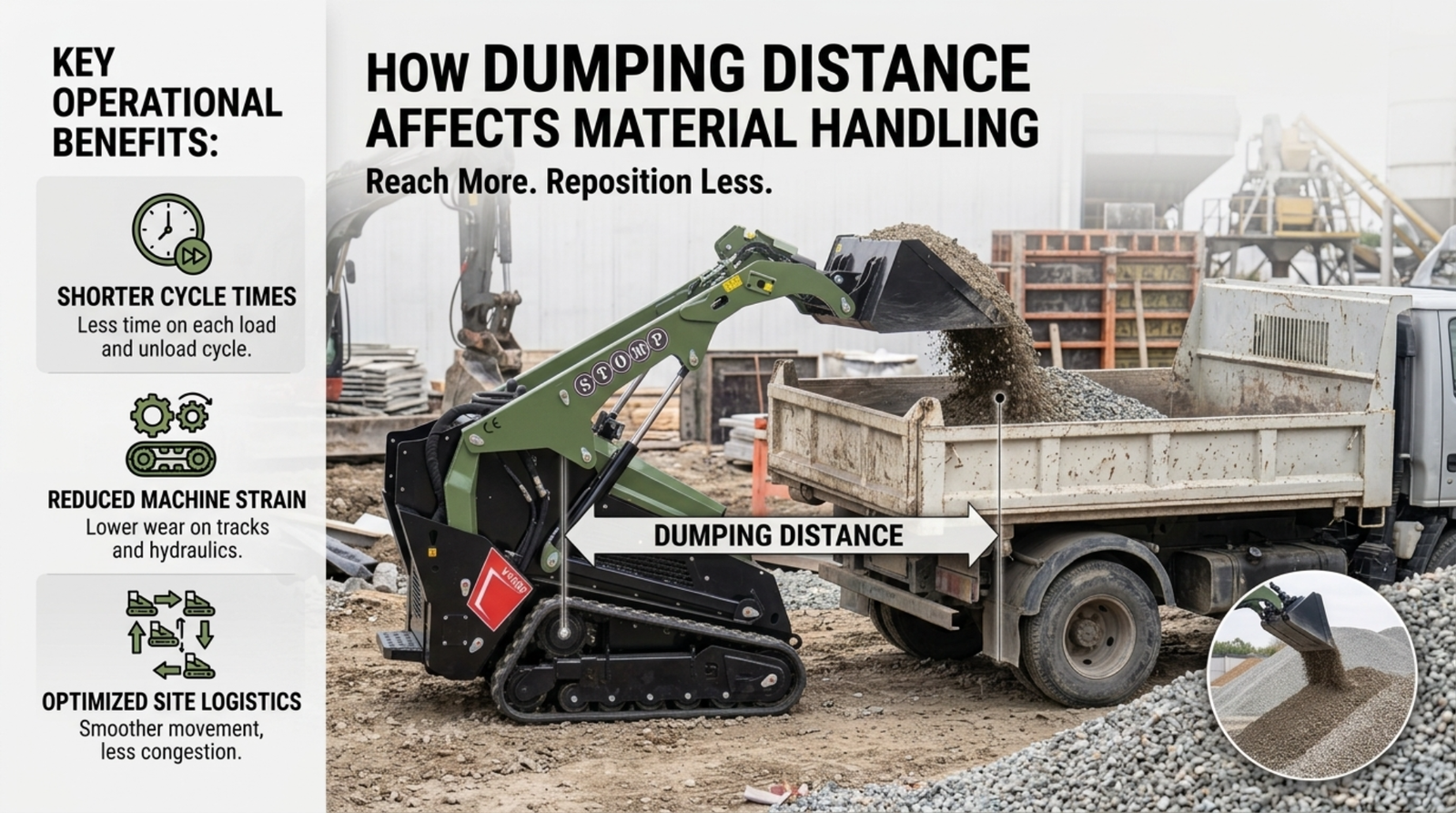
Why Dumping Distance Matters
How Dumping Distance Affects Skid Steer Material Handling
Dumping distance rarely makes the top of anyone’s spec sheet, yet it quietly decides how smoothly your skid steer moves material all day long. It’s the reach that lets you empty a bucket cleanly into a truck bed, drop spoil onto a pile without spilling, or feed a hopper without inching the machine dangerously close to the edge. Get it right, and loading feels effortless and efficient. Get it wrong, and you’re constantly repositioning, wasting time, and fighting the geometry of the job. This post breaks down five things every operator and buyer should understand about dumping distance: what it actually means, how reach trades off against load stability, how it affects loading trucks and containers, how it ties to bucket height and dump angle, and how to match the right reach to your specific work. With this knowledge, you’ll handle material faster, safer, and with fewer wasted movements.
What Dumping Distance Actually Means
Dumping distance describes how far a skid steer’s bucket can extend forward from the front of the machine when it’s raised and rolled to unload material. In practical terms, it’s the horizontal reach available at dump height, the space between the front edge of the machine and the point where material actually falls. This single measurement has an outsized influence on how easily you can place material exactly where it needs to go, whether that’s into a truck bed, a hopper, or a growing pile.
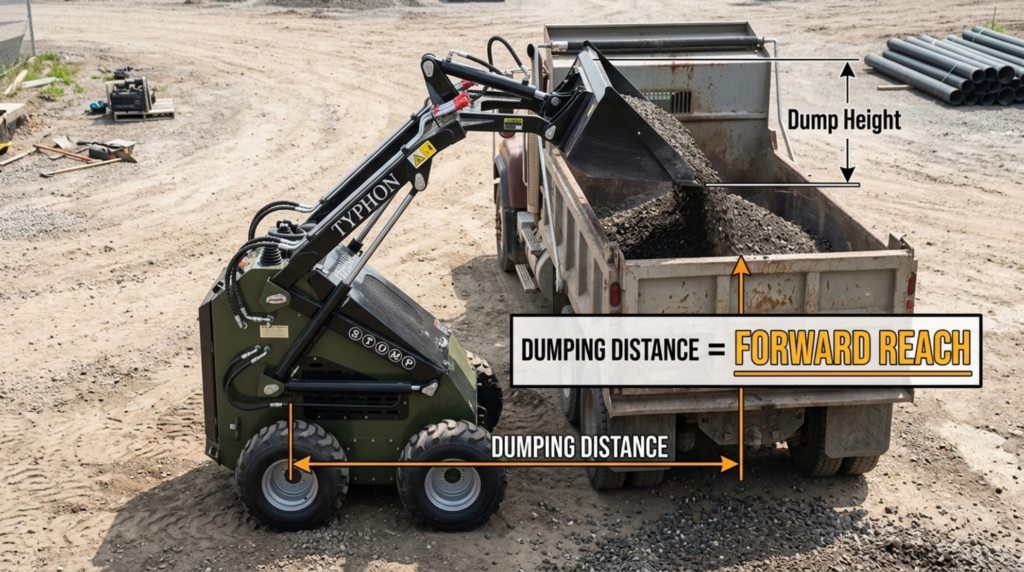
The reason dumping distance matters comes down to positioning. When a bucket has generous forward reach, you can unload material over an obstacle, a container wall, or the side of a truck without driving the machine right up to the edge. That reach gives you options. A short dumping distance forces you to get the machine very close to the target, which isn’t always possible or safe, especially near the lip of a dumpster, a trench, or a loading dock.
Manufacturers typically publish dumping distance alongside dump height and other loader-arm specifications, and reading them together tells the real story of how a machine performs at height. Consider how dumping distance shapes everyday tasks:
- Loading trucks, where reach lets you clear the side wall and drop material into the bed cleanly.
- Feeding hoppers, where forward reach places material over the opening without crowding it.
- Building piles, where extra distance helps you stack material neatly instead of dumping it short.
Understanding dumping distance as usable forward reach, rather than an abstract number, helps you judge whether a machine will actually fit the loading work in front of you.
Reach vs. Load Stability
Greater dumping distance sounds like a pure advantage, and in many ways it is, but it comes with a trade-off that every operator needs to respect. The farther forward a load extends from the machine, the more leverage that weight exerts against the skid steer’s front axle and tipping point. Reach and stability pull in opposite directions, and understanding that relationship is key to working safely and getting real capacity out of the machine.
When a load sits close to the machine, it stays near the balance point and the skid steer handles it comfortably. Extend that same load farther forward at full dump reach, and the weight now acts through a longer lever arm. This increases the tipping effect of the load, which reduces the practical lifting capacity available at that extended position. A weight that feels perfectly stable tucked in close can push the machine toward instability once it’s reaching out over a truck or container.
This is why rated capacity should never be treated as a single fixed figure across all positions. The safe working load shrinks as the bucket reaches farther forward, and pushing beyond that reduced margin invites the rear of the machine to lift and the load to pitch forward. Operators who understand this plan their lifts accordingly, keeping loads tucked back during travel and only extending fully when the weight is well within limits. The goal is to balance the convenience of longer reach against the reality of reduced capacity at that reach. A machine with strong dumping distance gives you flexibility, but using it wisely means matching the load to the position, respecting the stability margin, and never assuming full reach and full capacity can happen at the same time.
Loading Trucks and Containers
Loading trucks and containers is where dumping distance proves its worth more than almost anywhere else on the jobsite. A longer dumping distance lets you clear the side wall of a truck bed or the edge of a container and release material squarely inside, without having to nose the machine right up against it. That extra reach transforms an awkward, tight maneuver into a clean, repeatable motion that keeps material handling moving at a steady pace.
The benefits reach beyond convenience. When you don’t have to position the skid steer directly against a truck or container, you gain a safer buffer and better site access. Crowding the edge of a high-sided truck risks contact between the machine and the vehicle, and it leaves little room for error if the ground is uneven or the load shifts. With adequate dumping distance, you can stand off at a comfortable, controlled distance and still place material accurately, protecting both the equipment and the truck.
Workflow improves noticeably when reach is on your side. Consider the practical gains:
- Fewer repositioning moves, since you can load from a stable spot instead of nudging closer with each pass.
- Better access on tight sites, where there simply isn’t room to press the machine against the target.
- Cleaner loading, with less spillage down the side of the truck and less cleanup afterward.
On busy sites, these small efficiencies add up across a shift. A skid steer that reaches well over the side of a truck loads faster, spills less, and keeps the operator working from a safer, more controlled position. When you’re spending hours cycling between a pile and a waiting truck, dumping distance becomes one of the specifications that most directly shapes how productive that work feels.
Bucket Height and Dumping Distance
Dumping distance never works in isolation; it’s tightly connected to lift height and dump angle, and the three together determine whether you can actually place material where it needs to go. Lift height sets how high the bucket rises, dump angle controls how far the bucket rolls forward to empty, and dumping distance is the forward reach that results at that raised, rolled position. A machine needs enough of all three to clear the side of a truck and release material inside rather than short of the target.
Think about loading a high-sided dump truck. If the skid steer lifts high enough but lacks forward reach, the bucket clears the top of the wall but dumps material down the outside instead of into the bed. If it has reach but not enough height, the bucket can’t clear the wall at all. You need both working together, adequate height to get over the obstacle and enough dumping distance to release the material past the edge, for the load to land where you intend.
Dump angle plays into this as well. A bucket that rolls forward aggressively at full height throws material farther out, effectively extending the usable reach and helping empty the bucket completely. A shallow dump angle leaves material clinging in the bucket and drops it closer to the machine, which can undercut the benefit of an otherwise good dumping distance. When evaluating a skid steer for loading work, look at the full picture rather than any single number. Check the lift height against the targets you load most often, confirm the dumping distance clears their walls, and consider how the dump angle helps empty the bucket cleanly. Reading these specifications together tells you whether the machine can place material accurately and completely at the heights your work demands.
Matching Reach to the Job
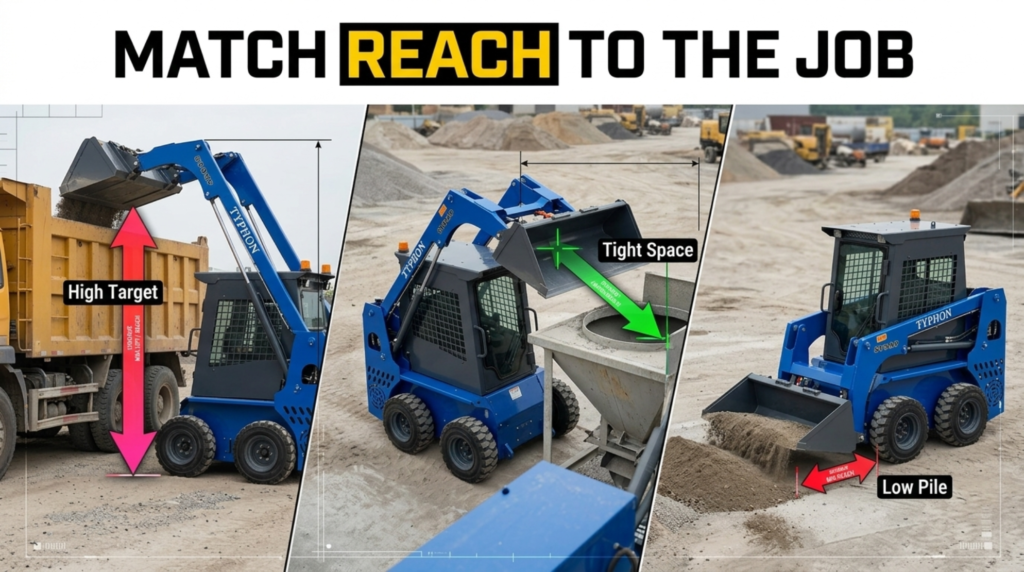
There’s no universal ideal dumping distance, because the right reach depends entirely on the work you do. The material you handle, the targets you load into, and the layout of your jobsites all shape how much forward reach actually serves you. Choosing a skid steer with dumping distance matched to your real tasks reduces repositioning, speeds up material handling, and keeps operators working efficiently instead of fighting the machine’s limits.
Start with the loading targets you face most often. If you regularly load high-sided trucks or large containers, generous dumping distance and lift height are worth prioritizing, since they let you clear tall walls and place material cleanly from a safe standoff. If your work centers on low piles, spreading material, or feeding low hoppers, extreme reach matters less, and you may value stability and capacity closer to the machine over maximum forward extension. Matching the machine to the target prevents you from paying for reach you’ll never use or, worse, coming up short when it counts.
Jobsite layout and material type round out the decision. A few factors deserve close attention:
- Loading target height, which sets the minimum lift height and dumping distance you need.
- Site space, since tight sites benefit from reach that lets you load without crowding the target.
- Material type, because light, dry material dumps easily while heavy or sticky loads demand more from the machine at reach.
When you weigh these factors together, the right dumping distance becomes clear for your operation. The payoff is real: less time spent inching the machine into position, fewer wasted cycles, and material moving from pile to target with fewer interruptions. A skid steer whose reach fits the job handles material faster and more smoothly, and that efficiency shows up in every shift.
Conclusion
Dumping distance shapes far more of a skid steer’s material handling performance than its modest place on the spec sheet suggests. It defines how easily you can place material into trucks, hoppers, and piles, and it trades off against load stability as the bucket reaches farther forward. Longer reach makes loading trucks and containers safer and faster by keeping the machine off the edge, but it only works when paired with adequate lift height and a strong dump angle to clear walls and empty the bucket cleanly. Above all, the right dumping distance is the one matched to your material, your loading targets, and your jobsite layout. Before you choose a machine or plan a loading task, review the loader-arm specifications together and match the reach to the work in front of you.
Frequently Asked Questions
1. What exactly is dumping distance on a skid steer?
Dumping distance is how far the bucket extends forward from the front of the machine when it’s raised and rolled to unload. In simple terms, it’s the horizontal reach available at dump height, measured from the front edge of the machine to where material actually falls. This reach determines how easily you can place material into a truck bed, hopper, or pile without driving the machine right up to the target. Manufacturers usually list it alongside dump height and other loader-arm specs, and reading those figures together gives you the clearest picture of how the machine performs when unloading at height.
2. Does a longer dumping distance reduce how much I can safely lift?
Yes, and it’s an important trade-off to understand. The farther forward the load extends, the more leverage that weight exerts against the machine’s front axle and tipping point. A load that sits stable when tucked close to the machine acts through a longer lever arm at full dump reach, which reduces the practical lifting capacity available in that position. This is why rated capacity isn’t a single fixed number across all positions. To work safely, keep loads tucked back during travel, respect the reduced capacity at full reach, and never assume you can use maximum reach and maximum capacity at the same time.
3. Why does dumping distance matter so much when loading trucks?
When loading a truck or container, dumping distance lets you clear the side wall and drop material cleanly inside without nosing the machine right up against the vehicle. That extra reach keeps a safe buffer between the skid steer and the truck, which protects both from accidental contact and gives you room to work on uneven ground. It also improves workflow, since you can load from a stable position instead of repositioning with every pass. The result is faster, cleaner loading with less spillage down the side of the truck and less cleanup at the end of the job.
4. How are dumping distance, lift height, and dump angle related?
These three work together to determine whether you can place material accurately at height. Lift height sets how high the bucket rises, dump angle controls how far the bucket rolls forward to empty, and dumping distance is the forward reach that results. To load a high-sided truck, you need enough height to clear the wall and enough dumping distance to release material past the edge into the bed. A strong dump angle helps throw material farther and empty the bucket completely, while a shallow angle drops material closer and can leave it clinging. Always evaluate all three specifications together rather than in isolation.
5. How do I choose the right dumping distance for my work?
Start with the loading targets you face most often. If you frequently load high-sided trucks or large containers, prioritize generous dumping distance and lift height so you can clear tall walls from a safe standoff. If your work centers on low piles, spreading, or low hoppers, extreme reach matters less, and stability closer to the machine may serve you better. Then factor in jobsite space and material type, since tight sites reward reach and heavy or sticky loads demand more from the machine at extension. Matching the reach to your real tasks reduces repositioning and keeps material handling fast and efficient.


