
Why Excavators Are Essential in Modern Construction
Why Excavators Are Essential in Modern Construction
Few machines have shaped the way we build the world around us quite like the excavator. From breaking ground on a new home to carving out the foundations of towering commercial structures, this versatile machine sits at the heart of nearly every construction project. Its ability to dig, lift, move, and handle a remarkable range of tasks has made it indispensable to contractors of every size. This guide explores why excavators have earned their place as essential equipment, how they power earthmoving work, the way attachments expand their capabilities, the features that boost productivity, and how to choose the right machine for your needs. By the end, you will understand exactly why the excavator remains a cornerstone of modern construction.
Why Excavators Are Essential in Modern Construction
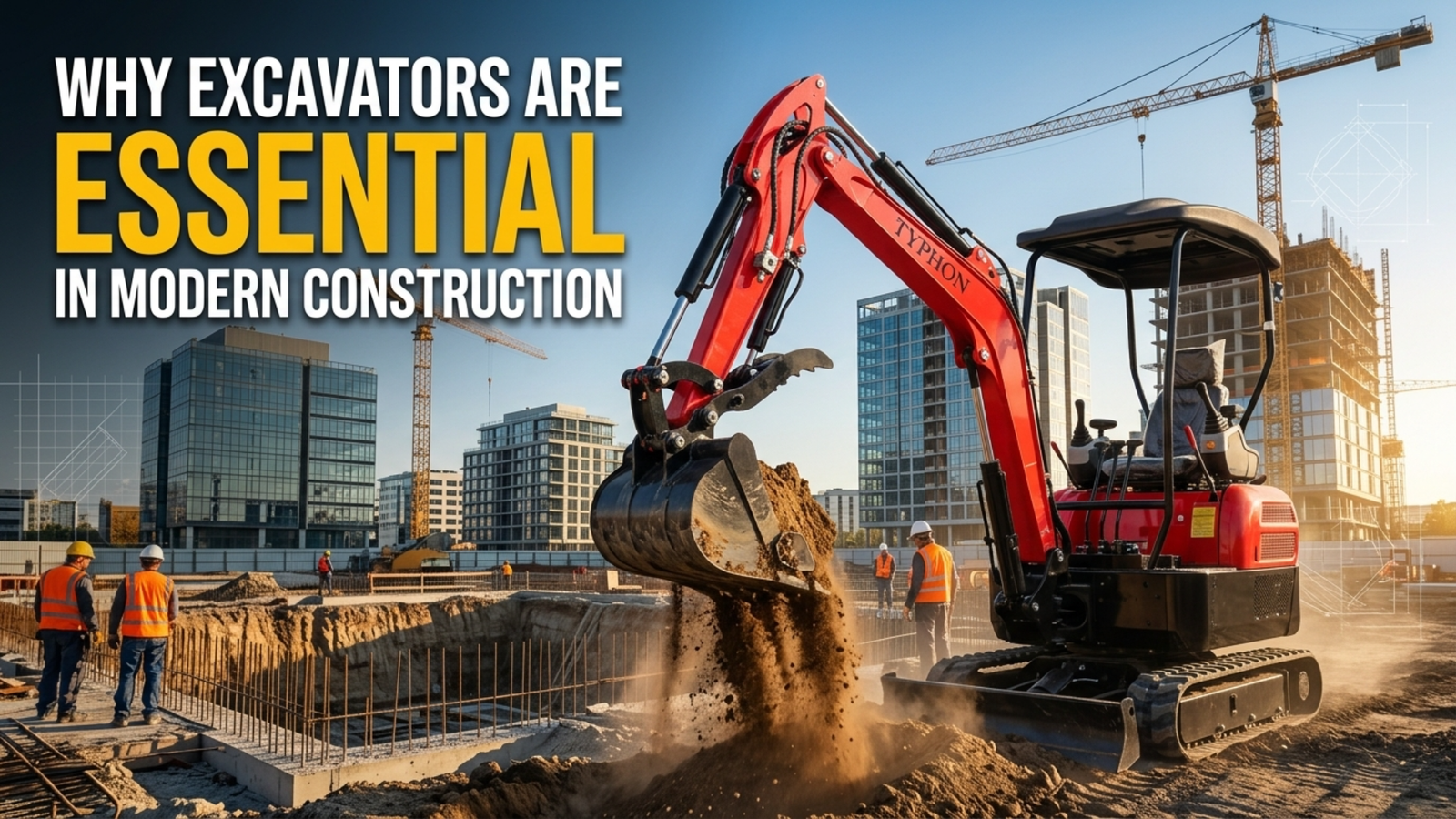
The excavator has become one of the most important machines on any construction site, and its dominance comes down to sheer versatility. No other single piece of equipment can dig deep trenches, lift heavy materials, swing loads into place, and clear a site with the same efficiency. That combination of capabilities lets contractors accomplish with one machine what once required several, saving time, labor, and money on projects of every scale. Whether the job is a modest residential build or a sprawling commercial development, the excavator earns its place as a reliable workhorse day after day.
Its core strength lies in how well it handles fundamental construction tasks. Digging is the obvious one, but the machine’s rotating house, powerful arm, and stable base let it do far more. Consider the range of work an excavator handles with ease:
- Digging trenches, foundations, and holes with speed and precision.
- Lifting heavy pipes, materials, and structural components into position.
- Moving soil, debris, and aggregate around the site efficiently.
- Handling specialized tasks through a wide selection of attachments.
This adaptability is what makes the excavator so valuable. A contractor who invests in the right machine gains a dependable partner that adjusts to the shifting demands of a project without missing a beat. As construction methods have advanced, the excavator has kept pace, growing more capable and more efficient with each generation. That reliability, combined with its all-around usefulness, explains why it remains a fixture on job sites everywhere and why so many projects simply could not move forward without one.
Excavating and Earthmoving Applications
Earthmoving is where the excavator truly proves its worth, and it handles these tasks with a speed and accuracy that manual methods cannot match. Trenching is one of its most common jobs, cutting clean, consistent channels for utilities, drainage, and piping. The operator controls depth and width precisely, producing trenches that meet specification the first time and reducing the costly rework that comes with uneven or inaccurate digging. For projects that depend on underground infrastructure, this precision keeps the whole schedule on track.
Foundation digging is another area where excavators excel. Before any structure rises, the ground must be excavated to the correct depth and shape, and the excavator delivers that foundation work quickly and cleanly. Its powerful arm cuts through compacted soil, clay, and rocky ground that would stall lighter equipment, giving builders a solid, accurate base to build upon. Grading and site leveling round out its earthmoving talents, as skilled operators use the bucket to smooth and shape terrain in preparation for construction.
Material removal ties these applications together, since every dig produces spoil that must be cleared away. The excavator loads soil, rock, and debris directly into trucks or moves it to another part of the site, keeping the work area clear and productive. Contractors rely on the machine across a broad span of earthwork:
- Trenching for utilities, drainage, and pipe installation.
- Foundation digging to the precise depth and dimensions a project requires.
- Grading and leveling to prepare and shape the ground for building.
- Material removal that clears spoil and keeps the site organized.
Taken together, these capabilities let contractors complete earthwork faster and more accurately than ever, which is exactly why the excavator anchors the earthmoving phase of nearly every build.
Excavator Attachments Expand Jobsite Capabilities
Excavator Attachments Expand Jobsite Capabilities
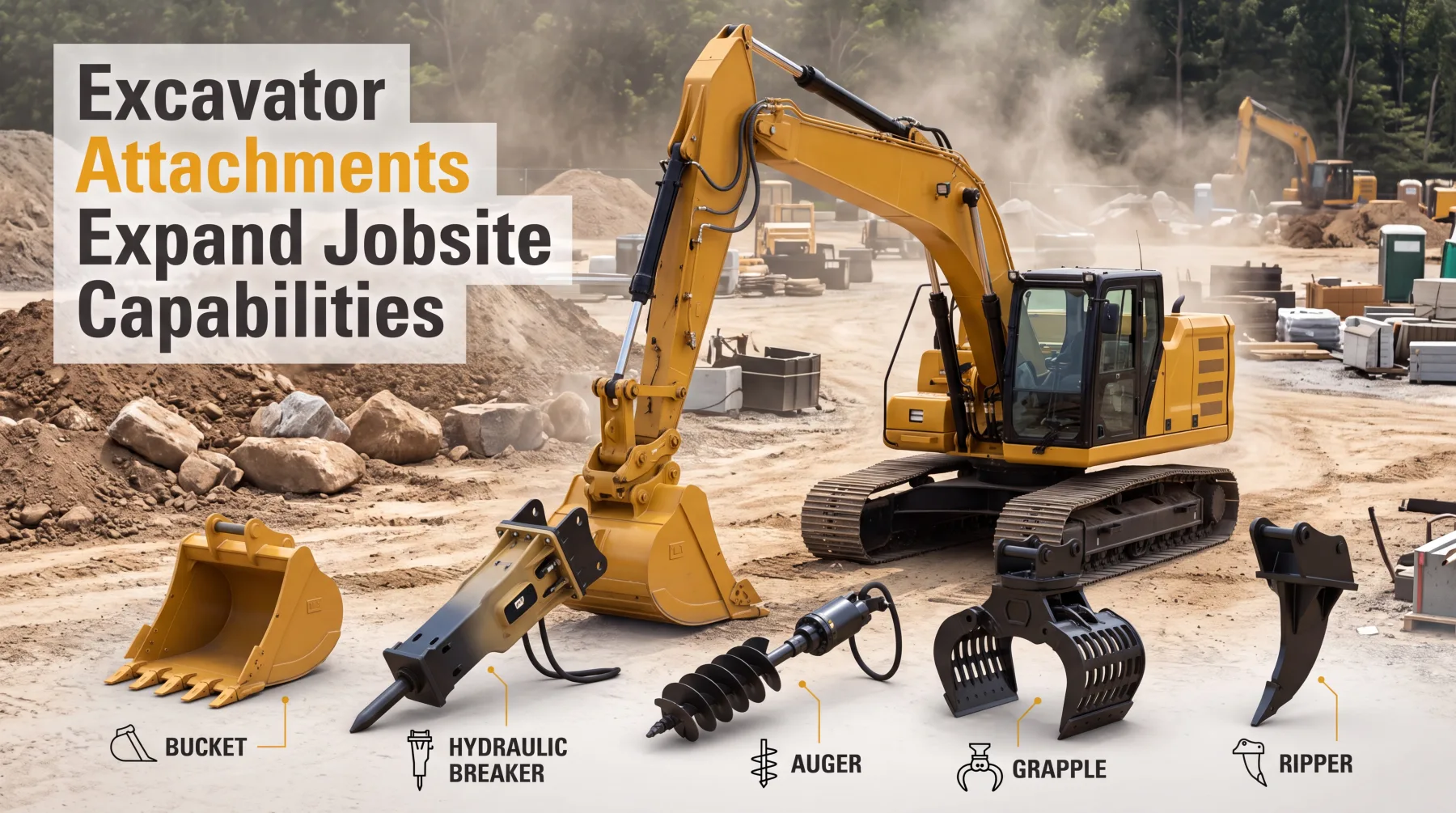
What transforms an excavator from a capable digger into a truly versatile machine is its ability to accept a wide range of attachments. By swapping the tool on the end of the arm, a single excavator adapts to dozens of different tasks, letting contractors get far more value from one investment. This flexibility means the same machine that digs a foundation in the morning can break concrete in the afternoon and set fence posts before the day is done. Attachments turn the excavator into a multi-purpose platform that serves construction and landscaping work alike.
What transforms an excavator from a capable digger into a truly versatile machine is its ability to accept a wide range of attachments. By swapping the tool on the end of the arm, a single excavator adapts to dozens of different tasks, letting contractors get far more value from one investment. This flexibility means the same machine that digs a foundation in the morning can break concrete in the afternoon and set fence posts before the day is done. Attachments turn the excavator into a multi-purpose platform that serves construction and landscaping work alike.
The most common attachments each unlock a distinct set of jobs. Understanding what they do helps you appreciate just how adaptable the machine becomes:
- Buckets in various sizes handle digging, trenching, grading, and material handling for everyday earthwork.
- Hydraulic breakers deliver powerful percussive force to demolish concrete, rock, and pavement.
- Augers bore clean, precise holes for posts, piles, and foundations quickly and consistently.
- Grapples grab and move logs, debris, rock, and irregular materials that a bucket cannot manage.
Beyond these staples, specialized attachments such as compactors, rippers, and thumbs extend the machine’s reach even further. This range is what makes the excavator so valuable across different trades. A landscaping crew uses augers and grapples to clear land and plant trees, while a demolition team relies on breakers to bring down structures efficiently. The ability to match the right tool to the task, all from the same base machine, saves contractors the expense of owning multiple dedicated pieces of equipment. When you invest in an excavator and a thoughtful selection of attachments, you equip your crew to tackle a remarkable variety of work with confidence, precision, and dependable results on every job.
Improving Productivity and Efficiency on Construction Sites
Modern excavators are engineered to do more work in less time, and the improvements built into today’s machines translate directly into better job site performance. Advanced hydraulic systems stand at the center of this progress. Refined hydraulics deliver smoother, faster, and more precise movement, letting operators work quickly without sacrificing control. That responsiveness means less time spent on each cycle of digging, swinging, and dumping, which adds up to meaningful productivity gains over the course of a long project.
Fuel efficiency has also improved dramatically, and it matters for both cost and sustainability. Newer engines and smarter systems reduce fuel consumption while maintaining strong performance, so contractors get more work done per gallon and keep operating costs in check. Enhanced operator controls contribute just as much, since intuitive, comfortable cabs help operators stay productive and alert through demanding shifts. Features that reduce fatigue and simplify complex movements let skilled operators perform at their best for longer.
These advances work together to reduce downtime and lift overall efficiency. Consider the features that make the biggest difference on site:
- Advanced hydraulics for faster, smoother, and more precise operation.
- Improved fuel efficiency that lowers operating costs and extends run time.
- Enhanced operator controls that reduce fatigue and boost accuracy.
- Reliable design that minimizes breakdowns and keeps the machine working.
When a machine runs efficiently and reliably, the entire project benefits. Less downtime means crews stay on schedule, fuel savings protect the budget, and precise controls reduce costly mistakes. For contractors focused on delivering quality work on time, these productivity features are not luxuries but genuine advantages that shape the success of a project. Investing in a modern, well-equipped excavator gives your operation the performance edge that today’s demanding construction timelines require.
Choosing the Right Excavator for Your Construction Needs
Selecting the right excavator is a decision that directly affects your productivity, your budget, and your return on investment. The best choice depends on matching the machine’s capabilities to the specific demands of your work rather than simply reaching for the largest or most powerful option. A machine too small will struggle and slow your progress, while one too large may prove difficult to transport and costly to run on jobs that do not need its capacity. Getting the fit right is the foundation of a smart, profitable investment.
Start by weighing the scale and nature of your projects. Project size and digging requirements point you toward the appropriate machine class, from compact models for tight residential work to full-size excavators for heavy commercial jobs. Job site conditions matter just as much, since access width, ground firmness, and available space can rule out machines that are otherwise capable. The attachments you plan to use also influence the decision, as the excavator must have the hydraulic capacity and mounting to support the tools your work demands.
Work through these key considerations before you commit:
- Project size and the typical scale of work you take on.
- Digging requirements, including the depth and reach your jobs demand.
- Job site conditions such as access, space, and ground stability.
- Required attachments and the hydraulic capacity to run them.
Matching machine capabilities to the task is what maximizes both productivity and return on investment. A well-chosen excavator handles your daily work comfortably, transports easily between sites, and keeps operating costs proportional to the jobs it performs. Take an honest look at your workload and conditions, weigh them against what each machine offers, and you will invest in equipment that delivers dependable, cost-effective performance for years to come.
Why Excavators Are Essential in Modern Construction is a question every contractor should understand before investing in heavy equipment.
Understanding Why Excavators Are Essential in Modern Construction helps builders improve efficiency and reduce project costs.
This is one reason Why Excavators Are Essential in Modern Construction, especially for earthmoving and foundation work.
The versatility of attachments explains Why Excavators Are Essential in Modern Construction across different industries.
Modern hydraulic systems demonstrate Why Excavators Are Essential in Modern Construction by increasing productivity.
Contractors recognize Why Excavators Are Essential in Modern Construction because one machine can perform multiple tasks.
Choosing the right model becomes easier when you understand Why Excavators Are Essential in Modern Construction.
Safety, precision, and performance are all reasons Why Excavators Are Essential in Modern Construction.
Every successful construction project shows Why Excavators Are Essential in Modern Construction.
Why Excavators Are Essential in Modern Construction is clear because excavators provide unmatched versatility, productivity, and reliability.
why-excavators-are-essential-in-modern-construction
Why Excavators Are Essential in Modern Construction comes down to their unmatched versatility. They can dig, lift, grade, demolish, and move materials using a single machine. This flexibility helps contractors complete projects faster while reducing labor and equipment costs.
Earthmoving is one of the excavator’s primary strengths. It creates precise trenches for utilities, excavates foundations, levels building sites, and removes large amounts of soil efficiently. These capabilities make excavators a core machine on residential, commercial, and infrastructure projects.
Excavator attachments greatly expand what the machine can do. Buckets, hydraulic breakers, augers, grapples, and compactors allow operators to switch from digging to demolition, drilling, or material handling within minutes. One machine can perform multiple tasks throughout the workday.
Modern excavators are designed for productivity. Advanced hydraulic systems deliver smoother operation, fuel-efficient engines reduce operating costs, and comfortable operator cabins improve accuracy while reducing fatigue. Together, these features increase jobsite efficiency and minimize downtime.
Choosing the right excavator depends on your project size, digging depth, site conditions, and attachment requirements. Selecting a machine that matches your workload improves productivity, lowers operating costs, and provides a better long-term return on investment.
Why Excavators Are Essential in Modern Construction is clear from their ability to handle multiple tasks with speed, precision, and reliability. Whether you’re building homes, commercial facilities, or infrastructure projects, an excavator remains one of the most valuable machines on any construction site.
The excavator has earned its reputation as one of the most essential machines in modern construction. Its ability to dig, lift, move materials, and adapt to different attachments makes it indispensable on projects of every size.
From foundation excavation and trenching to demolition, landscaping, and material handling, excavators deliver speed, precision, and reliability. Modern hydraulic systems, fuel-efficient engines, and comfortable operator cabins further improve productivity while reducing operating costs.
Choosing the right excavator ensures better efficiency, lower downtime, and a stronger return on investment. These advantages explain why excavators remain one of the most valuable machines on today’s construction sites.
Conclusion
The excavator has earned its reputation as one of the most essential machines in modern construction, and for good reason. Its ability to dig, lift, move materials, and adapt through a wide range of attachments makes it a versatile, dependable partner on job sites of every size. From precise trenching and foundation work to demolition, landscaping, and material handling, the excavator handles the demands of construction with speed and accuracy that few other machines can match. Advances in hydraulics, fuel efficiency, and operator controls have only strengthened its value, helping contractors work faster while keeping costs and downtime under control. Choosing the right machine for your projects, conditions, and attachment needs ensures you get the most from that investment. When you understand what an excavator brings to the table, it becomes clear why modern construction simply would not be the same without it.


