
Industries That Rely on Forklifts
The Essential Guide to Forklifts in Modern Material Handling
Walk into any busy warehouse, factory floor, or active construction site, and you’ll find a forklift at the center of the action. These machines move the materials that keep operations running — pallets of product, heavy components, building supplies, and bulk goods that no crew could shift by hand. When a forklift goes down, the work slows with it. That’s how central these machines have become to material handling.
This guide breaks down everything you need to understand forklifts and put them to work effectively. You’ll learn what a forklift is, the main types and where each one fits, the benefits they deliver, the industries that depend on them, and the safety and maintenance practices that protect both your people and your investment. We’ll also look at where forklift technology is headed, so you can plan ahead with confidence.
What Is a Forklift?
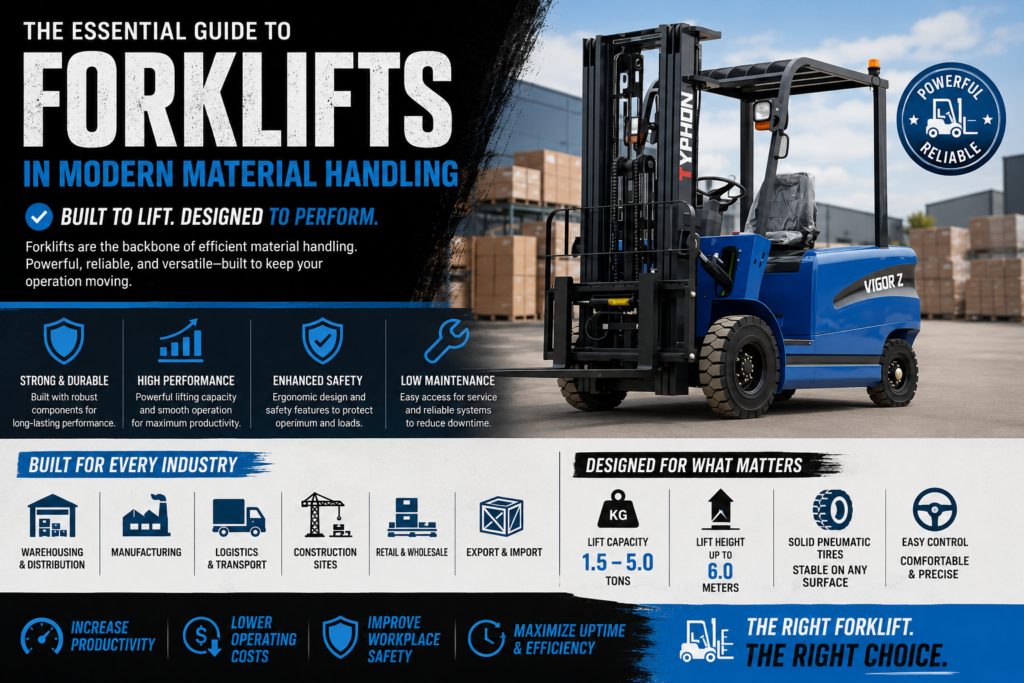
A forklift is a powered industrial truck fitted with two forks that raise and lower to lift, move, and stack heavy materials. Operators use them to transport pallets, containers, and bulky goods across short distances — work that would otherwise demand far more labor, time, and physical risk.
At its core, a forklift combines a few key systems: a power source that drives the machine, a hydraulic mast that lifts and lowers the load, and a counterweight at the rear that keeps the truck stable while carrying weight at the front. That balance between load and counterweight is what allows a compact machine to handle loads measured in thousands of pounds.
Forklifts come in a wide range of sizes, capacities, and configurations. The right machine for a tight indoor warehouse looks very different from one built for rough outdoor terrain — which is exactly why understanding the main types matters before you buy or operate one.
Common Types of Forklifts
Each forklift type is engineered for a specific environment and workload. Matching the machine to the job is the foundation of safe, productive material handling.
Electric Forklifts
Electric forklifts run on rechargeable batteries and produce zero emissions at the point of use. That makes them the standard choice for indoor work in warehouses, distribution centers, and food or pharmaceutical facilities where air quality matters.
Beyond clean operation, electric models run quietly and cost less per hour to operate than combustion machines. They’re well-suited to operations running consistent indoor shifts with access to charging infrastructure.
Diesel Forklifts
Diesel forklifts deliver strong lifting power and rugged performance, which makes them a go-to for outdoor and heavy-duty applications. You’ll find them on construction sites, in lumber yards, and anywhere loads run large and the ground is unforgiving.
Their durability and torque suit demanding outdoor work, though they’re best kept outdoors or in well-ventilated areas because of their emissions.
LPG Forklifts
Liquefied petroleum gas (LPG) forklifts strike a practical balance between power and flexibility. They produce fewer emissions than diesel and can move between indoor and outdoor work, as long as ventilation is adequate.
Refueling is fast — swap a tank and the machine is back to work — which makes LPG a strong fit for operations that can’t afford the downtime of battery charging but still need indoor capability.
Reach Trucks
Reach trucks are built for narrow aisles and tall racking systems. Their extending mast reaches deep into storage racks and lifts loads to heights that standard forklifts can’t safely manage.
For large warehouses focused on maximizing vertical storage, reach trucks let you pack more inventory into the same footprint while keeping retrieval efficient.
Rough Terrain Forklifts
Rough terrain forklifts feature large, treaded tires and a sturdy, stable build designed for uneven, unpaved ground. They handle gravel, dirt, mud, and slopes that would stop a standard warehouse machine cold.
These are the workhorses of construction sites, lumber yards, and agricultural settings where the surface is anything but smooth.
Key Benefits of Forklifts
The reasons businesses invest in forklifts come down to a clear set of operational advantages.
Increased productivity. A forklift moves large quantities of material in a fraction of the time manual labor would require. Loading and unloading trucks, restocking racks, and staging materials all happen faster, keeping the whole operation moving.
Improved workplace safety. By taking on the heavy lifting, forklifts reduce the manual handling that causes back injuries, strains, and repetitive-stress problems. Fewer hands under heavy loads means fewer injuries — and a safer, more compliant workplace.
Versatility. Modern forklifts accept a range of attachments that expand what one machine can do:
- Fork extensions for longer or oversized loads
- Side shifters for precise load positioning without repositioning the truck
- Paper roll clamps for handling rolled materials
- Drum handlers for safe movement of barrels and drums
- Rotators for tipping and emptying containers
Cost efficiency. By streamlining material handling, forklifts cut labor costs and speed up throughput. One operator with the right machine accomplishes what would otherwise take a full crew, which directly improves your bottom line.
Industries That Rely on Forklifts
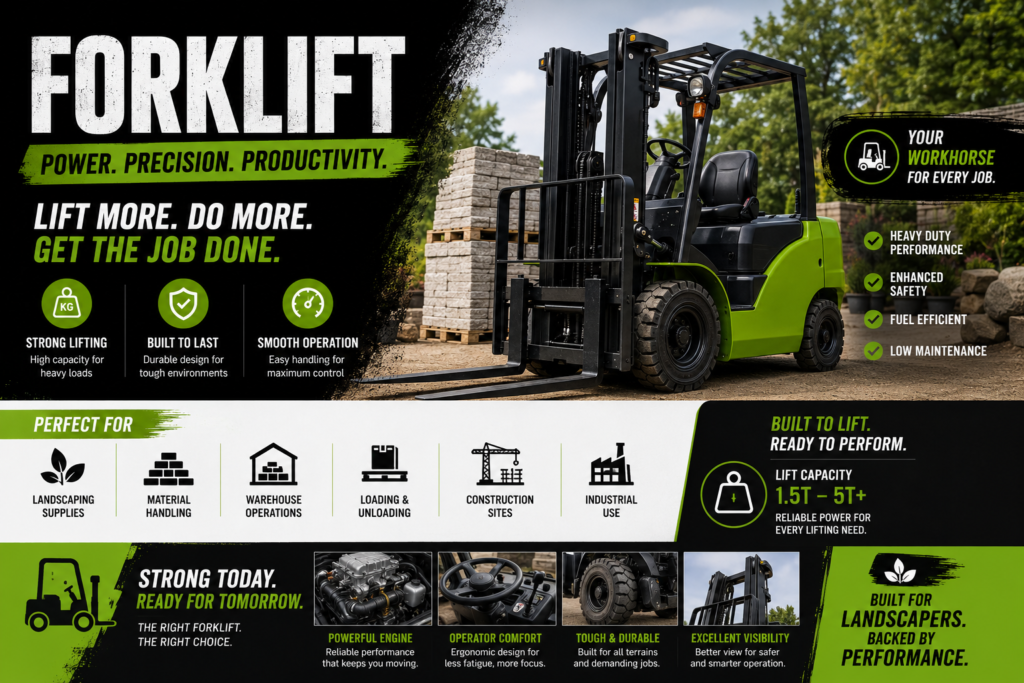
Forklifts have earned a place across nearly every sector that stores, moves, or processes physical goods.
Warehousing and logistics. This is the forklift’s home turf. Machines store, retrieve, and transport inventory throughout the facility, keeping order fulfillment fast and accurate.
Manufacturing. Factories use forklifts to move raw materials to the line, shift components between workstations, and transport finished products to shipping and storage.
Construction. On site, forklifts — often rough terrain models — carry building materials, equipment, and supplies across challenging ground to where crews need them.
Retail distribution. Large distribution centers depend on forklifts to manage high-volume inventory, replenish stock, and keep orders flowing out the door on schedule.
Agriculture. Farms put forklifts to work handling feed, fertilizer, pallets, and harvested crops, making them a versatile asset across the seasons.
Forklift Safety Tips
A forklift is a powerful machine, and respecting that power keeps everyone on the site safe. Build these practices into daily operation.
- Conduct daily inspections. Check the machine before every shift to catch problems before they cause accidents.
- Wear appropriate PPE. Hard hats, high-visibility clothing, and safety footwear protect operators and nearby workers.
- Never exceed the rated load capacity. Overloading destabilizes the truck and risks tipping. Know the machine’s limit and stay within it.
- Keep loads stable and secure. Carry loads low and balanced during transport to maintain control and visibility.
- Follow designated traffic routes and site rules. Stick to marked paths, watch for pedestrians, and observe speed limits throughout the facility.
- Ensure proper training and certification. Only trained, certified operators should run a forklift. Skilled operation is the single most effective safety measure.
These habits protect your people first — and your equipment and productivity right alongside them.
Forklift Maintenance Best Practices
Consistent maintenance keeps a forklift safe, reliable, and productive while extending its working life. Split your routine into daily checks and scheduled service.
Daily Checks
Before each shift, take a few minutes to confirm the machine is ready to work:
- Inspect tires for wear, damage, or low pressure
- Check fluid levels, including oil and hydraulic fluid
- Test brakes and steering for proper response
- Verify warning lights, horns, and alarms all function
Scheduled Maintenance
On a regular interval, complete the deeper service that prevents breakdowns:
- Replace filters as needed to protect the engine and hydraulics
- Service batteries or fuel systems based on the machine type
- Inspect hydraulic components, hoses, and the mast for wear or leaks
- Lubricate moving parts according to the manufacturer’s schedule
Reliable maintenance reduces unexpected downtime, prevents costly repairs, and keeps the machine performing as it should. A well-maintained forklift is a dependable one — and dependability is what keeps your operation on schedule.
Future Trends in Forklift Technology
The forklift industry keeps advancing, and several developments are reshaping how businesses approach material handling.
Lithium-ion battery technology. Lithium-ion batteries charge faster, last longer, and require less maintenance than traditional lead-acid batteries. They support opportunity charging during breaks, which keeps electric machines working longer with less downtime.
Smart fleet management systems. Connected platforms let managers track every machine in the fleet — utilization, operator activity, and maintenance status — from a single dashboard, improving efficiency and accountability.
Telematics and remote monitoring. Onboard sensors report machine hours, fault codes, and impact events in real time. This data helps you schedule service proactively and catch issues before they become breakdowns.
Autonomous forklifts. Self-guided machines are moving from concept to practical deployment, handling repetitive transport tasks in structured environments and freeing operators for higher-value work.
Energy-efficient electric models. Ongoing improvements in electric drivetrains continue to lower operating costs and support sustainability goals, making cleaner machines more capable than ever.
Together, these advances help businesses raise productivity, trim operating costs, and meet growing expectations around efficiency and sustainability.
Choosing and Operating the Right Forklift
Forklifts are foundational to modern material handling, and for good reason. Their ability to lift and move heavy loads safely and quickly makes them indispensable across warehousing, manufacturing, construction, retail distribution, and agriculture.
Getting the most from a forklift comes down to three things: choosing the right type for your environment and workload, operating it safely with trained and certified personnel, and maintaining it consistently to protect both performance and lifespan. Match the machine to your real needs — indoor or outdoor, light or heavy-duty, standard aisles or high racking — and back it with strong safety and service practices, and you’ll have a reliable asset that keeps your operation running smoothly.
When you’re ready to add or upgrade a forklift, weigh your application, your site conditions, and the support available behind the machine. The right choice, operated and maintained well, delivers productivity and value for years to come.
What Is a Forklift?
According to the Industrial Truck Association (ITA), a forklift is classified as a powered industrial truck fitted with two forks that raise and lower to lift, move, and stack heavy materials. Operators use them to transport pallets, containers, and bulky goods across short distances — work that would otherwise demand far more labor, time, and physical risk.
At its core, a forklift combines a few key systems: a power source that drives the machine, a hydraulic mast that lifts and lowers the load, and a counterweight at the rear that keeps the truck stable while carrying weight at the front. That balance between load and counterweight is what allows a compact machine to handle loads measured in thousands of pounds.
Forklifts come in a wide range of sizes, capacities, and configurations. The right machine for a tight indoor warehouse looks very different from one built for rough outdoor terrain — which is exactly why understanding the main types matters before you buy or operate one. (If you are outfitting a new facility, be sure to read our complete guide to warehouse layout and planning).
Common Types of Forklifts
Each forklift type is engineered for a specific environment and workload. Matching the machine to the job is the foundation of safe, productive material handling.
| Forklift Type | Power Source | Best Environment | Key Features & Ideal Applications |
| Electric Forklifts | Battery | Indoor | Zero emissions, quiet operation. Ideal for warehouses, distribution centers, and food/pharma facilities. |
| Diesel Forklifts | Diesel fuel | Outdoor | Rugged performance and high torque. Best for construction sites, lumber yards, and heavy-duty lifting. |
| LPG Forklifts | Liquid Petroleum Gas | Mixed Use | Fast refueling and fewer emissions than diesel. Great for indoor/outdoor flexibility with proper ventilation. |
| Reach Trucks | Electric | Indoor | Extending masts built for narrow aisles and tall racking systems to maximize vertical storage. |
| Rough Terrain | Diesel / Gas | Outdoor | Large treaded tires and stable builds for uneven, unpaved ground, mud, and gravel. |
Key Benefits of Forklifts
The reasons businesses invest in forklifts come down to a clear set of operational advantages:
- Increased productivity: A forklift moves large quantities of material in a fraction of the time manual labor would require. Loading trucks, restocking racks, and staging materials all happen much faster.
- Improved workplace safety: By taking on the heavy lifting, forklifts reduce the manual handling that causes back injuries, strains, and repetitive-stress problems.
- Cost efficiency: By streamlining material handling, forklifts cut labor costs and speed up throughput. One operator with the right machine accomplishes what would otherwise take a full crew.
- Unmatched versatility: Modern forklifts accept a range of attachments that expand what one machine can do.
To maximize versatility, operators frequently utilize attachments such as fork extensions for oversized loads, side shifters for precise load positioning, paper roll clamps, drum handlers for safe barrel movement, and rotators for emptying containers.
Industries That Rely on Forklifts
Forklifts have earned a place across nearly every sector that stores, moves, or processes physical goods:
- Warehousing and logistics: Machines store, retrieve, and transport inventory throughout the facility, keeping order fulfillment fast and accurate.
- Manufacturing: Factories use forklifts to move raw materials to the line, shift components between workstations, and transport finished products.
- Construction: Rough terrain models carry building materials, equipment, and supplies across challenging ground directly to crews. (See our heavy construction equipment checklist for more site essentials).
- Retail distribution: Large distribution centers depend on forklifts to manage high-volume inventory, replenish stock, and ship orders.
- Agriculture: Farms put forklifts to work handling feed, fertilizer, pallets, and harvested crops across all seasons.
Forklift Safety Tips
A forklift is a powerful machine, and respecting that power keeps everyone on the site safe. Build these practices into daily operation to stay compliant with OSHA’s powered industrial truck regulations:
- Conduct daily inspections: Check the machine before every shift to catch problems before they cause accidents.
- Wear appropriate PPE: Hard hats, high-visibility clothing, and safety footwear protect operators and nearby workers.
- Never exceed rated load capacity: Overloading destabilizes the truck and risks tipping. Know the limit and stay within it.
- Keep loads stable and secure: Carry loads low and balanced during transport to maintain control and visibility.
- Follow designated traffic routes: Stick to marked paths, watch for pedestrians, and observe speed limits throughout the facility.
- Ensure proper training: Only trained, certified operators should run a forklift. Skilled operation is the single most effective safety measure.
Forklift Maintenance Best Practices
Consistent maintenance keeps a forklift safe, reliable, and productive while extending its working life. Split your routine into daily checks and scheduled service. (For a broader look at fleet care, review our preventative equipment maintenance guide).
Daily Checks
Before each shift, take a few minutes to confirm the machine is ready to work:
- Inspect tires for wear, damage, or low pressure.
- Check fluid levels, including oil and hydraulic fluid.
- Test brakes and steering for proper response.
- Verify warning lights, horns, and alarms all function correctly.
Scheduled Maintenance
On a regular interval, complete the deeper service that prevents breakdowns:
- Replace filters as needed to protect the engine and hydraulics.
- Service batteries or fuel systems based on the machine type.
- Inspect hydraulic components, hoses, and the mast for wear or leaks.
- Lubricate moving parts according to the manufacturer’s schedule.
Future Trends in Forklift Technology
The forklift industry keeps advancing, and several developments are reshaping how businesses approach material handling:
- Lithium-ion battery technology: These batteries charge faster, last longer, and require less maintenance than traditional lead-acid batteries, supporting quick opportunity charging during breaks.
- Smart fleet management systems: Connected platforms let managers track machine utilization, operator activity, and maintenance status from a single dashboard.
- Telematics and remote monitoring: Onboard sensors report machine hours, fault codes, and impact events in real-time, allowing for proactive service scheduling.
- Autonomous forklifts: Self-guided machines handle repetitive transport tasks in structured environments, freeing operators for higher-value work.
- Energy-efficient electric models: Ongoing improvements in electric drivetrains continue to lower operating costs and
- support sustainability goals.
Choosing and Operating the Right Forklift
Forklifts are foundational to modern material handling. Their ability to lift and move heavy loads safely and quickly makes them indispensable across warehousing, manufacturing, construction, retail distribution, and agriculture.
Getting the most from a forklift comes down to three things: choosing the right type for your environment, operating it safely with certified personnel, and maintaining it consistently. Match the machine to your real needs — indoor or outdoor, standard aisles or high racking — and back it with strong safety and service practices. The right choice, operated and maintained well, delivers productivity and value for years to come.


