
The Core Advantages of Compact Electric Forklifts
Compact Electric Forklifts for Small Spaces: Maximize Your Warehouse Efficiency
Expanding your facility footprint requires massive capital investment. When you run out of floor space, the most profitable solution is to build upward and narrow your aisles. However, standard material handling equipment simply cannot navigate tight corners and restricted pathways. If you operate in a constrained environment, you need machinery engineered specifically for these exact challenges.
Compact electric forklifts provide the maneuverability, power, and safety required to keep small facilities operating at peak productivity. In this guide, you will learn why these specialized machines are essential for tight indoor environments and exactly how to evaluate the right model for your business.
What you will learn in this guide:
- How compact design improves turning radius and narrow aisle navigation.
- The environmental and safety benefits of operating electric equipment indoors.
- Which specific facilities benefit the most from compact material handling.
- The critical specifications you must evaluate before purchasing a compact forklift.
The Core Advantages of Compact Electric Forklifts
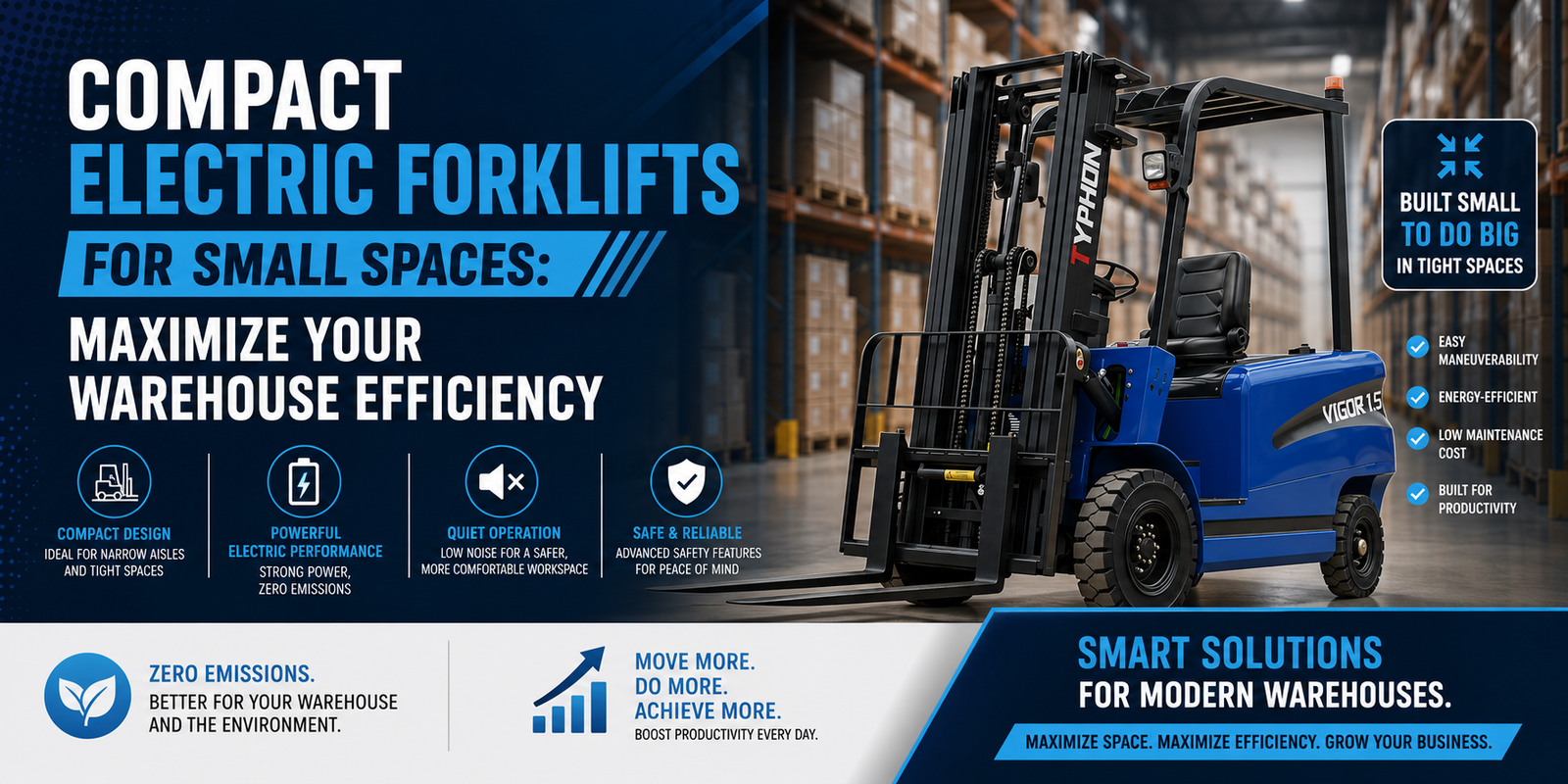
Manufacturers engineer compact forklifts to solve the spatial limitations of modern warehousing. By shrinking the chassis without sacrificing lifting power, these machines deliver uncompromising reliability in environments where traditional internal combustion forklifts fail.
Unmatched Maneuverability and Turning Radius
Operating in a cramped warehouse leaves zero margin for error. Compact electric forklifts utilize advanced steering geometries and smaller footprints to achieve exceptionally tight turning radii. Many three-wheel electric models can pivot precisely on their own axis. This allows your operators to enter an aisle, retrieve a heavy pallet, and turn around safely without striking your racking systems or damaging inventory.
Zero Emissions for Superior Indoor Air Quality
Small spaces severely compound ventilation issues. Running a propane or diesel machine in a tightly sealed retail backroom or urban warehouse introduces dangerous exhaust fumes that threaten your ground crew. Compact electric forklifts produce zero tailpipe emissions. This protects your workers from carbon monoxide exposure and eliminates the need to install expensive, heavy-duty ventilation systems to maintain safe indoor air quality.
Quiet Operation and Enhanced Operator Visibility
A loud warehouse increases operator fatigue and masks important warning signals. Electric motors operate with near-silent precision, significantly lowering the overall noise floor of your facility. Furthermore, a smaller machine chassis provides operators with excellent sightlines. Without a massive counterweight blocking their rear view, operators can reverse confidently and navigate blind corners safely.
Ideal Environments for Compact Machinery
If your facility prioritizes dense storage over sprawling floor plans, a compact electric forklift acts as your most valuable asset.
Thriving in Narrow Aisles and Urban Distribution Centers
Urban distribution centers face massive real estate costs, forcing managers to utilize every square inch of available space. Compact electric forklifts excel in these high-density applications. They navigate smoothly through narrow aisles, allowing you to place racking systems closer together and increase your total inventory capacity.
Retail backrooms also benefit heavily from this equipment. Operators can move pallets of heavy merchandise safely through standard doorways and tight storage corridors without disrupting the consumer-facing retail space.
How to Choose the Right Compact Electric Forklift
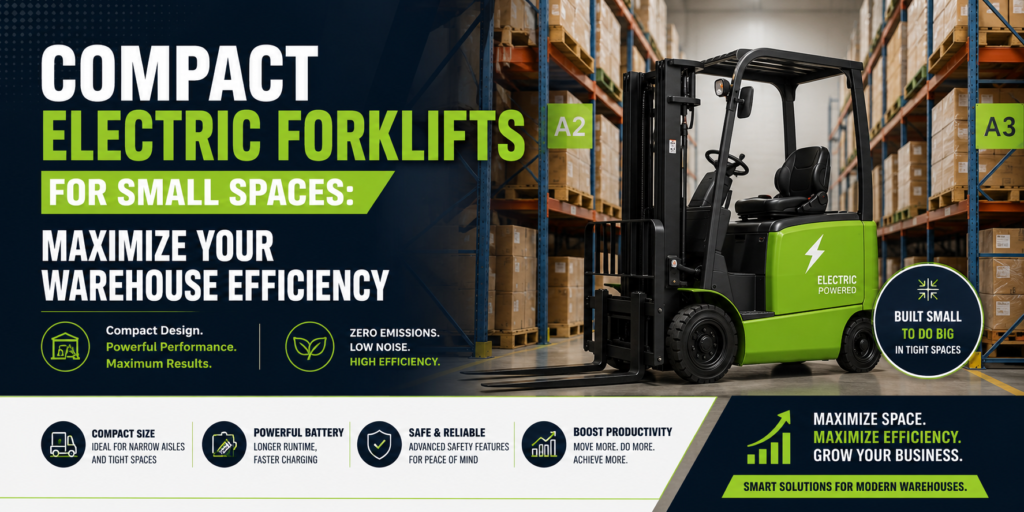
Selecting the right heavy equipment requires careful planning. You must align the machine’s capabilities directly with your facility’s physical constraints and your operational budget.
Measure Your Aisle Widths and Mast Height Limits
Before looking at specific models, you must measure your physical workspace. Measure the exact distance between your narrowest racking aisles. You must select a forklift with a right-angle stacking capability that comfortably clears this dimension. Next, measure your lowest ceiling clearances and standard door frames. Ensure the lowered mast height of the forklift allows the machine to pass through these obstacles without striking overhead hazards.
Determine Your Required Lift Capacity
Never compromise on your lifting requirements to save space. Calculate the maximum weight of the heaviest pallets you handle. You must choose a compact electric forklift that safely exceeds this weight threshold. Remember that a forklift’s lifting capacity decreases as the load goes higher. Always check the machine’s load capacity chart to ensure it can lift your heaviest materials to the top tier of your racking system safely.
Evaluate Battery Types and Total Cost of Ownership
The battery serves as the heart of your electric equipment. Traditional lead-acid batteries provide excellent power but require routine watering and dedicated charging periods. If you run a high-demand, multi-shift operation in a small space, consider investing in lithium-ion battery technology. Lithium-ion batteries charge rapidly, require zero maintenance, and allow operators to plug the machine in during short breaks.
While lithium-ion models carry a higher initial purchase price, their extended lifespan and reduced maintenance overhead drastically lower your total cost of ownership over the life of the machine.
Secure the Right Equipment for Your Operation
Compact electric forklifts deliver the robust lifting power you need within a footprint that respects your facility’s spatial limits. By prioritizing maneuverability, clean operation, and precise lifting specifications, you protect your inventory and guarantee a safe, productive working environment for your operators.
Before making your final purchasing decision, map out your tightest aisles, record your maximum load weights, and assess your daily shift demands. Use this concrete data to compare models and select the exact compact electric forklift that will drive your warehouse efficiency forward.
Compact Electric Forklifts for Small Spaces: Maximize Your Warehouse Efficiency
Expanding your facility footprint requires massive capital investment. When you run out of floor space, the most profitable solution is to build upward and narrow your aisles. However, standard material handling equipment simply cannot navigate tight corners and restricted pathways. If you operate in a constrained environment, you need machinery engineered specifically for these exact challenges.
Compact electric forklifts provide the maneuverability, power, and safety required to keep small facilities operating at peak productivity. In this guide, you will learn why these specialized machines are essential for tight indoor environments and exactly how to evaluate the right model for your business.
What you will learn in this guide:
- How compact design improves turning radius and narrow aisle navigation.
- The environmental and safety benefits of operating electric equipment indoors.
- Which specific facilities benefit the most from compact material handling.
- The critical specifications you must evaluate before purchasing a compact forklift.
The Core Advantages of Compact Electric Forklifts
Manufacturers engineer compact electric forklifts to solve the spatial limitations of modern warehousing. By shrinking the chassis without sacrificing lifting power, these machines deliver uncompromising reliability in environments where traditional internal combustion forklifts fail.
Unmatched Maneuverability and Turning Radius
Operating in a cramped warehouse leaves zero margin for error. Compact electric forklifts utilize advanced steering geometries and smaller footprints to achieve exceptionally tight turning radii. Many three-wheel electric models can pivot precisely on their own axis. This allows your operators to enter an aisle, retrieve a heavy pallet, and turn around safely without striking your racking systems or damaging inventory.
Zero Emissions for Superior Indoor Air Quality
Small spaces severely compound ventilation issues. Running a propane or diesel machine in a tightly sealed retail backroom or urban warehouse introduces dangerous exhaust fumes that threaten your ground crew. Compact electric forklifts produce zero tailpipe emissions. This protects your workers from carbon monoxide exposure and eliminates the need to install expensive, heavy-duty ventilation systems to maintain safe indoor air quality, aligning with guidelines set by the Occupational Safety and Health Administration (OSHA).
Quiet Operation and Enhanced Operator Visibility
A loud warehouse increases operator fatigue and masks important warning signals. Electric motors operate with near-silent precision, significantly lowering the overall noise floor of your facility. Furthermore, a smaller machine chassis on compact electric forklifts provides operators with excellent sightlines. Without a massive counterweight blocking their rear view, operators can reverse confidently and navigate blind corners safely.
Ideal Environments for Compact Machinery
If your facility prioritizes dense storage over sprawling floor plans, deploying compact electric forklifts acts as your most valuable strategic asset.
Thriving in Narrow Aisles and Urban Distribution Centers
Urban distribution centers face massive real estate costs, forcing managers to utilize every square inch of available space. Compact electric forklifts excel in these high-density applications. They navigate smoothly through narrow aisles, allowing you to place racking systems closer together and increase your total inventory capacity.
Retail backrooms also benefit heavily from this equipment. Operators can move pallets of heavy merchandise safely through standard doorways and tight storage corridors without disrupting the consumer-facing retail space.
How to Choose the Right Compact Electric Forklift
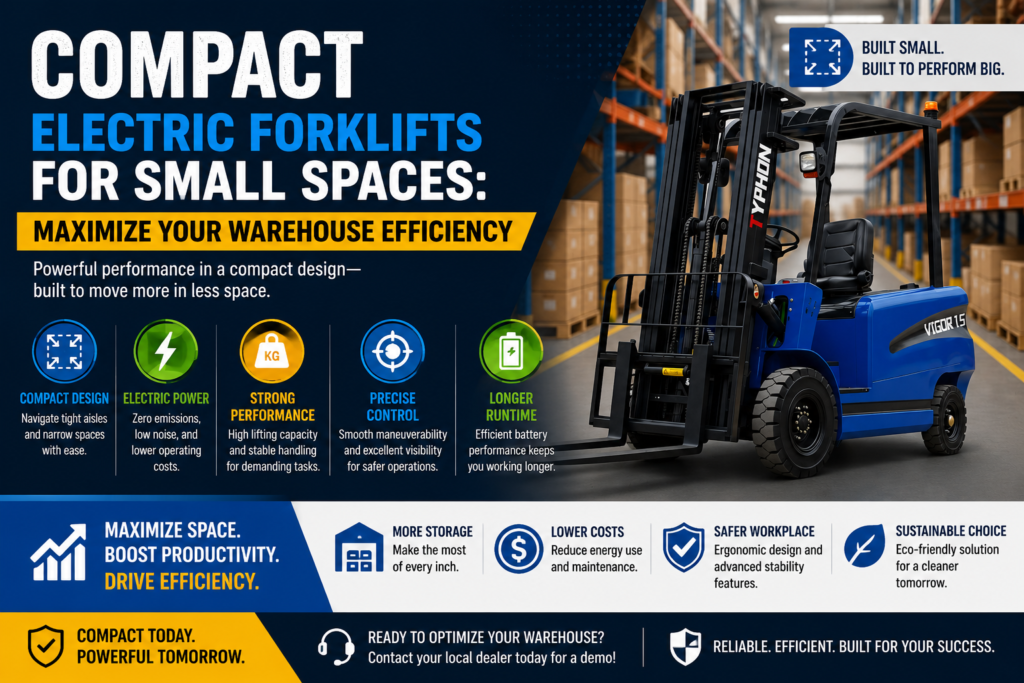
Selecting the right heavy equipment requires careful planning. You must align the capabilities of different compact electric forklifts directly with your facility’s physical constraints and your operational budget.
Measure Your Aisle Widths and Mast Height Limits
Before looking at specific models, you must measure your physical workspace. Measure the exact distance between your narrowest racking aisles. You must select a forklift with a right-angle stacking capability that comfortably clears this dimension. Next, measure your lowest ceiling clearances and standard door frames. Ensure the lowered mast height of the forklift allows the machine to pass through these obstacles without striking overhead hazards. For assistance in workspace planning, consult our internal Warehouse Layout Optimization Guide.
Determine Your Required Lift Capacity
Never compromise on your lifting requirements to save space. Calculate the maximum weight of the heaviest pallets you handle. You must choose from a selection of compact electric forklifts that safely exceeds this weight threshold. Remember that a forklift’s lifting capacity decreases as the load goes higher. Always check the machine’s load capacity chart to ensure it can lift your heaviest materials to the top tier of your racking system safely.
Evaluate Battery Types and Total Cost of Ownership
The battery serves as the heart of your electric equipment. Traditional lead-acid batteries provide excellent power but require routine watering and dedicated charging periods. If you run a high-demand, multi-shift operation in a small space, consider investing in lithium-ion battery technology, a growing standard tracked by the Material Handling Industry (MHI).
Lithium-ion batteries charge rapidly, require zero maintenance, and allow operators to plug the machine in during short breaks. While these specific compact electric forklifts carry a higher initial purchase price, their extended lifespan and reduced maintenance overhead drastically lower your total cost of ownership over the life of the machine.
Secure the Right Equipment for Your Operation
Compact electric forklifts deliver the robust lifting power you need within a footprint that respects your facility’s spatial limits. By prioritizing maneuverability, clean operation, and precise lifting specifications, you protect your inventory and guarantee a safe, productive working environment for your operators.
Before making your final purchasing decision, map out your tightest aisles, record your maximum load weights, and assess your daily shift demands. Use this concrete data to compare models and select the exact compact electric forklifts that will drive your warehouse efficiency forward. To explore the best models for tight spaces, view our Current Forklift Inventory today.


