
Compact Road Roller Benefits for Small Crews
Why Compact Road Rollers Are Perfect for Residential Projects
A paving crew pulls up to a new home with a narrow driveway, a fenced backyard, and a fresh walkway that needs compacting before the owner’s landscaping goes in. Their full-size ride-on roller barely clears the gate, can’t turn without a dozen corrections, and leaves the crew hand-tamping the spots it can’t reach. By early afternoon, the job that should have wrapped is still crawling along, and the homeowner is watching from the window with a look that says the day isn’t going the way anyone hoped. Swap that oversized machine for a compact road roller and the whole picture changes. It slips through the gate, packs the driveway and walkway in clean, overlapping passes, and finishes before the crew ever reaches for a hand tamper. The homeowner gets a tight, smooth surface, and the crew packs up hours ahead of schedule.
That kind of day is exactly what a compact roller is built for. Residential work rewards machines that fit tight spaces, compact well, and treat finished ground gently, and a mini road roller delivers all three without asking a small crew to haul a machine that belongs on a highway project. This post walks through what makes these machines suited to cramped residential sites, their edge in maneuverability and footprint, how they compact driveways and base material, the way they protect finished grades and turf, and the real return they offer a small crew across a busy season. Here’s why so many residential contractors reach for one and why it keeps paying off long after the first job.
What Makes Compact Road Rollers Suited to Tight Residential Sites
Residential jobs rarely offer the open ground a road project or commercial parking lot does. Fences, garden beds, garages, and property lines box in the work area fast, and a large roller simply can’t operate where it can’t fit. Even getting a full-size machine past the gate is often a production, with a crew waving it through inches at a time while the homeowner’s fence post takes a beating. A compact road roller is built for exactly these constraints, sized to work close to structures and inside spaces that would stop a bigger machine before it ever reached the driveway.
Small dimensions do more than squeeze through gaps. Because a compact roller sits lower and shorter than a full-size machine, the operator has a clear view of the drum edges, the obstacles nearby, and the crew working around the machine. On a crowded residential lot, that visibility matters enormously, since a tight pass along a garden bed or a concrete edging is completely different when you can see exactly where the drum is versus when you’re guessing from a high seat. Working near a home also means finish quality and precision count as much as raw output, and a smaller roller lets you place each pass deliberately rather than fighting the machine into position. That fit-first design is the whole reason compact rollers shine on residential ground where space is always the first constraint.
Maneuverability and Footprint Advantages
Turning radius decides how much of a residential site you can actually reach and compact properly. A compact road roller pivots in a fraction of the space a full-size machine needs, so it works driveways, garden paths, backyard patios, and side-yard walkways without the endless back-and-forth corrections a larger drum forces you through. Threading between a fence and a foundation becomes routine rather than a wrestling match, and tight corners that would leave a full-size machine making four-point turns are handled in a single smooth arc.
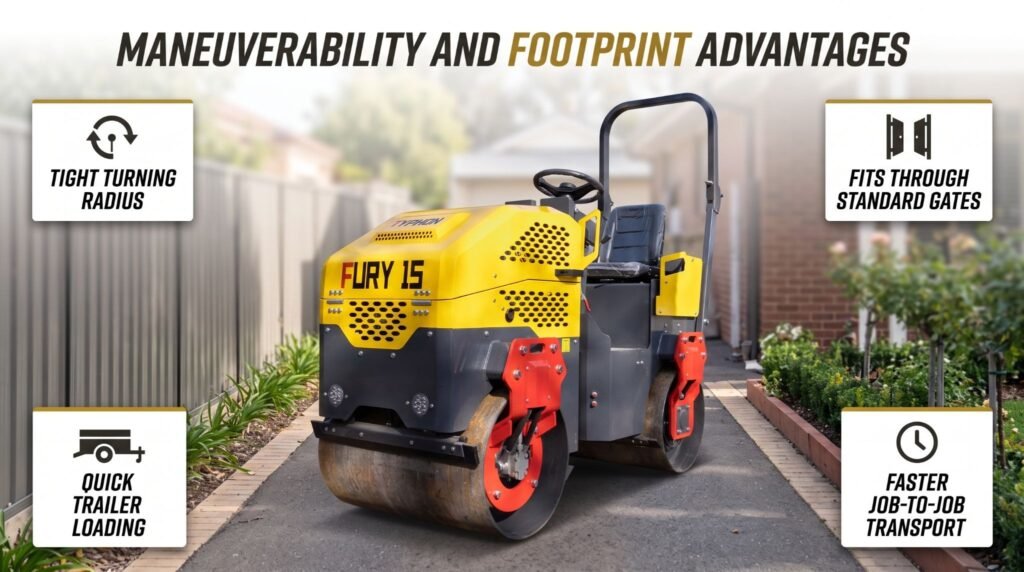
Think about a standard residential driveway install: two strips of asphalt running along the house with a narrow strip between the drive edge and the garden border. A compact roller handles that strip in controlled passes without ever threatening the landscaping beside it. A full-size machine either can’t reach it at all or needs the crew to hand-tamp the whole length, which adds time and rarely matches the density of a rolled surface.
The light footprint pays off during transport too. Loading a compact road roller onto a standard trailer takes minutes, and one crew can move it between jobs without a heavy hauler, which keeps a small operation nimble across several residential sites in a single day. Tight access points that would force a larger machine to sit on the street while the crew figures out the approach no longer stall the work. Moving efficiently between a morning driveway pour and an afternoon patio base keeps a compact crew billing hours that a less nimble setup would lose to transport and setup. Add it all together, and maneuverability turns jobs that look cramped and awkward into work that flows.
Compaction Performance on Driveways, Walkways, and Base Material
Size doesn’t mean the machine gives up on compaction results, and that’s one of the most important things a residential contractor needs to understand before choosing equipment. A compact road roller delivers genuine vibratory compaction, the same basic principle that drives a full-size paving roller, just matched to the scale of residential work. Running steady, overlapping passes across a fresh driveway or walkway surface packs asphalt and aggregate to a dense, stable finish that holds up through years of use, freeze-thaw cycles, and the kind of wear a residential surface sees every day.
Base material is where this compaction earns its most critical role. Before pavers, concrete, or asphalt ever go down, the sub-base has to be compacted properly, or everything built on top of it settles and cracks sooner than it should. A weak sub-base under a patio looks fine on day one and starts showing problems by year two. Running a compact road roller across the gravel or crushed-stone base locks that material in tight, eliminating the voids that cause settlement and giving the finished surface layer something solid and stable to sit on. Hand tamping or a plate compactor can handle small areas, but a roller delivers more consistent coverage and deeper density across a full driveway base or patio footprint.
Matching the machine’s amplitude and frequency settings to the material and the lift thickness keeps the finish clean and the compaction consistent. Higher amplitude and more passes suit thicker lifts or coarser aggregate, while lower settings work better on thin asphalt overlays or sensitive base material near finished surfaces. Following the settings the manufacturer recommends for the material and lift you’re working with takes the guesswork out of it and protects the surface from over-compaction. Done right, a compact road roller delivers results the job requires without leaving marks or bruising the surface.
Protecting Finished Grades and Turf
Residential sites carry finished surfaces that a careless or oversized machine can wreck in seconds, and the consequences land immediately. Manicured lawns, fresh sod, landscaped beds, and carefully graded soil all sit close to where you’re working, and a heavy roller marks or tears them with a single wrong pass. Homeowners notice that damage before you’ve packed up the machine, and repairing a torn lawn or a gouged garden border eats straight into your margin while creating exactly the kind of friction that hurts referrals.
A compact road roller treads far more gently across sensitive ground by virtue of its lighter weight. Lower weight means less force pressing into every square inch of surface the drum or tires contact, which dramatically reduces the risk of rutting or marking turf and finished grades beside the work area. Precise steering also gives the operator real control over drum placement, so the machine stays on the driveway or patio surface rather than drifting into the lawn with every pass. That precision is especially important near transitions, like the edge where asphalt meets grass, or where a walkway runs alongside a freshly planted bed.
Protecting the surrounding surface isn’t just a courtesy to the homeowner. On a residential job, the quality of the whole finished site reflects on your crew, and a compacted driveway next to a torn-up lawn tells the homeowner that the job wasn’t done carefully. A smaller, lighter machine with good steering control makes that protection far easier to deliver without slowing the work down. Passing close to a bed edge or a turf line becomes a controlled, confident move rather than something the crew dreads.
Seasonal Value and Year-Round Versatility
Residential paving work follows the seasons, and a compact road roller earns its keep across all of them when matched to the right jobs. Spring and early summer bring driveway installs, patio bases, and walkway projects as homeowners invest in their outdoor spaces. Fall brings repair work, overlays, and last-minute projects before the cold sets in. A compact roller fits into every phase of that calendar, handling fresh asphalt in spring as easily as aggregate base prep for a late-season patio.
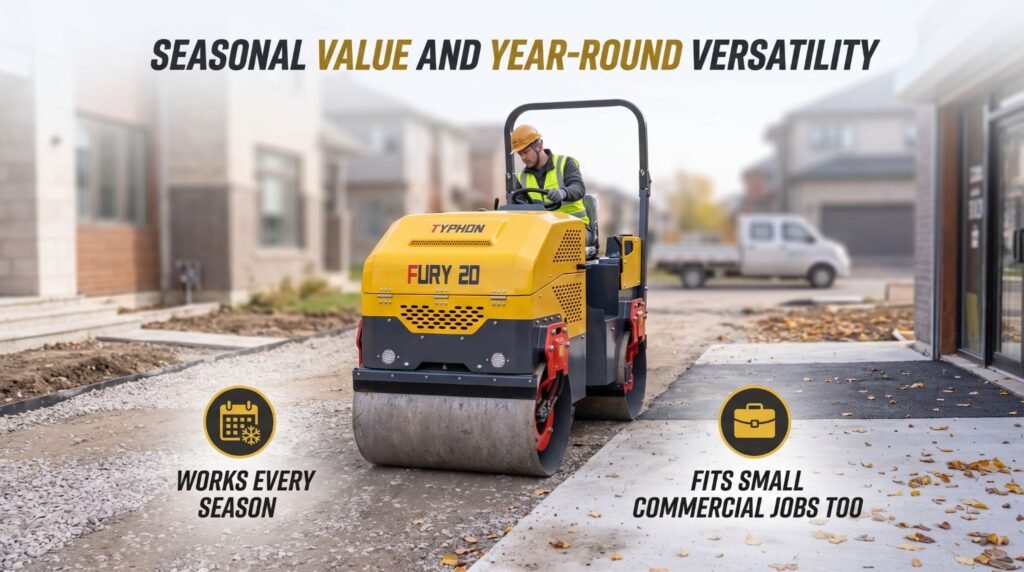
Some compact models also work effectively for small commercial and light industrial repair jobs, so a crew that handles residential work primarily doesn’t have to leave the machine parked when a small parking lot repair or commercial walkway project comes in. That flexibility stretches the machine’s productive hours across more of the year and helps spread its cost across a wider range of billable work. The more consistently a machine earns, the faster it pays for itself, and versatility across seasons and job types is a big part of what makes a compact roller a sound investment for a small paving operation.
Value and ROI for Small Crews
Cost is the question every small contractor weighs first, and a compact road roller answers it well compared to the alternatives. Priced and sized below full-scale paving rollers, it fits the budget and the workload of a crew handling driveways, walkways, and small residential paving jobs rather than highway projects. That lower entry point puts a capable, genuine compaction machine within reach of operations that could never justify the cost of a large roller and the specialized hauler it demands.
Value climbs quickly when the machine stays busy across the season. One compact road roller handles driveway paving, patio bases, walkway prep, small parking area repair, and asphalt overlay work, so a single purchase covers most of a residential crew’s compaction needs without renting for every job. Fewer hand-tamping hours per job, faster turnaround on each site, and less transport hassle between sites all add up week after week across a season. Those saved hours turn into more jobs completed in the same calendar, which is the clearest path to ROI.
Whether buying beats renting comes down to how often you compact. A crew running two or three residential paving jobs a week across a long season will recoup the cost of a compact roller faster than one that does occasional work and would be better served by renting for the busy stretches. Weigh your real job frequency, your season length, and your typical job size against the purchase price and the rental cost, and the math usually makes the right answer visible. Protecting that investment takes a steady maintenance routine, including drum spray system upkeep, scraper bar inspection, and fluid checks, and training operators on safe practices guards your crew on every site.
Conclusion
Compact road rollers suit residential projects because they fit tight sites, compact cleanly, and protect the finished ground around them. Their small footprint and quick turning radius let a crew reach driveways, walkways, and fenced backyards a full-size machine can’t touch, while their vibratory compaction still packs base material and asphalt to a dense, lasting finish. Lighter weight protects lawns, sod, and graded soil from the marking a heavier machine leaves behind, and the machine’s lower cost and easier transport fit the budget and workflow of a small crew handling everyday residential work. Seasonal versatility stretches the value further, keeping the roller earning across a longer calendar than a single-use machine can. Match the roller to the lots you work most, keep it on a steady maintenance routine, and run it within safe operating limits on every job. When you’re ready to put a dependable compact road roller to work, reach out to a trusted equipment specialist who can pair a reliable machine with the results your projects depend on.
Frequently Asked Questions
Why is a compact road roller better than a full-size roller for residential work?
Its smaller size fits tight driveways, walkways, and fenced yards a large machine can’t reach, while its lighter weight protects lawns and finished grades, so you compact residential surfaces cleanly without damaging the ground around them.
Can a compact road roller properly compact driveway base material?
Yes. It delivers the vibratory compaction that gravel and crushed-stone bases need, locking the sub-base tight so the asphalt, pavers, or concrete on top stay stable and resist settling or cracking over time.
Is a compact road roller worth it for a small paving crew?
For crews handling driveways, walkways, and small paving jobs regularly across a season, it offers strong value by covering most residential compaction needs at a lower cost than a full-size roller, with easier transport and no need for a heavy hauler.


