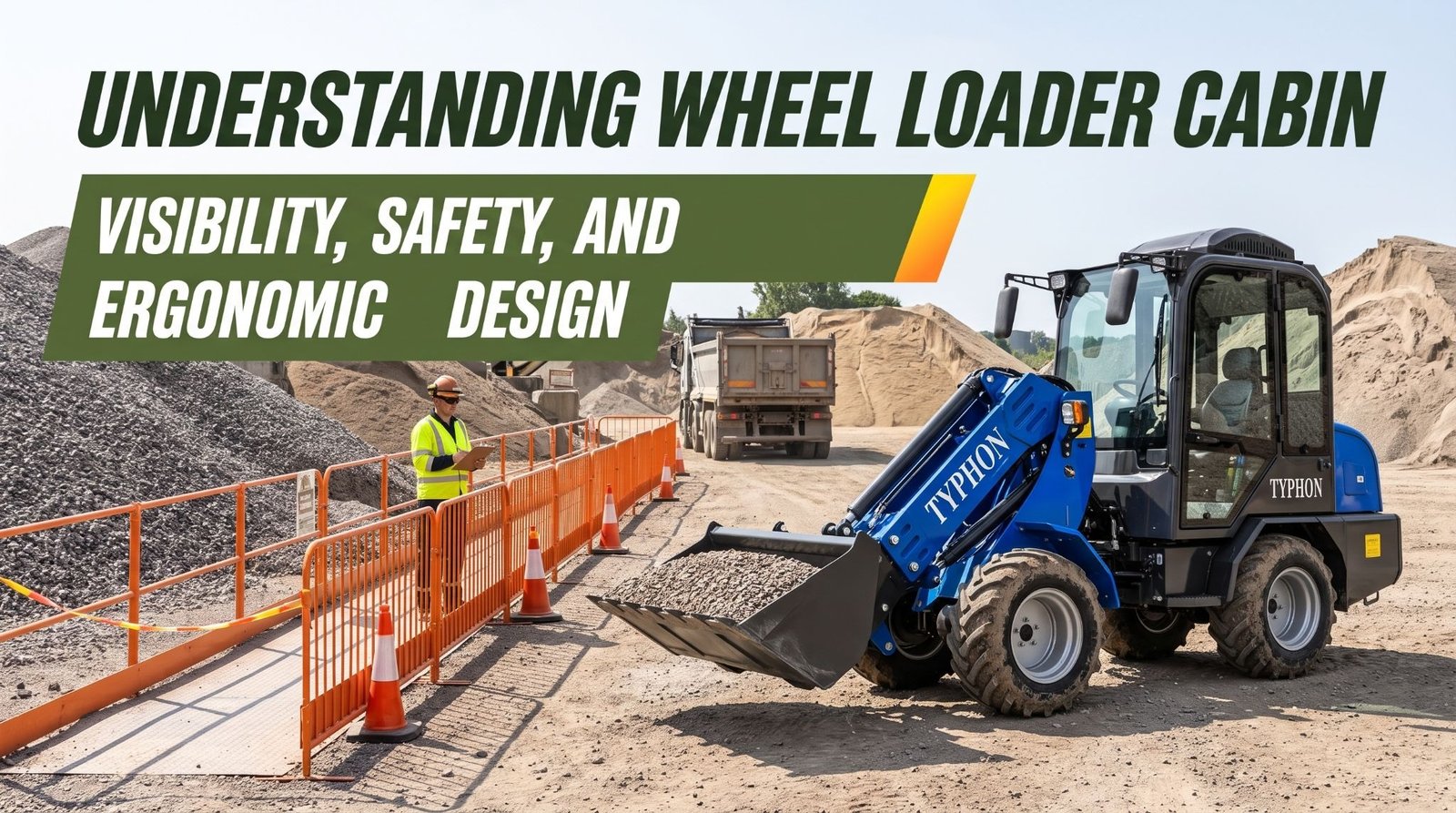
Understanding Wheel Loader Cabin Visibility, Safety, and Ergonomic Design
A wheel loader cab is the operator’s workplace for an entire shift. From that seat, the operator watches the bucket edge meet the pile, tracks trucks moving in and out of the loading area, checks for ground workers, and guides a machine weighing many tons through tight, busy spaces. Every decision depends on what the operator can see, how easily the controls can be reached, and how well the cab protects against heat, dust, noise, and impact. When the cab is well designed, the operator stays aware, comfortable, and in control. When it isn’t, blind spots, awkward reaches, and fatigue build up over the shift and raise the risk of costly mistakes.
Cab design involves several connected systems. Window size and pillar placement shape the operator’s sightlines. Mirrors, cameras, and lighting extend awareness to the rear and sides. Steps, handholds, and doors decide how safely the operator gets in and out. The seat, controls, and displays affect posture and accuracy. Climate control, filtration, sealing, and protective structures shape the working environment and shield the operator from hazards. A cab can look modern and feel comfortable yet still leave important areas hidden from view. That’s why buyers should evaluate these features together rather than one at a time.
Sightlines Across the Front and Bucket Area
Forward visibility is central to every loading cycle. The operator must see the cutting edge as it approaches the pile, judge how deeply the bucket enters material, and position the load accurately over a truck bed or hopper. Clear sightlines reduce guesswork, improve bucket fill, and help prevent contact with trucks, structures, and people.
Visibility changes as the bucket moves. With the bucket lowered, the operator may see the cutting edge clearly. As it rises toward truck-loading height, the bucket itself can block part of the forward view. When evaluating a loader, sit in the normal operating position with the seat adjusted, then check the view with the bucket on the ground, at carry height, fully raised, and tilted for dumping. Note any points where the corners of the bucket, the tires, or the area directly ahead become hard to see.
Recognized standards for earth-moving machinery, such as ISO 5006, define methods for assessing operator visibility. Ask the manufacturer or dealer how the machine’s visibility has been evaluated. Keep in mind that visibility aids and good design reduce blind spots but rarely eliminate them, especially near the front tires and close to the machine.
Lighting matters in early mornings, late shifts, and indoor facilities. Check that work lights illuminate the bucket, the pile face, and the travel path without creating glare on the glass. LED lighting packages can improve visibility in low light, while clean lenses keep output consistent.
Key takeaway: Evaluate the forward view from the operator’s seat through the full bucket range, paying attention to pillars, dash height, linkage, wipers, and lighting, so the operator can see the cutting edge and work area clearly throughout every loading cycle.
Monitoring Rear and Side Areas
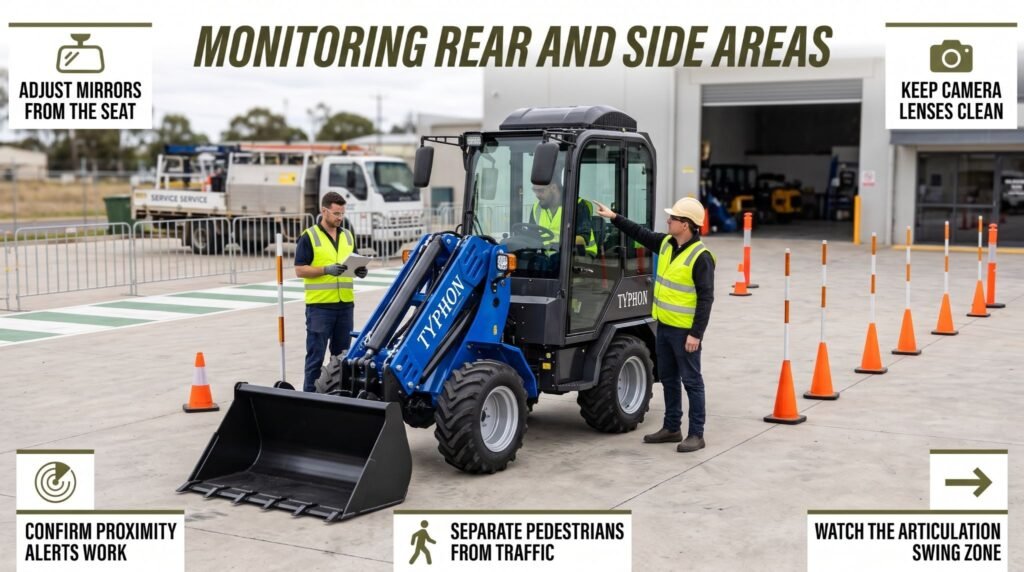
Wheel loaders spend a large share of every cycle reversing and turning. On many sites, they reverse away from the pile, turn toward a truck, and reverse again, often with ground workers, light vehicles, and other equipment nearby. That makes rear and side visibility one of the most important safety factors in cab design.
The engine compartment, counterweight, cab structure, and rear tires can create significant blind areas behind and beside the machine. Articulated steering adds another factor. When the loader turns, the front and rear frames move in different arcs, so the rear of the machine can swing into areas the operator may not be watching. The zone near the articulation joint is especially hazardous for anyone on foot.
Rear and side awareness depends on several tools working together:
- Rear window: A clear rear window, often combined with a sloped engine hood, helps the operator see behind the machine.
- Mirrors: Properly positioned mirrors cover areas beside and behind the loader that can’t be seen directly.
- Rear-view cameras: Cameras show areas directly behind the machine on an in-cab display.
- Proximity detection systems: Radar or sensor-based systems can alert the operator when an object or person is detected behind the machine.
- Side windows: Large side glass helps the operator watch tires, nearby trucks, and the edges of the travel path.
When inspecting a loader, check whether mirrors can be adjusted easily and whether they provide useful coverage without requiring awkward head movement. Confirm that the camera display is bright, clearly positioned, and readable in direct sunlight. Look for any areas that remain hidden from the seat even with all aids in use, particularly near the rear wheels and directly beside the cab.
Visibility aids support the operator but don’t replace direct checks or site procedures. Before reversing, operators should look directly where possible, scan mirrors and the camera display, and confirm the travel path is clear. Sites should separate pedestrian routes from machine traffic, set clear reversing rules, and use spotters where visibility is limited. Ground workers should stay out of the loader’s turning and reversing path and make eye contact with the operator before approaching.
Key takeaway: Rear and side blind areas are a major hazard on wheel loaders, so combine clear rear glass, adjusted mirrors, cameras, and proximity alerts with direct checks, pedestrian separation, and firm site reversing procedures.
Cab Access and Emergency Exit Design
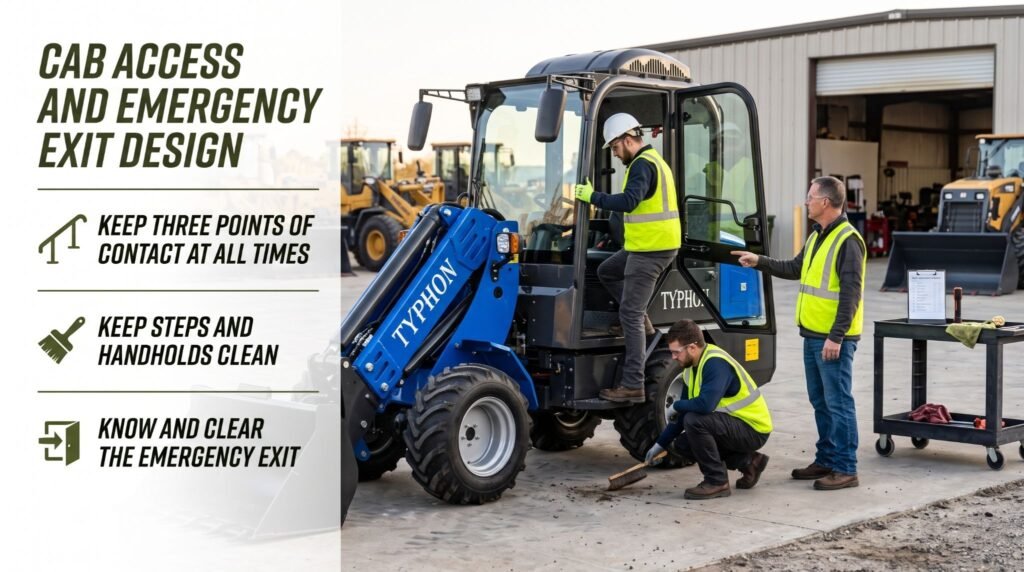
Getting into and out of the cab is a routine task, but it’s also a common source of injury. Slips, missed steps, and falls from access ladders happen most often when steps are muddy, handholds are poorly placed, or operators climb down facing away from the machine. Well-designed access helps prevent these incidents every time the operator enters or leaves the cab.
Operators should always face the machine when climbing on or off, use the handholds and steps provided, and keep three points of contact at all times. Never jump from the cab or steps, and never use control levers, steering wheels, or other controls as handholds. Grabbing a control while entering can cause unintended machine movement. Before leaving the seat, lower the bucket to the ground, engage the parking brake, and follow the manufacturer’s shutdown procedure.
Emergency exits deserve equal attention. Wheel loader cabs typically provide a secondary exit in case the main door is blocked after a rollover, fire, or collision. This may be an opening rear or side window, a breakable window with an emergency hammer, or another route defined by the manufacturer. Confirm that operators know where the emergency exit is, how to use it, and that the route stays clear of stored items, bags, and debris. Check that any emergency hammer is present and secured in its holder.
Keep steps, handholds, and the cab floor free from mud, oil, ice, and loose items. Clean them regularly as part of daily checks, and report damaged steps, loose rails, or doors that fail to latch properly.
Key takeaway: Safe cab access depends on wide, non-slip steps, well-placed handholds, secure doors, and a clear, understood emergency exit, supported by operator habits such as maintaining three points of contact and never using controls as handholds.
Seating and Control Layout for Daily Operation
The operator station decides how comfortably and accurately the operator can control the loader through a long shift. Seat design, control placement, and display layout all affect posture, reach, and the amount of effort required for each input. A well-designed station supports steady, precise work. A poorly designed one leads to stretching, twisting, and fatigue that can affect judgment later in the day.
Controls should fall within natural reach from the seated position. The joystick should sit at the end of a supported forearm, steering controls should allow comfortable arm positions, and frequently used switches should be grouped logically and clearly labeled. Displays should sit within the operator’s line of sight without blocking the view of the bucket or work area.
Seat and control position also affect visibility. An operator who can’t adjust the seat properly may sit too low to see the cutting edge or too far back to use the mirrors effectively. Setting the seat first, then the arm rest, steering column, and mirrors, helps every operator achieve a safe, comfortable working position.
Machines shared between operators need a broad adjustment range. A loader that suits one person perfectly may leave another stretching for controls or hunched to see through the windshield. During evaluation, have several regular operators of different sizes adjust the station and run normal loading movements. Check whether controls remain accessible while wearing work gloves, and note any awkward reaches or twisting needed to see the work area.
Key takeaway: A well-adjusted seat and logically placed controls support good posture, accurate operation, and clear sightlines, so evaluate the full operator station with the people who will use it and confirm it adjusts for every operator size.
Safety Features and Operator Awareness
Modern wheel loaders include a range of features designed to support operator awareness and reduce risk. These systems provide valuable information, but they only work when they function correctly and the operator understands how to use them.
Common cab safety features include:
- Seat belts and seat belt reminders that encourage consistent use
- Warning indicators and alarms for engine temperature, hydraulic faults, brake pressure, and other critical conditions
- Reversing alarms and lights that alert people nearby when the machine moves backward
- Rear-view cameras and proximity detection that extend awareness behind the machine
- Work lights and beacon lights that improve visibility in low light and signal machine presence
- Clear instrument displays that present information without unnecessary distraction
- Operator presence systems that may limit certain functions when the operator leaves the seat, depending on the model
Displays should present important information clearly and quickly. Warning messages need to stand out without overwhelming the operator with constant alerts. When evaluating a loader, review how warnings appear, whether the display remains readable in bright sunlight, and whether controls for lights, alarms, and cameras are easy to find.
Include safety features in daily pre-operation checks. Confirm that the seat belt latches and releases properly, that warning lights illuminate during start-up as designed, and that the horn, reversing alarm, lights, and camera display all work. Clean camera lenses, mirrors, and windows before starting. Report any fault before operation, and never bypass or disable a safety device to keep the machine working.
Technology supports operator awareness, but safe operation depends on people and procedures. Operators should travel at speeds suited to site conditions, maintain clear communication with ground workers and truck drivers, and stop whenever visibility is lost or the travel path can’t be confirmed. Training should cover the specific machine’s controls, visibility aids, emergency exits, and warning systems, along with site traffic rules.
Key takeaway: Seat belts, alarms, cameras, lights, and clear displays strengthen operator awareness only when they’re checked daily, kept in working order, and backed by safe travel speeds, clear communication, and thorough training.
Conclusion
Wheel loader cabin design shapes how safely and effectively an operator controls the machine through every shift. Clear forward sightlines let the operator watch the cutting edge and load accurately, while rear glass, mirrors, cameras, and proximity alerts reduce the risk created by blind areas behind and beside the machine. Wide, non-slip steps, well-placed handholds, and a clear emergency exit protect the operator getting in and out. An adjustable seat and logically placed controls support good posture and precise operation, while engine horsepower determines the power available for demanding loading tasks and fuel capacity affects how long the machine can operate between refueling stops. Climate control, filtration, noise insulation, and certified protective structures keep the working environment safe and comfortable. Safety features complete the picture when they’re maintained and supported by sound procedures and training. Before your next equipment decision, sit in the operator’s seat, adjust the station, check visibility through the full bucket range and during reversing, inspect access and emergency exits, and review every safety system. Also compare engine horsepower and fuel capacity to ensure the loader matches your workload and operating schedule. A carefully evaluated cab helps your operators stay alert, comfortable, and in control from the first load of the day to the last.
Frequently Asked Questions
Why is wheel loader cab visibility important?
Visibility allows the operator to monitor the bucket, cutting edge, material pile, nearby workers, trucks, and obstacles throughout every loading cycle. Clear forward sightlines improve bucket fill and placement accuracy, while good rear and side visibility reduces the risk of striking people or equipment when reversing and turning. Because articulated loaders swing their rear frame during turns, awareness of the areas beside and behind the machine is especially important. Strong visibility supports both safety and productivity.
Do rear cameras replace mirrors?
No. Rear-view cameras are additional visibility aids that show areas directly behind the machine, but they have limited fields of view and can be affected by dust, mud, rain, and poor lighting. Mirrors cover different areas beside and behind the loader. Operators should use cameras and mirrors together, along with direct observation, before and during reversing. Proximity alerts can add another layer of awareness, but none of these aids replace site traffic procedures, pedestrian separation, or spotters where needed.
What should buyers check when inspecting cab access?
Check that steps are wide, evenly spaced, non-slip, and securely mounted, and that handholds allow three points of contact throughout the climb. Confirm the door opens fully, holds open, and latches firmly. Locate the emergency exit, verify it’s easy to use, and check that any emergency hammer is present. Look for step and entry lighting, and make sure arm rests or controls don’t block entry and exit. Damaged steps, loose rails, or doors that don’t latch properly should be repaired before operation.
Which ergonomic features matter most in a wheel loader cab?
Seat adjustment and suspension form the foundation, since they set the operator’s posture and absorb vibration. Arm rest support and joystick reach determine how comfortably the operator makes repeated control inputs. Display placement, logically grouped switches, and an adjustable steering column reduce stretching and distraction. Climate control, filtration, and noise insulation affect comfort and alertness over long shifts. The most reliable way to judge ergonomics is to have the operators who will use the machine adjust the station and run real loading cycles.


