

Forklift Attachments Guide: Boost Machine Power
A standard forklift is a powerful piece of equipment, but it only scratches the surface of what your fleet can achieve. When you equip your machines with the right forklift attachments, you transform a basic lifting vehicle into a multi-functional powerhouse. This simple upgrade prevents the need to purchase entirely new vehicles for specialized tasks.
Using the correct attachments directly impacts your bottom line. You reduce material damage, speed up your loading cycles, and create a significantly safer environment for your operators. Finding the exact attachment for your specific workflow ensures you get the absolute highest return on your equipment investment.
In this comprehensive guide, we will explore the most effective forklift attachments available on the market. You will learn how side-shifters, paper roll clamps, and fork positioners operate. By the end of this post, you will understand exactly how to match the right attachment to your industry needs, maximizing both efficiency and workplace safety.
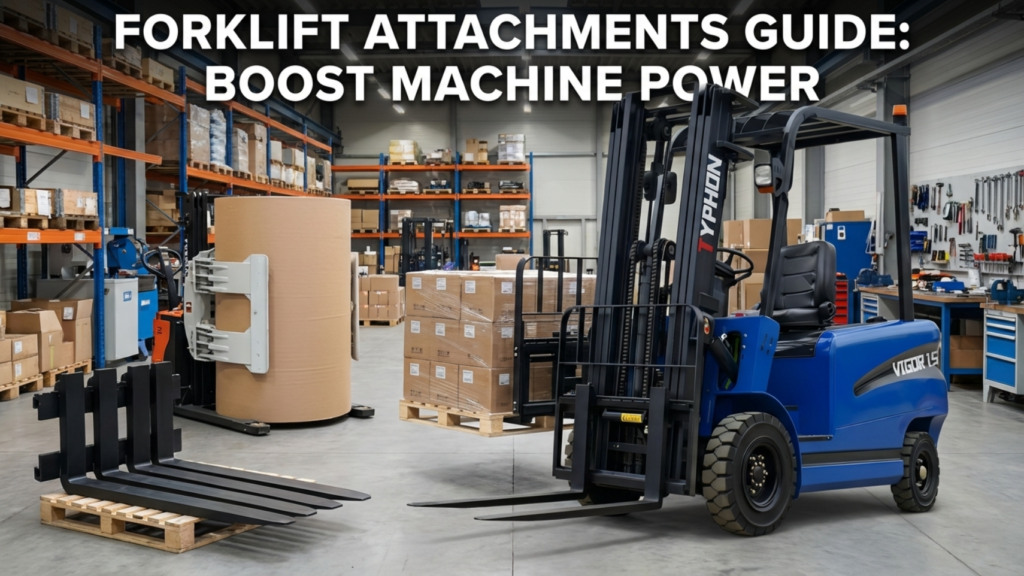
Why Invest in Forklift Attachments?
Purchasing heavy machinery represents a massive capital expense. Attachments allow you to multiply the value of your existing fleet without taking on new vehicle financing.
Instead of buying a dedicated machine to move paper rolls and another to move standard pallets, you use one forklift for both tasks. This consolidation drastically reduces your preventative maintenance costs and frees up valuable floor space in your facility.
Attachments also enhance workplace safety. When operators use the wrong equipment to move an awkwardly shaped load, the risk of dropped materials and vehicle tip-overs skyrockets. Purpose-built attachments grip, rotate, and secure unconventional loads perfectly, eliminating the guesswork and protecting your workforce.
Essential Attachments for General Warehousing
General warehousing requires speed, precision, and the ability to adapt to varying pallet sizes. These core attachments belong in almost every modern distribution center.
Side-Shifters
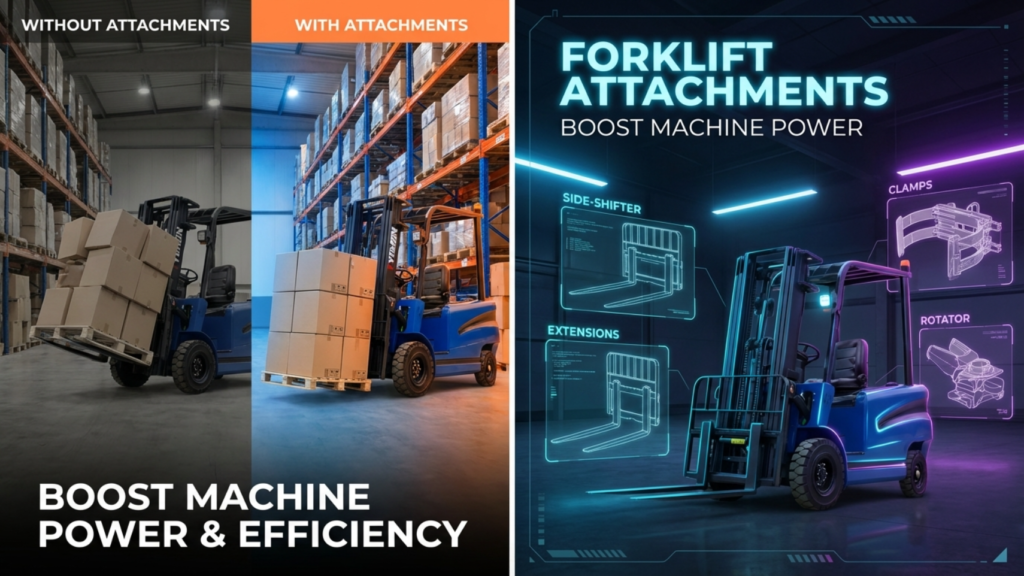
The side-shifter is the most common and universally beneficial forklift attachment available. It allows the operator to shift the forks horizontally to the left or right without moving the entire vehicle.
This capability eliminates the need to reverse and reposition the forklift when approaching a pallet slightly off-center. Operators can align the forks perfectly with the pallet slots in seconds. This minor adjustment speeds up loading dock operations significantly and drastically reduces damage to wooden pallets and valuable inventory.
Fork Positioners
Pallets come in dozens of different dimensions. When an operator encounters a non-standard pallet, they usually have to dismount the vehicle and manually kick or push the heavy steel forks into the correct position. This manual labor wastes time and frequently leads to back injuries.
A fork positioner allows the operator to adjust the distance between the forks hydraulically from inside the cabin. You can widen or narrow the forks instantly to accommodate varying pallet widths. This attachment keeps your operators safely in their seats and keeps your supply chain moving without interruption.
Fork Extensions
Sometimes your operators need to reach deeper into a racking system or load a flatbed truck from a single side. Fork extensions slide directly over your standard forks, temporarily increasing their length.
Extensions are highly cost-effective and easy to install. They provide the extra reach necessary for double-deep stacking or handling oversized, lightweight loads. However, you must train operators to understand that extending the load center decreases the overall lifting capacity of the machine.
Specialized Attachments for Industrial Applications
Certain industries handle materials that a standard pallet simply cannot accommodate. These specialized attachments secure delicate or awkwardly shaped inventory with precision.
Paper Roll Clamps
The printing and paper manufacturing industries handle massive, heavy rolls of paper that are easily crushed or torn. Traditional forks cannot lift these cylindrical loads safely.
Paper roll clamps feature curved, hydraulically powered arms that grip the roll securely around its circumference. The clamp applies perfectly distributed pressure to prevent the roll from slipping while ensuring the delicate paper does not tear or deform. Many paper roll clamps also feature a 360-degree rotation capability, allowing operators to transition rolls from horizontal resting positions to vertical feeding positions.
Carton Clamps
If you run a high-volume appliance or electronics distribution center, you know that wooden pallets take up valuable space and represent a massive ongoing expense. Carton clamps allow you to implement a completely palletless handling system.
These attachments feature two large, flat aluminum pads lined with specialized rubber. The pads press against the sides of a large square load, such as a washing machine box or a stack of televisions. The hydraulic pressure holds the carton securely, allowing the operator to lift and transport the product without ever needing a base pallet.
Push-Pull Attachments
Push-pull attachments facilitate another highly efficient palletless handling method using slip sheets. A slip sheet is a thin piece of plastic or corrugated cardboard that sits under the load, replacing a heavy wooden pallet.
The push-pull attachment features a hydraulic faceplate and a gripping jaw. The jaw bites the lip of the slip sheet and pulls the entire load onto a wide set of flat platens. When the operator reaches the destination, the faceplate pushes the load smoothly off the platens and into the shipping container. This system maximizes cargo space inside shipping trucks, saving thousands of dollars in freight costs.
Rotators
Many manufacturing processes require operators to dump raw materials into hoppers or mixing vats. A standard forklift can lift a bin, but it cannot empty it.
A rotator attachment securely locks the forks into the pockets of a specially designed bin. The operator then uses the hydraulic controls to rotate the entire carriage 360 degrees. This allows for safe, controlled dumping of scrap metal, agricultural products, or chemical powders. Rotators completely eliminate the need for dangerous manual dumping by ground personnel.
Bale Clamps
The recycling, agriculture, and textile industries deal with tightly compressed bales of material. Whether you are moving bales of recycled cardboard, cotton, or hay, traditional forks often pierce and ruin the bindings.
Bale clamps work similarly to carton clamps but feature thicker, more robust arms designed to handle highly compressed, durable materials. The arms squeeze the sides of the bale securely, allowing operators to stack them safely in tight configurations without damaging the product.
Construction and Heavy-Duty Attachments
Outdoor jobsites and construction yards demand rugged versatility. These attachments help you handle the heavy, unpredictable tasks found on active build sites.
Jib Cranes and Booms
Not every load sits neatly on the ground. Sometimes you need to lift motors, industrial pipes, or heavy machinery components from the top down.
A jib boom slides onto the existing forks and extends a heavy-duty steel beam outward. The beam features a hook at the end, effectively turning your forklift into a mobile crane. This allows you to lift suspended loads safely. You must pay strict attention to the forklift’s capacity plate when using a boom, as the extended load center severely reduces the maximum safe lifting weight.
Sweepers and Brooms
Maintaining a clean warehouse floor or construction site is a critical safety requirement. Debris causes forklift tires to lose traction and creates trip hazards for pedestrians.
Instead of buying a dedicated industrial sweeper, you can attach a rotary broom directly to your forklift. These attachments use the forward motion of the vehicle to power heavy-duty brushes, sweeping dust, dirt, and gravel into an integrated hopper. You clean your facility efficiently using the equipment you already own.
The Safety Impact of Using the Right Attachment
While attachments dramatically increase your productivity, they fundamentally change the physics of your forklift. You must manage these changes proactively to maintain a safe working environment.
Maintaining Load Capacity
Every attachment adds physical weight to the front of your forklift. Furthermore, attachments push the load center further away from the mast. This combination significantly reduces the maximum weight your forklift can safely lift.
When you install a new attachment, you must have a certified professional calculate the new safe lifting capacity. You must then install an updated data plate on the forklift cabin. Operating a forklift with an attachment without consulting the updated data plate often leads to catastrophic forward tip-overs.
Operator Training and Certification
An operator certified to drive a standard forklift is not automatically qualified to use a specialized attachment. Each attachment utilizes different hydraulic controls and alters the vehicle’s center of gravity and turning radius.
You must provide specific, hands-on training for every new attachment you introduce to your fleet. Operators need to understand how to apply the correct hydraulic pressure to a carton clamp without crushing the product. They must know how to navigate corners safely when using extra-long fork extensions. Thorough training protects your inventory, your equipment, and your personnel.
How to Choose the Right Forklift Attachment
Selecting the correct attachment requires a thorough analysis of your daily operations. You want to ensure the tool you purchase seamlessly integrates with your current workflow.
Assess Your Material Handling Needs
Start by auditing the materials your team handles daily. Look for bottlenecks in your process. Do your operators spend too much time manually adjusting forks? Do you experience high product damage rates when handling delicate inventory?
Identify the specific problems slowing down your supply chain. Once you isolate the operational friction points, you can easily select the attachment engineered to solve that exact issue.
Check Forklift Compatibility
Not every attachment works with every forklift. You must verify the hydraulic capabilities of your current machines.
Many attachments, like side-shifters and clamps, require auxiliary hydraulic functions. If your forklift only has a standard two-function hydraulic valve (lift and tilt), you will need to upgrade the hydraulic plumbing before installing a clamp. Always consult with your equipment dealer to ensure the attachment matches your forklift’s carriage class, weight capacity, and hydraulic specifications perfectly.
Maximize Your Fleet’s Potential
Forklift attachments are the smartest way to scale your material handling capabilities. By equipping your fleet with side-shifters, clamps, and positioners, you empower your operators to work with total precision.
You eliminate the need for manual lifting, reduce product damage, and streamline your entire supply chain. Evaluate your warehouse operations today to identify where a specialized attachment can deliver the highest impact. Partner with a trusted equipment provider to select the exact tools you need to build a safer, faster, and highly profitable facility.
Comments
Add a Review
Your email address will not be published. Required fields are marked*


Fernando4005
https://shorturl.fm/vDdUv
Pearl3960
https://shorturl.fm/9bZtZ