

Forklift Fork Extensions Guide: Increase Reach & Handle Oversized Loads
Warehouse managers constantly face the challenge of moving materials that do not fit the standard mold. When a massive, irregularly shaped pallet arrives at your loading dock, standard forklift forks often fall short. Attempting to move oversized inventory with inadequate equipment threatens your products, your facility, and the safety of your personnel. You need a reliable, cost-effective solution that adapts your existing machinery to the demands of the job.
Fork extensions offer a highly effective way to expand the capabilities of your current forklift fleet. By temporarily lengthening your forks, you gain the stability and reach required to handle deep, bulky, or awkwardly shaped loads safely. This simple modification eliminates the need to purchase dedicated heavy-duty machinery for intermittent oversized handling.
In this comprehensive guide, we will explore everything you need to know about forklift fork extensions. We will cover how they function, their primary industrial applications, and the strict safety guidelines you must follow to protect your team. By the end of this post, you will possess the expert knowledge needed to maximize your fleet’s efficiency and secure your materials with absolute confidence.
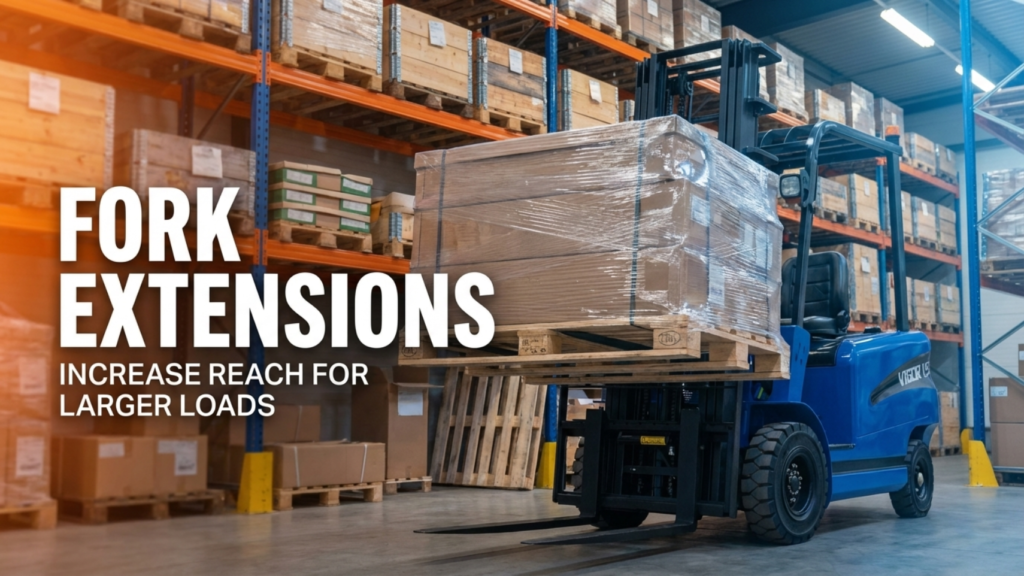
What Are Forklift Fork Extensions?
Before investing in new attachments, you must understand exactly how they interact with your equipment. Fork extensions are heavy-duty, sleeve-like attachments designed to slide directly over your existing forklift forks. They provide temporary additional length, allowing your machine to support loads that extend far beyond the physical reach of the standard carriage.
The Mechanics of Extended Reach
Standard forklift forks are engineered to handle standard pallets, typically measuring 48 inches in length. When you encounter a load that measures 72 inches or more, standard forks cannot provide adequate support under the center of gravity. This lack of support causes the pallet to bow, splinter, or collapse entirely during transit.
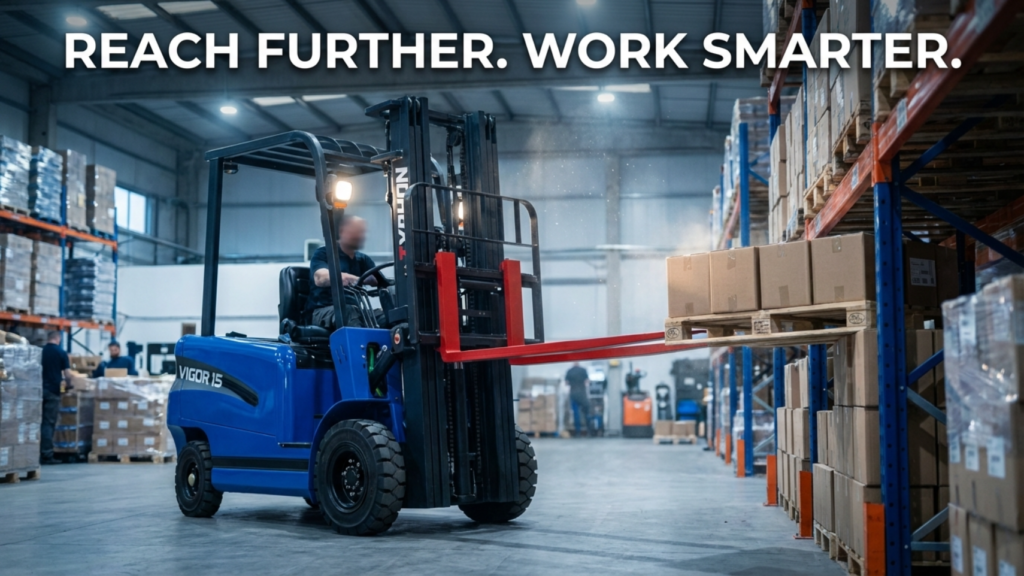
Fork extensions solve this problem by providing a rigid, elongated support base. The extension slides over the bare fork and locks securely into place, usually behind the heel of the fork using a heavy-duty steel retaining pin or strap. This creates a seamless, extended lifting surface that distributes the weight of the oversized load evenly across a much larger area.
Built for Durability and Reliability
We understand that you demand equipment that works as hard as your team does. High-quality fork extensions are manufactured from heavy-grade, high-tensile steel. This robust construction ensures they will not bend or warp under the immense pressure of a heavy payload.
Most extensions feature a fully welded design for maximum structural integrity. The tips are often tapered to allow operators to slide under pallets or slip sheets smoothly without tearing the packaging or damaging the underlying materials. When you choose premium steel extensions, you invest in a tool that delivers decades of reliable performance on your loading dock.
Strategic Applications for Fork Extensions
Fork extensions are not meant for everyday, standard pallet handling. They are specialized tools designed to solve specific logistical bottlenecks. Understanding when to deploy them will dramatically improve your facility’s material flow.
Mastering Double-Deep Stacking
Warehouse space is a premium asset. Many facilities utilize double-deep racking systems to maximize their square footage, placing one pallet directly behind another in the same rack location. A standard forklift cannot reach the rear pallet without special attachments.
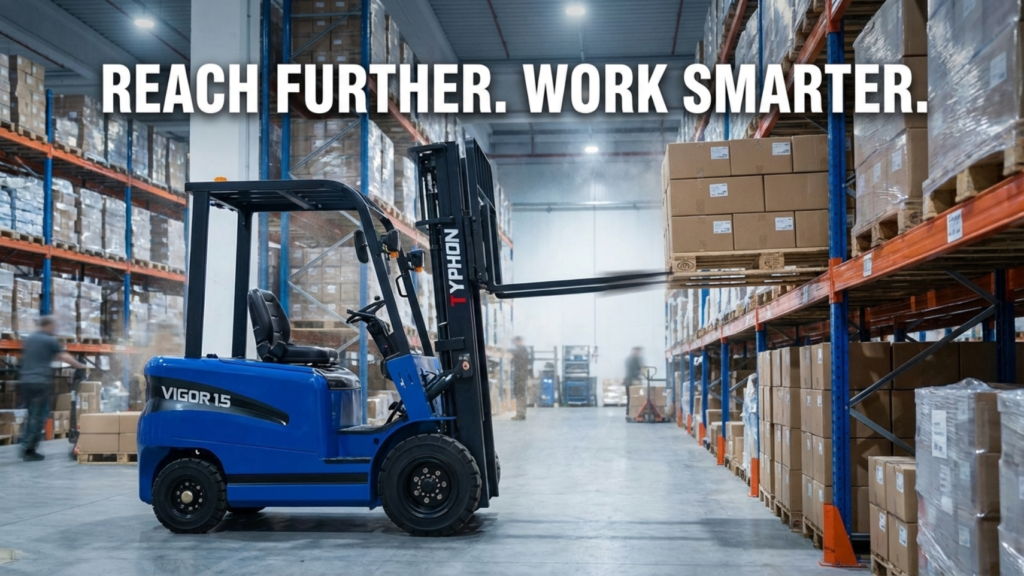
Fork extensions provide the exact reach necessary to access the second row of a double-deep configuration. Your operators can slide the extended forks smoothly into the rear pallet, lift it securely, and extract it without disturbing the inventory in adjacent slots. This capability allows you to increase your storage density without investing in expensive, specialized reach trucks.
Streamlining Single-Side Truck Loading
Loading and unloading flatbed trucks or curtain-side trailers often requires the forklift operator to access both sides of the vehicle. In cramped shipping yards, driving a forklift entirely around a large trailer wastes valuable time and creates unnecessary traffic hazards.
With fork extensions, an operator can load or unload an entire trailer from a single side. The extended reach allows the forks to push pallets all the way to the far side of the flatbed, or safely retrieve pallets positioned out of normal reach. This single-side loading technique cuts your turnaround times in half, keeping your shipping schedule highly efficient and strictly on time.
Handling Oversized and Irregular Loads
The manufacturing and construction industries frequently deal with materials that defy standard packaging. Long pipes, massive sheets of drywall, bulky industrial machinery, and oversized crates require specialized handling to prevent catastrophic load failure.
Fork extensions provide the elongated wheelbase necessary to cradle these irregular materials. By supporting the load across a wider span, extensions prevent the material from swaying, bowing, or slipping off the tips of the forks. This ensures that high-value, fragile materials make it from the storage yard to the production floor without suffering a single scratch.
The Financial and Operational Benefits
Every piece of equipment you introduce to your warehouse must justify its cost through tangible operational improvements. Fork extensions deliver an exceptionally high return on investment by optimizing the resources you already possess.
Maximizing Your Current Equipment Fleet
Purchasing a brand-new forklift with factory-extended forks requires a massive capital expenditure. If you only handle oversized loads a few times a week, that expensive machine will sit idle, draining your budget.
Fork extensions cost a fraction of the price of a new vehicle. They allow you to transform a standard sit-down counterbalanced forklift into an extended-reach machine in less than two minutes. Once the specialized task is complete, the operator removes the extensions, and the forklift immediately returns to standard duty. This versatility maximizes your equipment utilization and keeps your capital expenditures strictly under control.
Reducing Material and Facility Damage
When operators attempt to move oversized loads with standard forks, damage is almost inevitable. The unsupported weight causes pallets to snap, dropping expensive inventory onto the concrete floor. Furthermore, operators often resort to pushing or dragging heavy loads with the tips of standard forks, severely damaging both the material and your facility’s flooring.
Fork extensions eliminate these dangerous workarounds. By providing the correct tool for the job, you empower your operators to lift and transport oversized loads exactly as intended. This drastically reduces your inventory write-offs, prevents damage to your warehouse infrastructure, and protects your bottom line.
Boosting Daily Operational Efficiency
Efficiency drops dramatically when operators have to stop their workflow to figure out how to safely move an awkward piece of freight. They waste time looking for alternative lifting straps, calling for additional spotters, or breaking the load down into smaller, manageable pieces.
Equipping your facility with fork extensions removes this operational friction. When a large load arrives, the operator simply slides the extensions on, secures the retaining pins, and moves the material immediately. This seamless transition keeps your supply chain moving fluidly, ensuring you meet your production quotas and customer delivery deadlines without fail.
Crucial Safety Considerations and Best Practices
While fork extensions provide massive operational advantages, they also fundamentally alter the physics of your forklift. Safety is our ultimate priority, and you must manage these physical changes proactively to prevent accidents, tip-overs, and equipment damage.
The Mandatory 60 Percent Rule
The most critical safety regulation regarding fork extensions is the 60 percent rule. Industry standards and occupational safety guidelines dictate that the length of the fork extension cannot exceed 1.5 times the length of the underlying standard fork.
For example, if your standard forklift forks are 48 inches long, the maximum safe length for a fork extension is 72 inches. The standard fork must support at least 60 percent of the total extended length. If you use extensions that are too long, the leverage exerted on the tips of the underlying forks will cause them to bend, fracture, or snap entirely under load. You must enforce this rule rigidly to maintain structural integrity.
Understanding Load Center and Capacity Limits
Every forklift operates on a precise mathematical balance based on a specific load center. The load center is the horizontal distance from the vertical face of the forks to the center of gravity of the load. Standard forklifts typically calculate their maximum capacity based on a 24-inch load center.
When you use fork extensions, you push the load center further away from the forklift’s drive axle. This increased distance acts as a lever, drastically reducing the total weight the forklift can safely lift. A forklift rated for 5,000 pounds at a 24-inch load center might only safely lift 3,000 pounds when the load center shifts to 36 or 48 inches.
Consulting the Updated Data Plate
You cannot guess the new lifting capacity when using extensions. Operating blindly leads directly to forward tip-overs, endangering the operator’s life and destroying the cargo.
Whenever you introduce a new attachment to a forklift, you must have a qualified professional calculate the derated capacity. You must then install an updated data plate inside the operator cabin that clearly states the new maximum lifting limits when the extensions are in use. Your operators must be trained to consult this data plate before lifting any oversized load.
Proper Installation and Daily Inspection
The reliability of your equipment depends entirely on how well you maintain it. Fork extensions require strict installation procedures and consistent daily inspections to ensure they remain safe for heavy-duty operations.
Secure Installation Procedures
A fork extension is only safe if it remains firmly attached to the underlying fork. Never slide an extension over a fork without engaging the locking mechanism.
Most high-quality extensions utilize a heavy steel retaining pin that drops behind the heel of the standard fork. Ensure this pin is fully inserted and locked with a cotter pin or retaining clip. If an operator attempts to reverse out of a pallet without the retaining pin secured, the friction will pull the extension completely off the fork, creating a massive drop hazard in your aisles.
Inspecting for Wear and Tear
Your operators must inspect the fork extensions at the beginning of every shift, just as they inspect the forklift itself. Look closely for signs of metal fatigue, stress fractures, or deep gouges along the length of the steel sleeve.
Pay special attention to the load-bearing areas near the heel and the retaining pin holes. If the retaining pins are bent or the holes are elongated, the extension can shift dangerously during transit. If you detect any bowing, cracking, or severe wear, you must remove the extensions from service immediately. Never attempt to weld or repair a compromised fork extension; replace it to guarantee the safety of your team.
Operator Training for Extended Reach Handling
Providing the right equipment is only half the solution; your operators must know how to use it expertly. Driving a forklift with extended forks requires a distinct set of skills and a heightened sense of spatial awareness.
Adjusting Turning Radius and Clearances
Adding 24 to 36 inches to the front of a forklift drastically alters its turning radius. Operators accustomed to maneuvering standard forks will quickly find themselves clipping racking systems, pedestrian walkways, or adjacent machinery.
You must provide specific, hands-on training for operators using fork extensions. They must learn to swing wider when turning corners and approach intersections with extreme caution. Ensure your warehouse layout provides adequate aisle width to accommodate the extended forward profile of the machine.
The Dangers of Tip Loading
Fork extensions are designed to support a load evenly across their entire length. They are not designed to lift heavy weights exclusively at the very tips.
If an operator attempts to pick up a heavy, dense object using only the front six inches of the extension, the mechanical stress multiplies exponentially. This tip-loading concentrates the entire bending moment onto the thinnest part of the extension, leading to immediate structural failure. Train your operators to slide the extensions fully under the load, ensuring the weight rests as close to the backrest as physically possible.
Selecting the Right Fork Extensions for Your Fleet
To guarantee peak performance, you must purchase extensions that fit your existing forks perfectly. A poor fit leads to dangerous lateral movement and compromised lifting strength.
Measuring Your Existing Forks
Do not guess the dimensions of your standard forks. Use a tape measure to determine the exact width, thickness, and length of the forks currently on your machine.
The inside width of the fork extension should be no more than half an inch wider than the outside width of your standard fork. If the extension is too wide, it will slide side-to-side during transit, destabilizing the load and making precise pallet entry impossible. A snug, accurate fit ensures the extension acts as a rigid, seamless continuation of the original fork.
Choosing the Right Profile
Fork extensions generally come in two profiles: round-top and flat-top. Round-top extensions are typically easier to slide into standard wooden pallets, as the curved edges prevent the steel from catching on the pallet slats. Flat-top extensions offer a wider, more stable surface area, making them ideal for lifting oversized crates or unpalletized materials.
Evaluate the primary materials you handle daily. If your operations focus heavily on standard pallets and slip sheets, round-top extensions provide smoother entry. If you handle custom manufacturing crates, flat-top extensions offer superior load stability.
Elevate Your Material Handling Capabilities
Your warehouse operations demand flexibility, precision, and absolute safety. By equipping your fleet with high-quality fork extensions, you empower your team to handle oversized, double-deep, and awkward loads with total confidence.
These essential attachments maximize the value of your existing machinery, protect your valuable inventory from handling damage, and streamline your daily workflows. However, reaping these benefits requires strict adherence to capacity limits, installation protocols, and rigorous operator training.
We are committed to helping you build a safer, more efficient facility. Evaluate your current material handling challenges to determine where extended reach can eliminate your operational bottlenecks. Partner with a trusted material handling expert to source the exact fork extensions that match your equipment specifications and secure your supply chain for the future.
Comments
Add a Review
Your email address will not be published. Required fields are marked*


Micah4302
https://shorturl.fm/79fFf
Beatrice1142
https://shorturl.fm/OufMP
Mathew320
https://shorturl.fm/sFkBC