
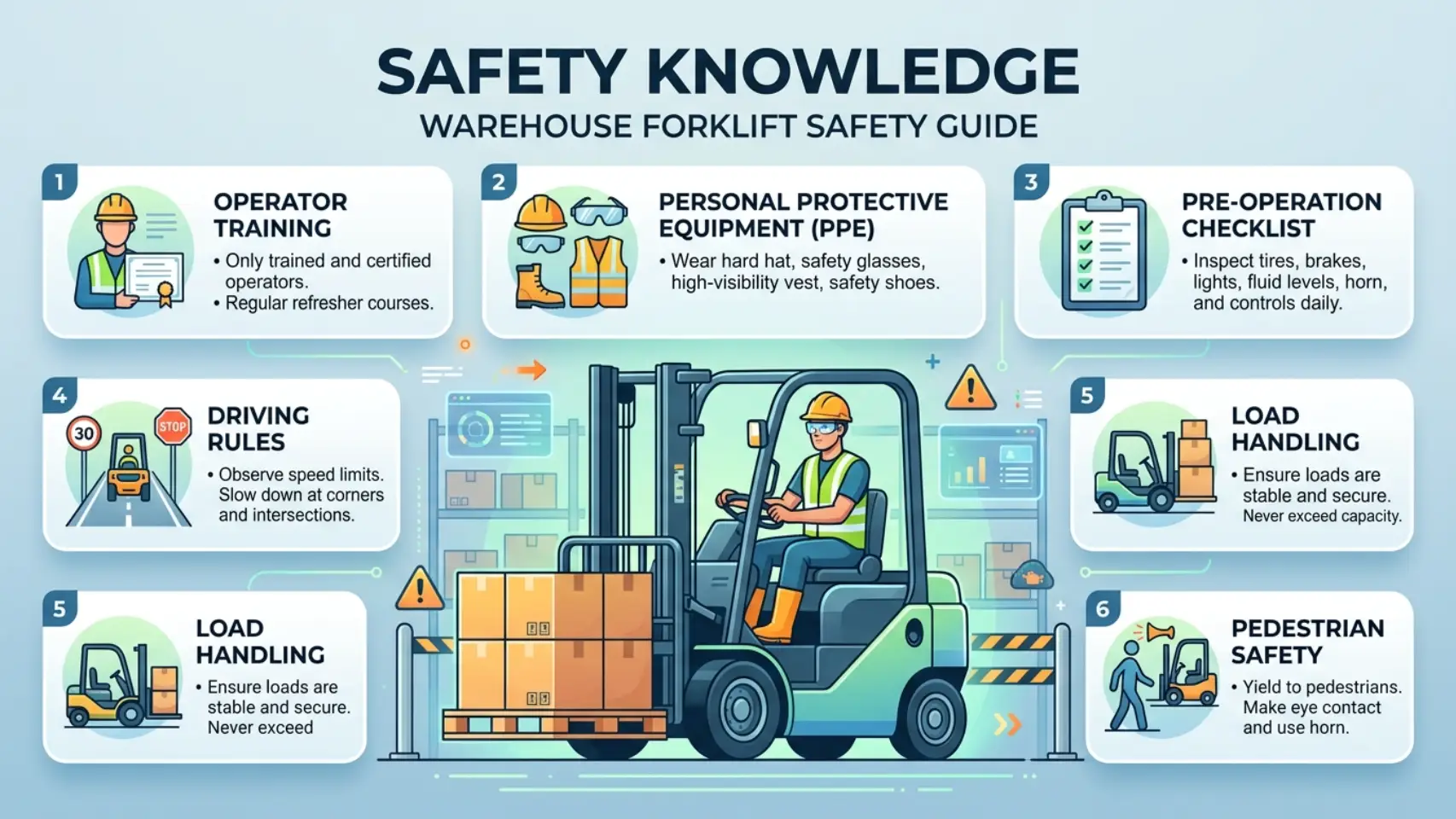
Essential Safety Tips for Forklift Operators
Forklift Safety Tips for Proper Load Handling.
Every shift in a busy distribution center relies on heavy machinery. Forklifts serve as the powerful engines that keep supply chains moving and customers satisfied. However, these massive vehicles require immense respect and diligent oversight. According to the Occupational Safety and Health Administration (OSHA), forklift-related incidents account for more than 7,000 nonfatal injuries and approximately 85 fatalities annually in the United States alone—a stark reminder of the very real risks present on the warehouse floor.
Common accidents include collisions with pedestrians, tip-overs due to improper load handling, and falls from elevated forklifts. Each of these incidents can lead to significant downtime, costly medical claims, and even long-term operational setbacks. Facility managers cannot afford to overlook the vital link between robust safety practices and overall warehouse efficiency. Proper adherence to safety protocols not only protects your personnel and inventory but also ensures reliable, uninterrupted service for your customers.
In modern warehousing, where precision, speed, and reliability define competitive advantage, comprehensive forklift safety is non-negotiable. A rigorous commitment to safety doesn’t just reduce accident rates—it directly improves productivity, reduces equipment and product damage, and builds a culture of trust and accountability. In this environment, every safe shift reinforces your facility’s reputation for reliability and customer satisfaction.
Without strict safety protocols, a standard material handling task can quickly become a serious hazard.
Facility managers and operators must work together to prioritize workplace safety. You protect your personnel, secure your valuable inventory, and maintain peak operational efficiency when you commit to proper safety standards. A safe warehouse is a productive warehouse.
This guide provides actionable safety tips for forklift operators at every experience level. We will explore the critical importance of pre-shift inspections, outline strategies for proper load handling, and detail how to navigate high-traffic areas. You will also learn why adhering to OSHA regulations and investing in continuous training builds a foundation of reliability and trust for your business.
The Critical Role of Pre-Shift Inspections
Safety begins long before you turn the ignition key. You must verify that your equipment is in perfect working order before attempting to lift a single pallet. A rigorous pre-shift inspection represents your first line of defense against equipment failure and workplace accidents.
Pre-shift inspections are critical for identifying hazards that could lead to costly downtime, equipment damage, or serious injury if left unchecked. For example, undetected hydraulic fluid leaks can reduce lifting power and may cause a sudden loss of control while raising heavy loads. Severely worn tires can lead to instability, making the forklift more susceptible to tip-overs, especially when transporting uneven or oversized pallets. Cracked or bent forks put both the operator and bystanders at immediate risk if a load unexpectedly falls. Electrical issues, such as malfunctioning lights or backup alarms, compromise visibility and communication on a busy warehouse floor, increasing the likelihood of collisions—particularly in high-traffic areas.
Beyond these mechanical dangers, failing to spot broken seat belts or missing safety pins can result in regulatory violations and heavy fines. By performing a detailed inspection before every shift, you create an opportunity to address small issues—like frayed hoses, loose chains, or obstructed pedals—before they escalate into major threats to safety and operations. Documenting each inspection not only satisfies OSHA requirements but also reinforces a culture of accountability, signaling to every team member that safety is a top operational priority.
Conducting Thorough Visual Checks
Start your shift by walking completely around the forklift. Look for obvious signs of damage or wear from the previous shift. Check the floor underneath the vehicle for puddles, which indicate dangerous hydraulic fluid or oil leaks.
Examine the tires for deep gouges, chunking, or under-inflation. Damaged tires severely compromise the stability of the forklift, especially when carrying heavy loads. Next, inspect the mast chains and hoses. Make sure they possess proper tension and show no signs of fraying. Finally, check the forks themselves. Look for cracks along the heel and ensure the retaining pins lock securely into place. If you find any physical defects, tag the machine out of service immediately and notify your maintenance supervisor.
Verifying Operational Controls
Once the visual inspection is complete, sit in the operator’s cabin and test the mechanical controls. Fasten your seatbelt securely. Turn on the engine and listen for unusual grinding or squealing noises.
Test the lift, tilt, and side-shift functions fully. The mast should move smoothly without jerking or catching. Check the brakes, including the parking brake, to ensure they engage firmly. Test the horn, backup alarm, and headlights. In a noisy warehouse, these auditory and visual warning systems are absolutely essential for pedestrian safety. Never operate a forklift if any of these basic control systems fail your inspection.
Mastering Proper Load Handling
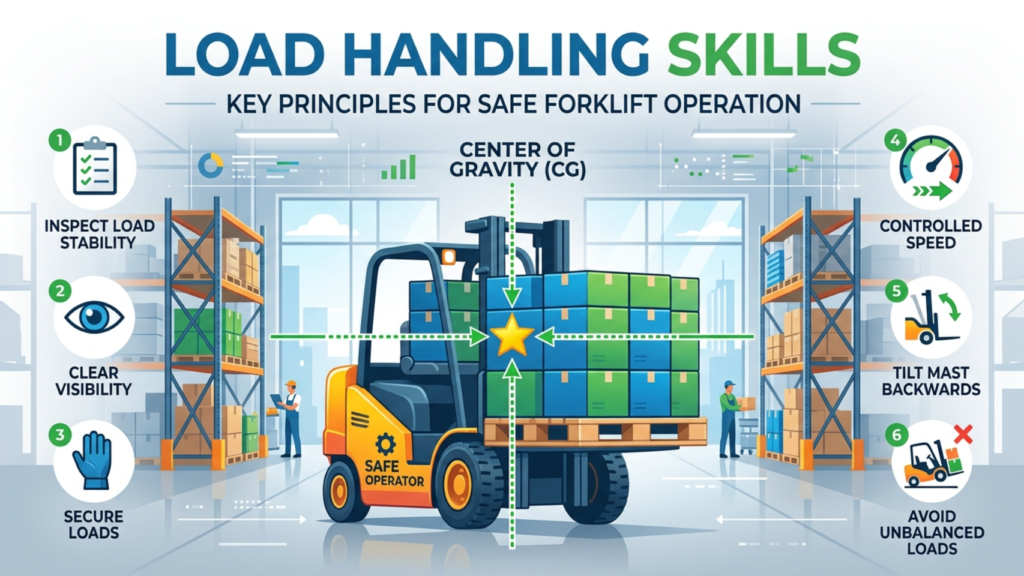
Moving heavy freight safely requires a deep understanding of physics, mechanical limits, and careful attention to best practices every step of the way. Ensuring each load is properly secured not only protects your product and equipment but also plays a vital role in maintaining workplace safety.
Step-by-Step Tips for Secure Load Handling
- Inspect the Load Before Moving
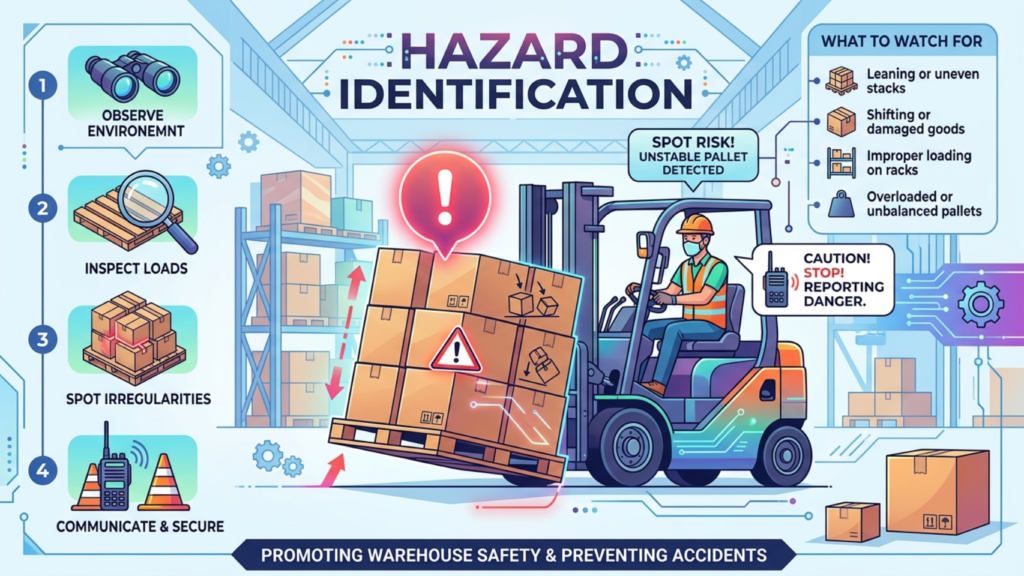
Always visually inspect the load for shifted items, damaged packaging, uneven stacking, or protruding materials. If you notice instability or loose wrapping, request that the load be restacked or secured before proceeding. - Position the Forks Correctly
Adjust the forks so they’re as wide apart as possible and evenly spaced under the load for maximum stability. Both forks should fully engage the pallet or load base to properly support the weight. - Center the Load on the Forks
Place the load evenly between the forks, ensuring the weight is balanced on both sides. Centering the load minimizes lateral tipping and strain on the forklift mast. - Lift Smoothly and Evenly
Raise the load slowly and only as high as necessary to clear ground obstacles. Avoid jerky movements or rapid acceleration, as these can destabilize the freight. Keep the mast slightly tilted back to bring the load’s center of gravity closer to the vehicle. - Check Overhead Clearance
Before lifting, make sure there is sufficient overhead clearance—especially when working near low-hanging structures, sprinkler heads, or stacked goods. - Tilt and Secure the Load
Once elevated, tilt the mast back gently. This action secures the load against the backrest, reducing the risk of forward slippage. Never travel with the mast tilted forward or the load raised high above the floor unless stacking at height. - Travel With Load Low and Mast Back
During transit, keep the load just a few inches above the ground and the mast tilted back. This improves stability and visibility, lowers the risk of tip-over, and allows for quicker emergency stopping. - Adjust Speed for Weight and Terrain
Heavier or top-heavy loads require slower travel speeds and wider turning radii, especially when navigating ramps or uneven surfaces. Reduce speed when making turns and steer smoothly to avoid sudden lateral shifts. - Avoid Sudden Starts and Stops
Abrupt movements can unbalance the load or cause it to fall. Accelerate and brake gradually, paying special attention when reversing or stopping on inclines. - Stay Aware of Surroundings
Use your horn and visually scan for pedestrians and obstacles, especially at intersections or blind corners. Maintain extra space around the forklift when carrying oversized or tall loads. - Stack Loads Safely
When stacking, ensure the base is stable and strong enough to support additional weight. Place heavier loads at the bottom and lighter ones on top. Approach the stack squarely, raise the load to the desired height, inch forward, and set the load down slowly. Withdraw the forks carefully to avoid shifting the newly stacked goods. - Double-Check After Delivery
Once the load is placed, visually confirm it is stable and properly seated before withdrawing the forks and moving away. If you notice any instability, address it at once to prevent future accidents.
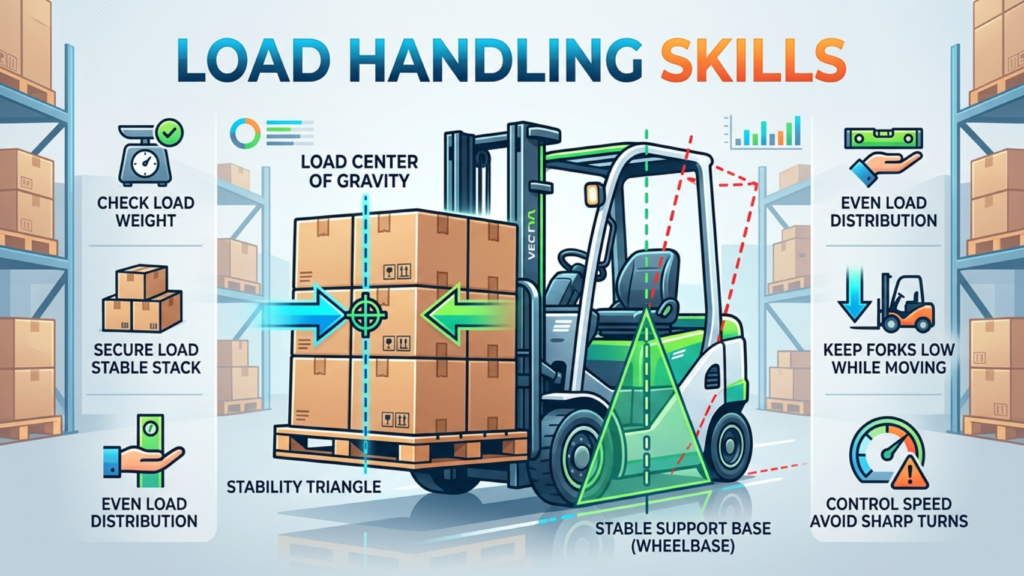
Applying these procedures every time you move freight ensures safe, reliable, and efficient material handling. Establishing standard operating procedures for load handling and reinforcing them in regular training keeps both operators and inventory secure, demonstrating a true commitment to operational excellence and customer satisfaction.
Understanding Capacity and Center of Gravity
Every forklift features a data plate mounted clearly inside the cabin. This plate states the vehicle’s maximum safe lifting capacity at a specific load center. You must never exceed these weight limits.
Exceeding the rated capacity pushes the center of gravity too far forward. This acts as a dangerous lever, lifting the rear steering wheels off the ground and inviting a catastrophic forward tip-over. Always evaluate the weight of a pallet before inserting your forks. If a load seems too heavy, break it down into smaller, manageable packets. We always recommend making two safe trips rather than one hazardous attempt.
Securing and Transporting Freight
When approaching a load, square up the forklift perfectly. Adjust the forks to achieve the maximum possible spread. This wide stance provides the best lateral stability for the pallet.
Drive forward slowly until the load rests completely flush against the backrest. Before moving, tilt the mast backward slightly. This shifts the center of gravity closer to the drive axle, stabilizing the materials during transit. Always travel with the forks positioned just a few inches above the floor. Carrying a load high in the air drastically reduces the stability of the machine. If you need to travel down an incline with a heavy load, drive in reverse to prevent the freight from sliding off the forks.
Navigating High-Traffic Warehouse Areas
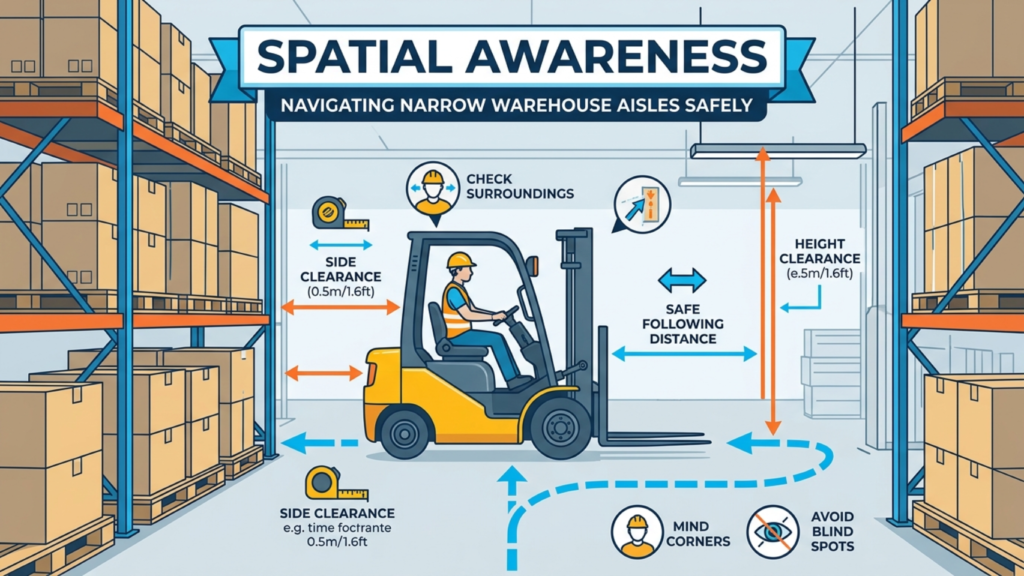
A distribution center features a constant flow of machinery, incoming trucks, and floor personnel. Navigating this dynamic environment demands more than just spatial awareness—it requires a proactive, safety-first mindset and effective strategies for real-time communication and hazard avoidance.
Maintain Clear Lines of Communication: Reliable communication is essential in high-traffic zones. Operators should use horns at intersections and blind corners, signal turns using designated lights, and make eye contact with pedestrians and other equipment operators to confirm awareness before moving. Two-way radios or hands-free headsets can further enhance coordination, especially in large or multi-shift warehouses. Clearly posted communication protocols should reinforce that all team members—not just operators—are responsible for announcing their movements and intentions when entering shared areas.
Leverage Safety Technology: Modern facilities can substantially boost operator safety with technological upgrades. Install motion sensors and blue- or red-line spotlights on forklifts to visually alert others of approaching equipment. Warehouse management systems (WMS) with real-time location tracking allow supervisors to monitor equipment and pedestrian movement, providing early warnings in congested aisles. Proximity alarms or wearable tags for pedestrians can trigger alerts if someone enters a high-risk zone, helping everyone maintain safe distances in real time.
Implement Designated Walkways and Signage: Marked pedestrian walkways, floor tape, and high-visibility signage make it clear where foot traffic is permitted and where machinery has the right of way. Clear visual cues minimize confusion in intersections and reduce the risk of accidents.
Adopt a Predictive Mindset: High-traffic areas require operators to anticipate actions by others. Reduce speed, increase following distances, and use mirrors or cameras installed on the forklift to check for blind spots. Remain alert to environmental changes such as new staging areas, blocked exits, or sudden congestion due to inbound deliveries.
Continuous Training on Traffic Awareness: Regular drills and ongoing education should emphasize safe practices for navigating congested areas, including the correct use of communication devices and the importance of vigilance. Encourage team members to report near-misses or areas of concern promptly so the facility can address traffic flow adjustments proactively.
By combining strategic communication, technology-based safeguards, and robust training, operators and warehouse personnel can effectively reduce incidents and keep productivity high.
Yielding the Right-of-Way to Pedestrians
Pedestrians always possess the right-of-way. As an operator, you must maintain a state of hyper-vigilance regarding ground staff. A loaded forklift can weigh over 10,000 pounds and cannot stop instantly.
Maintain a safe speed at all times. When you spot a pedestrian in your travel path, slow down, sound your horn, and make direct eye contact. Do not proceed until they acknowledge your presence and move to a safe distance. Never allow anyone to stand or walk beneath your elevated forks, even if the forklift is completely stationary.
Managing Blind Spots and Intersections
Warehouse aisles lined with tall racking systems create massive blind spots. You must approach every intersection and doorway with extreme caution.
Slow down to a crawl as you approach the end of an aisle. Sound your horn to warn unseen traffic of your approach. If your facility utilizes convex mirrors mounted to the ceiling, use them to check for cross-traffic. When carrying a bulky load that blocks your forward vision, you must drive in reverse. If driving in reverse is not possible, ask a spotter to guide you through the congested area safely.
Adhering Strictly to OSHA Regulations
Regulatory compliance forms the bedrock of professional warehouse management. The Occupational Safety and Health Administration (OSHA) provides clear, actionable guidelines designed to keep your workforce safe and your operations running smoothly. Following these regulations is not only a legal requirement—it signals to employees and customers that safety is your top priority and that you operate with the highest standards of reliability and trustworthiness.
Failure to adhere to OSHA standards can have serious consequences for both employers and operators. Common violations include allowing uncertified personnel to operate forklifts, failing to conduct regular equipment inspections, neglecting to provide or enforce the use of seatbelts, and improper parking or leaving forklifts unattended with forks elevated. Each of these violations increases the risk of accidents, from tip-overs and collisions with pedestrians to load spills and property damage.
Consequences can be severe: OSHA citations often result in substantial fines, mandatory corrective action, and in some cases, legal liability if negligence leads to injury. For example, facilities cited for repeated violations can face escalating penalties and increased scrutiny, while operators found to be non-compliant may be immediately removed from duty, impacting workforce productivity.
More importantly, non-compliance undermines employee morale and puts your company’s reputation at risk. In contrast, a demonstrated commitment to OSHA compliance supports a safe, orderly workplace where staff feel valued and customers trust your professionalism. Adopting OSHA best practices reduces workplace accidents, minimizes downtime from injuries or investigations, and aligns your facility with industry leaders who prioritize both efficiency and safety.
Certification and Compliance
OSHA strictly forbids uncertified personnel from operating powered industrial trucks. You must complete both formal classroom instruction and hands-on practical evaluations before driving independently.
This certification is not a one-time event. You must undergo re-evaluation at least once every three years. Furthermore, if you are involved in a near-miss incident or observed driving recklessly, you must complete immediate refresher training. This strict compliance ensures that only highly qualified professionals handle your expensive machinery and valuable inventory.
Parking and Shutting Down Safely
How you leave your forklift is just as important as how you drive it. OSHA mandates specific procedures for leaving a vehicle unattended to prevent accidental roll-aways.
When you park the forklift, choose a designated area that does not block fire exits, pedestrian walkways, or emergency equipment. Lower the forks completely until they rest flat on the floor. Neutralize all directional controls and set the parking brake firmly. Finally, turn off the engine and remove the key. Taking these final steps ensures the vehicle remains secure until the next certified operator begins their shift.
The Value of Continuous Safety Training
Safety is an ongoing commitment, not a static achievement. To maintain a truly safe environment, you must actively foster a culture of continuous learning and professional accountability. Ongoing training offers more than just regulatory compliance—it equips your operators with the knowledge and confidence to recognize new hazards, adapt to evolving procedures, and respond swiftly in high-pressure situations.
Numerous leading warehouses have set the standard by investing in structured and frequent safety training programs. For example, one national logistics provider reduced its forklift-related incidents by over 40% in a single year after launching mandatory monthly training sessions that included real-time demonstrations and scenario-based exercises. Operators were encouraged to share recent challenges and discuss near-miss situations in a team setting, turning individual experiences into valuable learning moments for all.
In another instance, a regional distribution center implemented peer-led safety audits and a reward system for reporting hazards. This initiative not only improved compliance metrics but also cultivated a sense of shared responsibility, with team members actively looking out for each other and intervening before unsafe actions could escalate into accidents.
Such comprehensive training programs typically combine classroom instruction, hands-on practice using actual facility equipment, and regular safety drills, including simulated emergencies like spills or stalled equipment. Many facilities also utilize digital learning platforms that enable operators to review OSHA regulations and best practices on demand, ensuring critical knowledge remains fresh and accessible.
Ultimately, continuous safety training is about driving accountability at every level. Supervisors and operators alike are empowered to report unsafe conditions or lapses in procedure without fear of negative repercussions. This open communication makes it far easier to correct problems before they lead to incidents, reinforcing a workplace culture where safety and reliability go hand in hand.
Preventing Tragic Accidents
Complacency represents the biggest threat to warehouse safety. When operators perform the same tasks daily, they often begin taking dangerous shortcuts. Continuous training disrupts this complacency.
Regular safety meetings remind operators of the severe consequences of reckless driving. Reviewing recent near-miss reports allows the team to learn from mistakes without suffering actual injuries. When you keep safety at the forefront of daily operations, you drastically reduce the frequency of collisions, product damage, and tragic workplace accidents.
Protecting Your Workforce
Your employees represent your company’s most valuable asset. Investing in their safety demonstrates your commitment to their long-term health and well-being.
When you prioritize rigorous training, you empower your staff to identify hazards and speak up about unsafe conditions. This proactive approach protects your workforce from debilitating injuries. It also protects your business from costly worker’s compensation claims and regulatory fines. A strong safety culture improves employee morale, reduces turnover, and ensures your operations run smoothly day after day.
Take Action to Secure Your Facility
Operating a forklift is a major responsibility that demands continuous focus and professional dedication. By mastering pre-shift inspections, load dynamics, and traffic management, operators ensure the safe movement of critical inventory.
We encourage facility managers to evaluate their current safety protocols today. Review your daily inspection checklists and verify that all operator certifications remain active and fully compliant with OSHA standards. Schedule regular refresher courses to eliminate complacency and reinforce proper handling techniques. When you equip your team with comprehensive knowledge and reliable equipment, you build a safer, faster, and highly efficient warehouse that consistently delivers excellence to your customers.


