
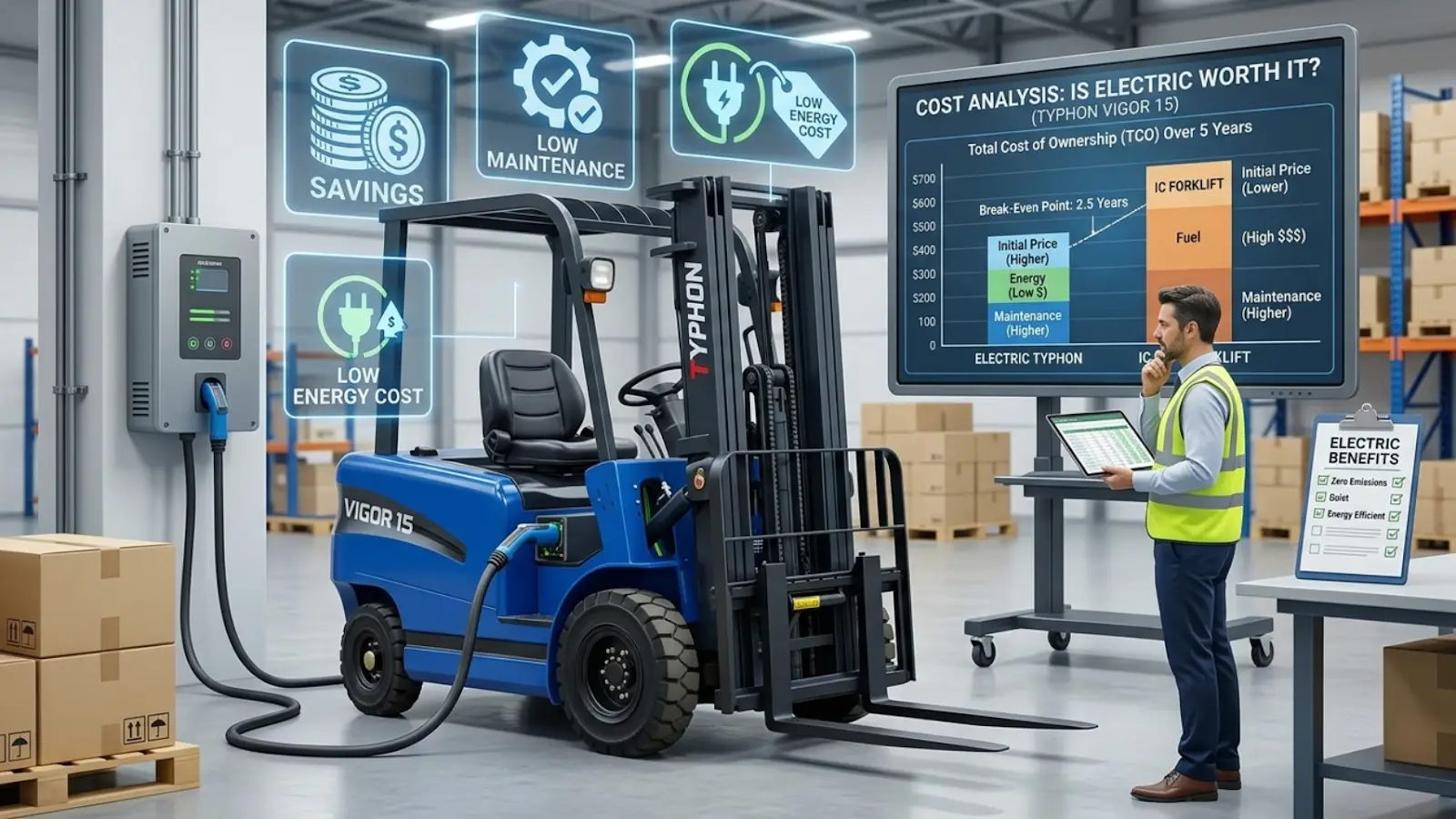
Cost Analysis: Is it worth it to buy electric forklifts?
To upgrade your material handling equipment, you need to carefully look over your operational budget. When considering new machines, the price tag only provides a partial view of the overall cost. You need tools that work well and actively protect your bottom line.
Many warehouse managers are unsure if switching from gas-powered forklifts to electric ones will save them money. Yes, but the details are important. To make an informed choice, you need to look at more than just the item’s price and figure out the total cost of ownership.
This detailed cost analysis looks at whether electric forklifts are a good investment. You will learn how to figure out the costs of upfront investments, the savings you can expect to see every day, and the long-term benefits of maintenance. By the end of this guide, you’ll know how to tell if an electric fleet fits with your business goals.
The Truth About Costs Up Front
When people think about buying electric forklifts, the most common thing that stops them is the initial cost. It’s true that machines that run on batteries usually cost more than those that run on diesel or propane. But you should think of this purchase as a long-term investment that will pay off in the long run, not just an expense.
Breakdown of the Initial Purchase Price
When you buy a regular forklift, you mostly pay for the machine. When you buy an electric forklift, you’re really buying the machine and the fuel it needs to run. The battery, whether it’s a modern lithium-ion battery or an old-fashioned lead-acid battery, makes up a large part of the total cost.
This makes the first bill higher, but you know how much your energy will cost from the start. You protect your business from sudden rises in fossil fuel prices. This financial stability makes it possible to make very accurate budget predictions for the equipment’s entire life.
Charging Stations and Infrastructure
To switch to electric power, you’ll need to introduce some changes to your building. You need to consider how much it will cost to put in charging stations and improve your electrical system.
You need to make a special charging room with good ventilation to handle off-gassing if you choose lead-acid batteries. Lithium-ion batteries do away with this need because you can put chargers right on the warehouse floor for opportunity charging. These electrical upgrades do cost money, but they are a one-time investment in the facility that will pay off for years to come.
Finding Daily Operational Savings
You can see how much money an electric forklift can save you when you use it every day. As soon as the equipment arrives at your warehouse, the savings on operations start to add up quickly, more than making up for the higher initial cost.
Cost of electricity vs. fuel
Prices for diesel and liquid propane are high and change based on what is happening in the world. Every week, refueling a fleet of traditional forklifts takes money out of your operating budget. In contrast, electricity is much cheaper and has very stable prices.
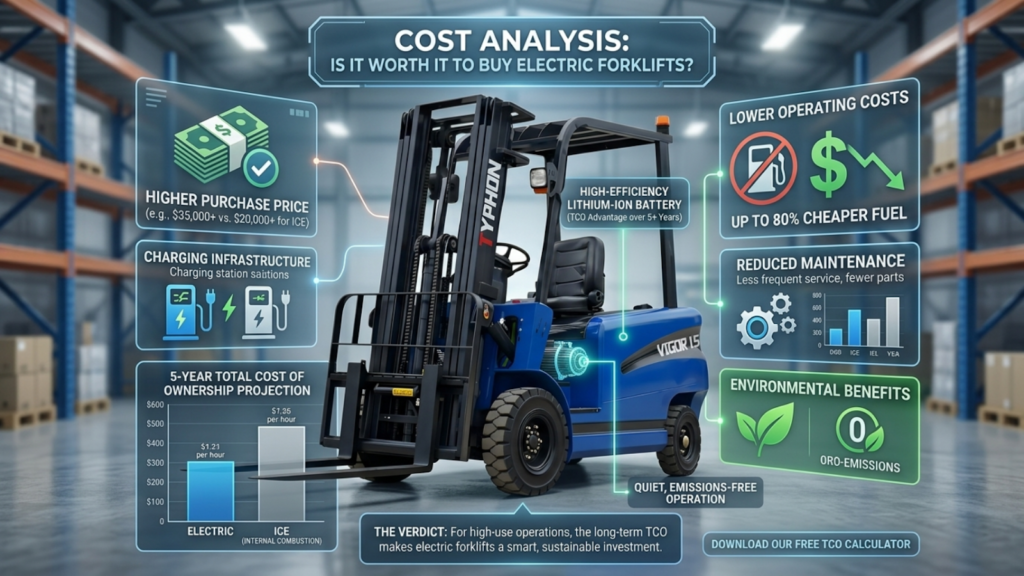
It costs a lot less to charge an electric forklift than it does to fill a propane tank for the same amount of time. If your facility runs on more than one shift, these fuel savings add up quickly. By switching from fossil fuels to other sources of energy, many warehouses were able to cut their daily energy costs by up to 70%.
How to Save Energy on the Floor
Electric forklifts use power much more efficiently than gas-powered forklifts. Heat and mechanical friction cause a diesel engine to lose a lot of energy. Electric motors deliver instant torque directly to the drive train and hydraulic systems.
This high energy efficiency means you get more lifting power per dollar spent. Modern electric models also feature regenerative braking. This technology captures kinetic energy when the machine slows down and feeds it back into the battery. This extends your runtime and lowers your daily electricity consumption even further.
Advantages of Long-Term Care
Downtime is the secret killer of warehouse profits. Every minute a machine sits waiting for repairs, you lose money. Electric forklifts drastically reduce these unexpected mechanical failures and lower your preventative maintenance bills.
Fewer Moving Parts
Engines that run on gasoline are very complicated. They depend on timing belts, spark plugs, pistons, and alternators. They also need to have their fluids changed all the time, like engine oil, transmission fluid, and radiator coolant.
Electric forklifts make this whole thing much easier. There aren’t many moving parts in the electric motor. You don’t need to change the spark plugs or the oil in the engine. This simpler design almost completely gets rid of the routine mechanical tune-ups that traditional fleets need. Your technicians spend less time fixing the machines, which keeps your labor costs low.
Longer lifespans and uptime
Electric forklifts put less stress on their internal parts because they vibrate less and run cooler than combustion engines. This greatly increases the machine’s overall lifespan by reducing wear and tear.
An electric forklift lasts much longer than a diesel forklift when you follow a simple maintenance schedule. You get more hours of work out of your first investment before you have to buy a new unit. High uptime means that your team can always be productive, which means they can meet tight shipping deadlines without any delays caused by equipment.
The Monetary Worth of Environmental Advantages
Going green is not just about corporate responsibility; it carries tangible financial advantages. Going green isn’t just the right thing to do for businesses; it can also save them money. The environmental benefits of electric forklifts have a direct effect on your tax and operating expenses.
Tax Incentives and Rebates
Governments and local municipalities actively encourage industrial facilities to reduce their carbon footprints. By purchasing zero-emission electric forklifts, your business likely qualifies for significant tax incentives and environmental rebates.
These financial kickbacks can cover a substantial portion of your initial infrastructure upgrades or battery purchases. Consult with your tax professional to identify specific green energy grants available in your region. Leveraging these programs accelerates your return on investment dramatically.
Improved Workplace Health
Diesel exhaust creates a hazardous work environment. To operate combustion engines indoors, you must run massive, energy-draining ventilation systems to maintain safe air quality.
Electric forklifts produce zero tailpipe emissions. You can shut down those expensive ventilation fans, saving thousands of dollars in electricity every year. Furthermore, eliminating toxic fumes and too much engine noise makes the workspace less healthy. A safer workplace lowers the number of workers’ compensation claims, lowers the number of employees who leave, and raises the overall productivity of the team.
Making the Final Decision for Your Fleet
Understanding the total cost of ownership provides you the confidence to make the right choice for your business. To determine if an electric forklift fits your specific needs, you must analyze your unique operational data.
Looking at Your Shift Patterns
Pay close attention to how you use it every day. A traditional forklift might seem like a good deal in the short term if you only have one light-duty shift. But if you run heavy loads for two or three shifts, an electric fleet is the clear winner when it comes to money.
When used frequently, electric equipment saves the most money on fuel and maintenance. Use advanced lithium-ion batteries with your high-demand schedules to keep your machines running 24/7 with rapid opportunity charging.
Finding out where you break even
Please contact your equipment provider to determine the exact break-even point. Look at how much it costs to buy an electric machine and charger up front and how much a diesel truck costs. Then, make a plan for how much money you expect to save each month on gas and repairs.
For most high-volume warehouses, the operational savings cover the initial price difference. For most warehouses that move a lot of goods, the savings on operations make up for the higher initial cost within the first two years of ownership. After that break-even point, the electric forklift makes money by keeping your daily costs very low.
Make sure your warehouse runs smoothly.
Forklifts that run on electricity are a smart and safe investment for the future of your business. They are the most reliable, eliminate costly fuel needs, and greatly reduce maintenance.
Take the next step by auditing your current fleet expenses. Track exactly what you spend on propane, diesel, and mechanical repairs over a standard quarter. Compare those numbers to the streamlined costs of electric operation. Partner with a trusted material handling expert to conduct a full site survey and find the exact electric models that will protect your budget and elevate your productivity.
Comments
Add a Review
Your email address will not be published. Required fields are marked*


chou chou
This so great
Paul4497
https://shorturl.fm/OufMP
Sylvia3929
https://shorturl.fm/HamsS