
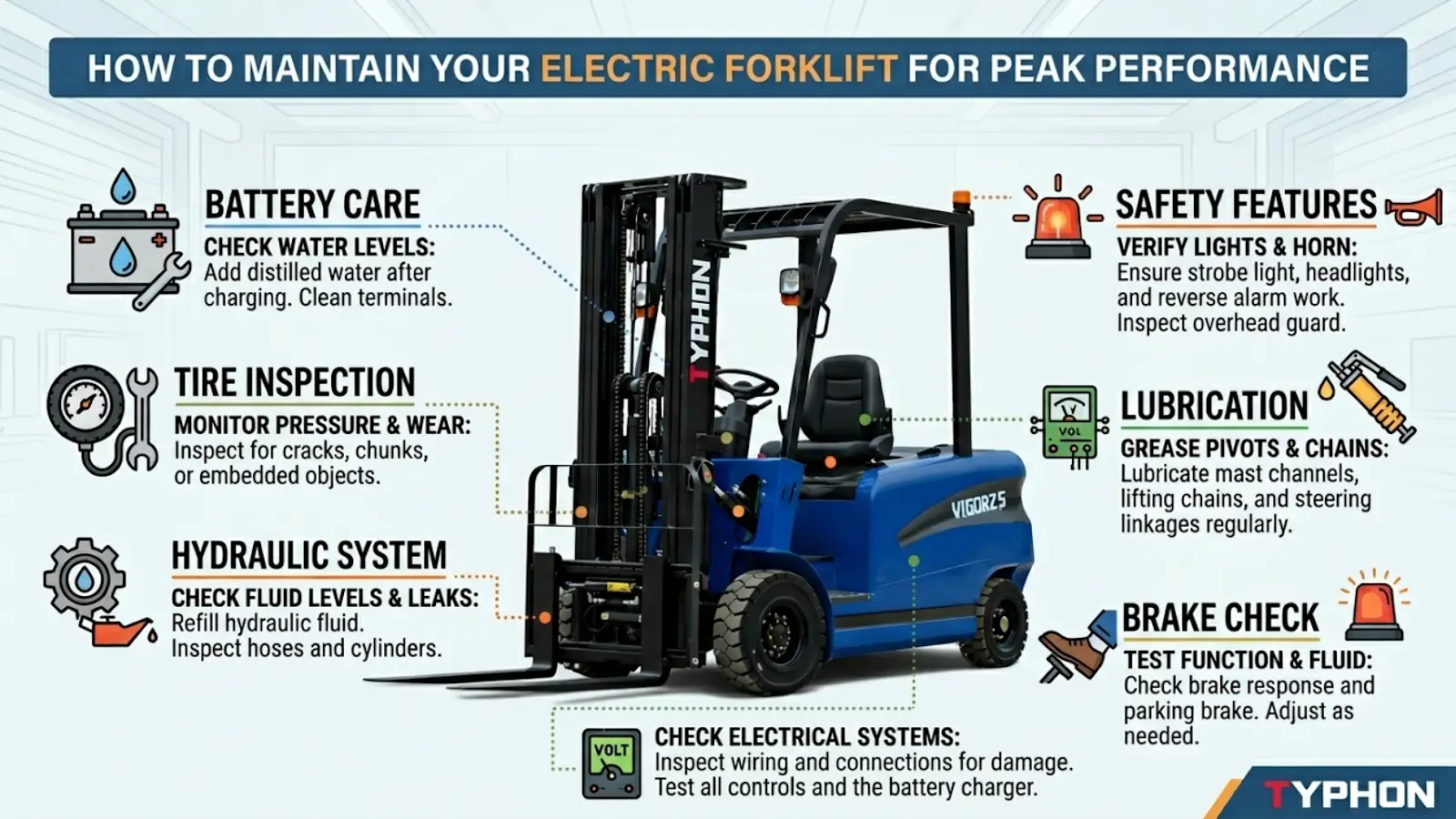
How to Maintain Your Electric Forklift for Peak Performance
Electric forklifts provide your warehouse with amazing power, zero emissions, and silent operation. They are a substantial investment in your day-to-day output. However, these vehicles require regular maintenance to produce dependable outcomes, just like any heavy machinery.
A neglected forklift drains your budget through unexpected breakdowns and safety hazards. On the other hand, a well-maintained fleet runs smoothly, keeps your operators safe, and boosts your bottom line. As business demands increase and your warehouse takes on more work, the reliability of your material handling equipment becomes more important than ever. By staying ahead of maintenance needs, your business can maintain a competitive edge through high uptime and responsive operations.
We know that it can be hard to keep track of warehouse tools. That’s why it’s so important to have a plan for keeping things up. Using checklists and scheduling services is a good way to make sure your investment keeps paying off for a long time.
This guide will show you exactly how to take care of your electric forklifts. This guide will show you exactly how to take care of your electric forklifts. We’ll talk about daily tasks, long-term care plans, and useful tips to help you get the most out of your gear. We’ll talk about daily tasks, long-term care plans, and useful tips to help you get the most out of your gear. These best practices will help warehouse managers, operators, and maintenance teams do their jobs more safely and efficiently. These best practices will help warehouse managers, operators, and maintenance teams do their jobs more safely and efficiently.
Why Regular Maintenance Is Non-Negotiable
Not doing scheduled maintenance is a risky move. Not doing scheduled maintenance is a risky move. Putting regular inspections at the top of your list protects your team, your equipment, and your inventory. Putting regular inspections at the top of your list protects your team, your equipment, and your inventory. This is why it’s important to keep up with maintenance. This is why it’s important to keep up with maintenance.
Drastically Reduced Downtime
You lose money every minute your forklift is broken down and not working. Routine checks find small problems before they become big ones. It only takes a few minutes to change a worn hydraulic hose. Cleaning up a big fluid spill and replacing a broken pump can stop your business for days.
Corporate clients depend on delivery schedules that are always the same and orders that are always correct. If your forklift breaks down when you’re busy, you won’t be able to get work done, you’ll miss deadlines, and your customers won’t be happy. Companies that put regular maintenance first have stable operations, which helps them keep their reputation for being reliable.
Enhanced Workplace Safety
Warehouse safety should always come first. Faulty brakes, worn tires, or steering issues can lead to severe accidents. Regular maintenance ensures your machines operate exactly as expected, keeping your operators and pedestrians out of harm’s way.
Accidents caused by neglected equipment not only endanger staff but can also lead to expensive worker compensation claims and operational shutdowns. OSHA emphasizes the importance of daily inspections for this very reason—safe equipment produces a safe and productive workplace.
Significant Cost Savings
Preventative care costs a fraction of emergency repairs. When you lubricate moving parts and monitor battery health, you extend the life of your equipment. You also maintain the machine’s energy efficiency, which keeps your daily charging costs down.
By investing in routine upkeep, you reduce the need for costly part replacements and minimize unplanned downtime. Moreover, scheduled maintenance can preserve your warranty coverage, helping you avoid unnecessary expenses.
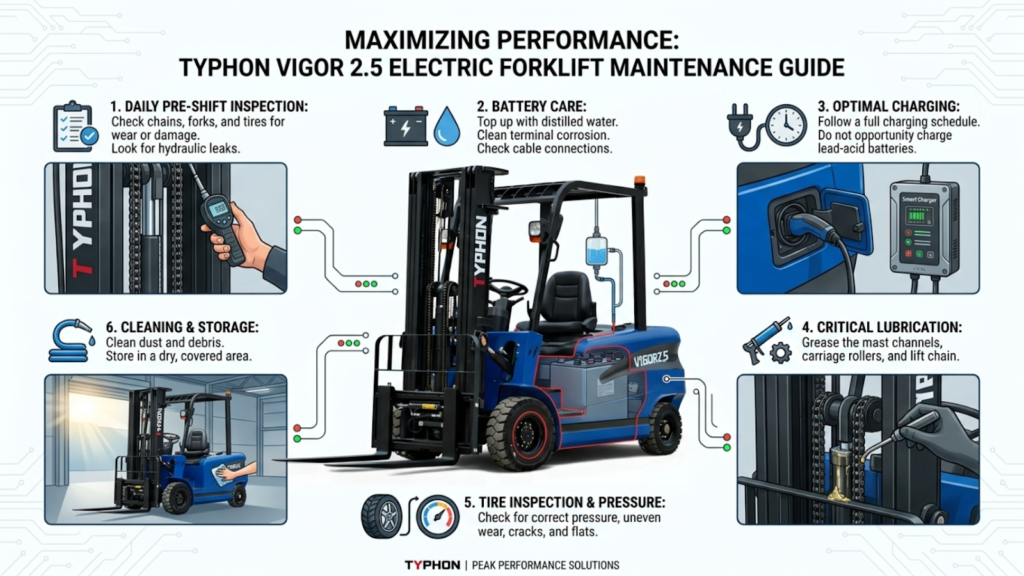
Things You Should Do to Keep Your Electric Forklift Running
Caring for an electric forklift is a little different than caring for a diesel or propane one. You don’t need to worry about changing the spark plugs or the oil in your engine. Instead, you should pay attention to the moving parts, the battery, and the electrical system.
To keep your electric fleet in good shape, you need to know what makes each vehicle different. Here are the main areas of maintenance to keep an eye on.
How to charge and care for batteries
Battery Care and Charging Routines
The battery is the heart of your electric forklift. Whether your fleet uses traditional lead-acid batteries or advanced lithium-ion technology, proper charging habits are crucial.
Lithium-Ion Batteries
Take advantage of opportunity charging for lithium-ion batteries. You can plug these batteries in during lunch breaks or when you change shifts without hurting their life. They are very efficient and require little work for busy warehouses because they can be charged quickly and don’t need any maintenance. Because they don’t need to be watered or equalized, they also lower the chance of operator error and chemical exposure.
Battery management systems (BMS) in modern lithium-ion batteries keep them from deep discharge, overcharging, and extreme temperatures. But it’s still important to check cables and connections every now and then for signs of wear and to keep the battery compartment clean and dry.
Batteries with Lead-Acid
Check the water levels in your lead-acid batteries every week. You should only add distilled water to them after the charging cycle is over. Never let a lead-acid battery drop below 20% charge, because doing so will permanently damage it. Always clean the battery terminals and get rid of any white, crusty corrosion.
When working on lead-acid batteries, be extra careful to wear gloves, goggles, and aprons. Acid exposure can cause serious injury. Putting a spill kit near charging stations makes operators even safer.
Make sure that the charging areas for both types of batteries are well-ventilated and don’t have any open flames. Keep track of how well each forklift’s batteries are working, and replace them as soon as you notice a drop in performance to avoid unexpected downtime.
Checking and changing tires
Every day, forklift tires carry huge loads. Your machine will be less stable, and the battery will have to work harder if the tires are worn.
Every day, check your tires for damage. Look for chunking, which is when pieces of the rubber come off. Look for flat spots that could make the ride bumpy and dangerous for the driver. If your forklift has cushion tires, keep an eye on the wear line. When the rubber wears down to the letters on the side of the tire, it’s time to get a new one.
Well-maintained tires keep the operator from getting tired, stop uneven loads, and help the forklift’s drivetrain last longer. Follow the manufacturer’s instructions for when to rotate tires, and keep track of when each unit in your fleet needs new tires or repairs in your fleet management records.
Brake System Checks
Electric forklifts often use regenerative braking, which takes some of the strain off the physical brake pads and extends their lifespan. However, mechanical brakes still require strict attention to ensure safe, reliable stopping power.
Listen for any grinding or squealing noises when the operator comes to a stop. Test the stopping distance at the beginning of every shift. If the pedal feels spongy or the machine takes too long to stop, pull it from service immediately. Check the brake fluid levels monthly and top them off with the manufacturer-recommended fluid.
Pay attention to sensor warnings and dashboard alerts related to the braking system. Failing to address brake issues can lead to brake failure and expose your warehouse to unnecessary risk.
Hydraulic System and Mast Maintenance
The mast handles the heavy lifting, relying heavily on a healthy hydraulic system. Inspect the hydraulic hoses for cracks, leaks, or severe wear. Even a pinhole leak can compromise your lifting capacity and create a slipping hazard on your warehouse floor.
Keep the mast channels clean and well-lubricated. Dirt and debris can mix with old grease, creating a thick paste that wears down the mast rollers. Wipe away old grease and apply a fresh, even coat according to your manual. Make sure the chains have proper tension and show no signs of rust or broken links.
Monitor your hydraulic oil levels, and replace the hydraulic fluid at the manufacturer’s recommended intervals. Promptly repair or replace worn hoses, seals, and cylinders to prevent further system damage and avoid hazardous spills on the warehouse floor.
Electrical System Checks
Because electric forklifts depend entirely on their electrical system, regular inspections are vital. Periodically examine all wiring harnesses, connectors, and fuses. Signs of loose connections, frayed wires, or overheating must be addressed immediately. Keep electrical terminals clean and protected from moisture.
If your forklift features onboard software or a telematics system, update firmware and review performance logs regularly for anomalies or early warning signs of trouble. These small steps go a long way to keep your equipment running at its full potential.
General Inspections and Daily Checklists
Train operators to conduct a daily walk-around inspection before every shift. This routine helps catch issues early and reinforces a culture of accountability. Typical daily checks include:
- Verifying the condition of the forks (no cracks or bends)
- Checking for fluid leaks or puddles under the equipment
- Testing lights, horn, and safety alarms
- Inspecting seat belts and operator restraints
- Ensuring the overhead guard is free of damaged welds or bolts
Maintain dated inspection records to ensure compliance with workplace safety standards.
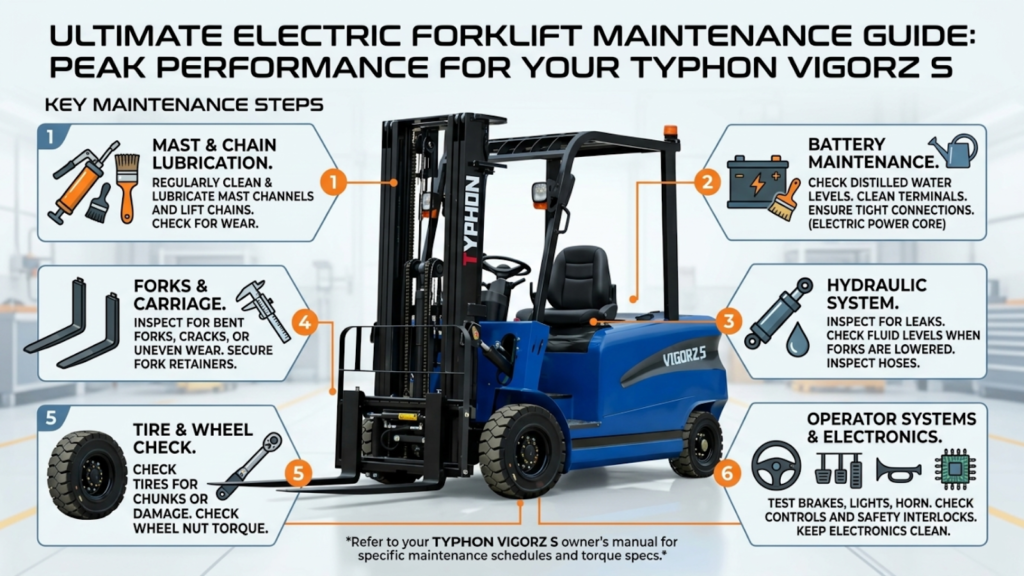
Actionable Advice for Warehouse Managers
As a warehouse manager, you control the culture of safety and responsibility in your facility. Your operators look to you for guidance on how to treat the equipment.
Implement a mandatory daily checklist. Require every operator to complete a pre-shift inspection before turning the key. This checklist should include visual checks of the tires, forks, safety lights, and a quick test of the horn and brakes. Keep these records logged digitally or on paper.
Invest in operator training. A machine is only as good as the person driving it. Train your team to handle electric forklifts properly. Teach them to avoid slamming on the brakes, taking corners too fast, or lifting loads that exceed the rated capacity. Gentle operation significantly extends the life of the internal components.
Schedule professional servicing. Your team can handle daily and weekly checks, but you still need a certified technician for heavy maintenance. Schedule professional inspections every 250 to 500 operating hours. A trained expert will check the internal motor components, test the electrical circuitry, and ensure the machine meets all safety regulations.
Focus on documentation and record-keeping. Utilize digital maintenance tracking tools to schedule and log inspections, repairs, and replacements. Well-kept maintenance logs help identify recurring issues and demonstrate regulatory compliance during audits.
Encourage a proactive safety culture. Empower staff to report any abnormal noise, vibration, or performance change, and ensure they know whom to notify. Respond quickly to reported issues and avoid the temptation to delay repairs.
Audit spare parts inventory. Keep essential replacement parts on hand—such as fuses, hoses, and filters—so small repairs can be addressed promptly, minimizing downtime and wait times for critical repairs.
Review manufacturer guidelines. Each model has its own unique requirements. Keep digital or printed copies of manuals available and ensure maintenance procedures align with official recommendations.
Tips for Extending the Lifespan of Your Equipment
You want your 1.5 to 3-ton lifters working hard for years to come. Follow these specific strategies to maximize their lifespan.
Keep the Equipment Clean
Warehouses are dusty environments. Dust, shrink wrap, and debris easily get sucked into the forklift’s undercarriage. Blow out the motor compartments and radiators with compressed air weekly. A clean machine runs cooler and prevents the electrical systems from overheating.
Regular cleaning also prevents debris buildup in moving parts, which can wear down bearings, seals, and rollers prematurely. Make cleaning a scheduled part of your weekly or daily maintenance plan.
Never Ignore Warning Lights
Electric forklifts come equipped with smart dashboard displays. If a warning light flashes or an error code appears, do not ignore it. Stop the machine and consult your manual. Pushing a forklift through an error code often leads to catastrophic motor or battery failure.
Promptly responding to these alerts can reduce the severity of repairs required. Train your operators to recognize and act on dashboard warnings, and make clear that safety always comes before short-term productivity.
Store Equipment Properly
If you need to store a forklift for an extended period, do it correctly. Park the machine in a dry, temperature-controlled area. Lower the forks entirely to the ground to relieve pressure on the hydraulic system. If you are storing a machine with a lithium battery, leave it at roughly a 50% charge rather than fully charged or completely dead.
For lead-acid batteries, charge them fully and disconnect the cables. Regularly check the charge status during long-term storage. Covering your forklifts or storing them indoors protects them from dust, moisture, and UV damage, further extending their life.
Schedule Seasonal Maintenance
Beyond daily or weekly checks, implement a seasonal maintenance plan. Changes in temperature and humidity can impact battery efficiency, tire pressure, and component wear. Prepare your forklift fleet for busy seasons or extreme weather by scheduling additional inspections and preventive measures.
Partner with Trusted Service Providers
Establish a relationship with an experienced, reputable forklift service provider. Outsourced professionals can provide in-depth diagnostics, quick turnaround for major repairs, and updates on the latest maintenance best practices. Verify that service technicians are certified and familiar with your specific makes and models.
Monitor and Analyze Fleet Performance
Leverage telematics or fleet management software to collect and review data about runtime, error codes, power consumption, and maintenance history. Analyzing these metrics allows you to spot trends, predict problems before they escalate, and make evidence-based decisions about equipment replacement or upgrades.
Securing Your Warehouse Efficiency
Taking care of things properly isn’t just a chore; it’s what makes a warehouse work well. If you take care of your electric forklifts, they will always work well, have a lot of power, and be completely reliable.
Using preventative maintenance not only protects your investment, but it also makes the workplace safer, more efficient, and more profitable. Make a clear maintenance schedule, put money into ongoing operator training, and work with reliable support partners to get things done. A strong maintenance plan has regular checks, clean workspaces, and quick repairs as its main parts.
Today, make a clear plan for how to keep things up. Work with your operators to make sure that daily checks are done, the battery is healthy, and the moving parts are always lubricated. By being proactive, you can extend the life of your equipment, cut down on unexpected costs, and keep your business running smoothly, giving your customers reliable results every time.
Comments
Add a Review
Your email address will not be published. Required fields are marked*


Lewis4864
https://shorturl.fm/T4d5T
Aaron655
https://shorturl.fm/NKgkI
Alex4991
https://shorturl.fm/Otnbi