
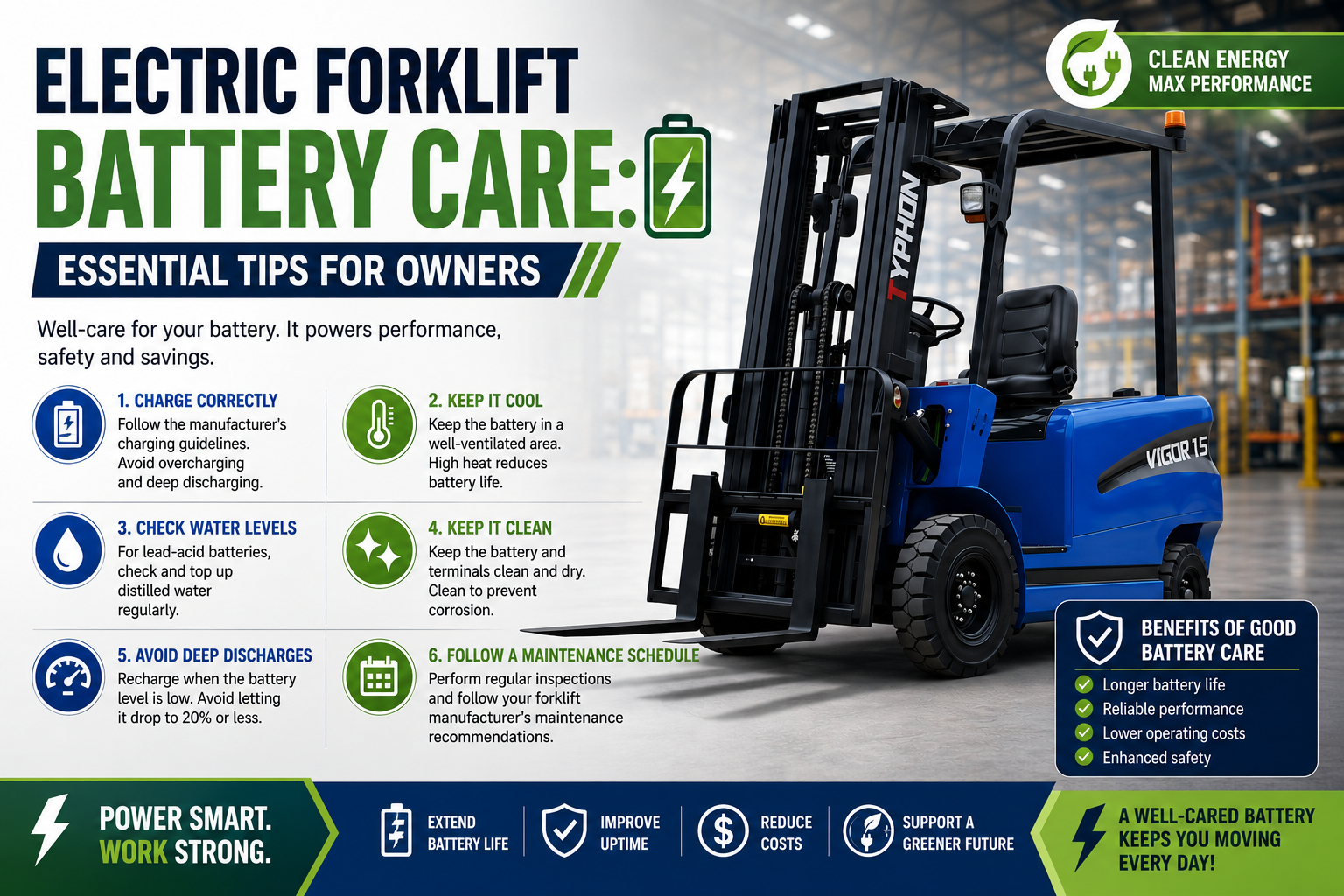
Electric Forklift Battery Care: Essential Tips for Owners
Battery Care Tips for Electric Forklift Owners
The battery serves as the heart of your electric forklift. Protecting this vital component ensures your equipment runs efficiently shift after shift. Proper battery maintenance directly improves your total cost of ownership, daily uptime, and workplace safety. By establishing strict care protocols, you extend the lifespan of your heavy machinery and protect your bottom line.
This guide outlines the essential practices every warehouse manager and maintenance team must follow to keep electric forklift batteries in peak condition.
Implement Proper Charging Habits
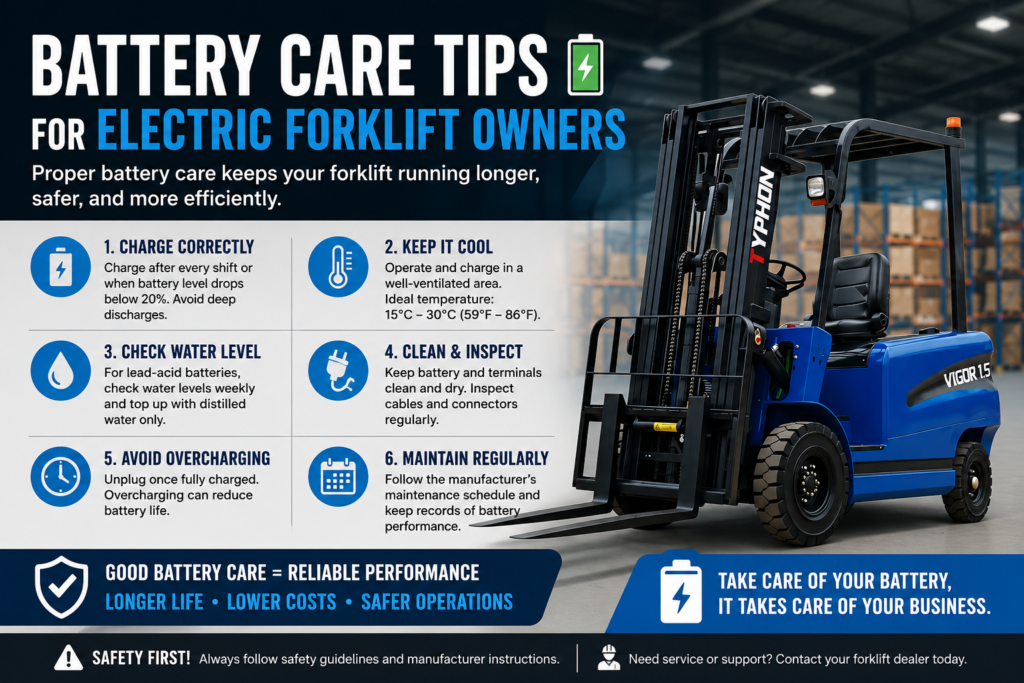
Your charging routine dictates the overall health of your battery. You must never allow an electric forklift battery to drop below a 20 percent charge. Pushing the battery into a deep discharge state damages the internal cells and drastically shortens its operational life.
When you connect the battery to the charger, allow it to reach a full 100 percent charge without interruption. Unplugging the battery mid-cycle confuses the battery memory and degrades its long-term capacity. For traditional lead-acid batteries, you should also schedule regular equalizing charges to balance the cell voltages, following your specific manufacturer guidelines.
Master Watering Practices for Lead-Acid Batteries
Lead-acid batteries require precise watering to function safely and efficiently. You must add water only after the battery finishes its complete charging cycle, never before. Charging expands the internal fluids. Adding water beforehand causes the battery to overflow, leading to dangerous acid spills and permanent capacity loss.
Always use clean, distilled water. The minerals found in standard tap water will coat the internal plates and ruin the battery cells. Fill the cells to the precise level indicated by the manufacturer, taking care not to overfill.
Maintain Clean and Secure Terminals
Acid buildup and corrosion on battery terminals create harmful electrical resistance. This forces the battery to work harder, generating excess heat and wasting energy.
Inspect the cables, plugs, and terminals weekly. You must clean away any white or green residue immediately. Use a specialized acid-neutralizing wash or a simple mixture of baking soda and water to clean the top of the battery. Rinse the area gently with clean water and wipe it completely dry. Ensure all cable connections remain perfectly tight to prevent dangerous electrical arcing.
Control Storage and Operating Temperatures
Extreme temperatures destroy battery performance. High heat accelerates internal wear and causes the battery fluids to evaporate rapidly. Freezing temperatures reduce the total power capacity and slow down the charge rates.
You must store and charge your forklift batteries in a climate-controlled, well-ventilated environment. During heavy warehouse shifts, monitor the battery temperature closely. Give the battery adequate time to cool down after a full charge before placing it back into service.
Monitor Performance and Follow Manufacturer Schedules
You cannot protect what you do not measure. Track your charge cycles, water consumption, and daily run times carefully. A sudden drop in shift performance or a rapid increase in water consumption signals a developing internal problem.
Always adhere strictly strictly to the maintenance schedule provided by your battery manufacturer. Routine inspections by trained technicians catch small issues before they require expensive replacements.
Build a Consistent Maintenance Routine
Consistent battery care guarantees long-term reliability. When you prioritize daily maintenance, you maximize your equipment lifespan and secure total operational efficiency across your facility.
Train your operators and maintenance teams on these exact standards. Build a strict, documented battery care routine today to keep your warehouse moving safely and profitably, without the burden of unexpected downtime.
Electric Forklift Battery Care: Essential Tips for Owners
Electric forklift battery care is the single most critical maintenance responsibility for any warehouse manager or fleet operator. The battery serves as the beating heart of your material handling equipment, and protecting this vital, expensive component ensures your machinery runs efficiently shift after shift. Comprehensive electric forklift battery care directly improves your total cost of ownership, daily uptime, and workplace safety. By establishing strict, well-documented care protocols, you extend the lifespan of your heavy machinery and aggressively protect your bottom line from unnecessary replacement costs.
This comprehensive guide outlines the essential practices every warehouse manager, forklift operator, and maintenance team must follow. From precise charging habits to daily visual inspections, mastering electric forklift battery care will keep your equipment in peak condition and your supply chain moving without interruption.
Implement Proper Charging Habits
Your daily charging routine dictates the overall health and longevity of your equipment. To maintain optimal electric forklift battery care, you must never allow the battery to drop below a 20 percent charge capacity. Pushing the battery into a deep discharge state, also known as “deadheading,” damages the internal lead plates and drastically shortens its operational life.
When you connect the battery to the charger, allow it to reach a full 100 percent charge without interruption. Unplugging the unit mid-cycle (known as opportunity charging, unless specifically designed for it like lithium-ion) confuses the battery memory and degrades its long-term capacity. For traditional lead-acid systems, proper electric forklift battery care also involves scheduling regular “equalizing” charges. This specialized overcharge balances the cell voltages and reverses early stages of sulfation, and should be performed exactly according to your manufacturer’s guidelines.
Master Watering Practices for Lead-Acid Batteries
If your fleet relies on traditional lead-acid units, precise and timely watering is a non-negotiable step in your electric forklift battery care program. You must add water only after the battery finishes its complete charging cycle and has had time to cool down—never before. Charging expands the internal fluids; adding water beforehand causes the battery to boil over and overflow, leading to dangerous acid spills, equipment corrosion, and permanent capacity loss.
- Use the Right Water: Always use clean, distilled, or deionized water. The minerals found in standard tap water will coat the internal plates and ruin the cells, completely defeating the purpose of your electric forklift battery care routine.
- Fill to the Correct Level: Fill the cells to the precise level indicated by the plastic manufacturer inserts, taking extreme care not to overfill the reservoir.
Maintain Clean and Secure Terminals
Acid buildup and corrosion on battery terminals create harmful electrical resistance. This forces the battery and the forklift’s motor to work significantly harder, generating excess heat and wasting valuable electrical energy.
When conducting routine electric forklift battery care, your team should inspect the cables, connector plugs, and terminals weekly. You must clean away any white or green crystalline residue immediately. Use a specialized acid-neutralizing wash or a simple, homemade mixture of baking soda and water to scrub the top of the unit. Rinse the area gently with clean water and wipe it completely dry. Finally, ensure all cable connections remain perfectly tight and unfrayed to prevent dangerous electrical arcing during operation.
Control Storage and Operating Temperatures
Extreme temperatures destroy battery performance, making climate control a major factor in effective electric forklift battery care. High heat accelerates internal component wear and causes essential fluids to evaporate rapidly. Conversely, freezing winter temperatures reduce the total power capacity, slow down charge rates, and can even freeze the electrolytes if the battery is discharged.
You must store and charge your forklift batteries in a climate-controlled, well-ventilated environment. During heavy warehouse shifts in the summer, monitor the battery temperature closely. Good electric forklift battery care means giving the battery adequate time to rest and cool down after a full charge before placing it back into heavy service.
Prioritize Safety Gear and Handling Equipment
Executing an electric forklift battery care routine requires handling heavy equipment and hazardous chemicals. Industrial batteries can weigh thousands of pounds and contain highly corrosive sulfuric acid.
Always equip your maintenance staff with the proper Personal Protective Equipment (PPE), including acid-resistant gloves, safety goggles, and face shields. Furthermore, never attempt to lift a battery manually or with inappropriate tools; always use a dedicated battery hoist, extraction gantry, or specifically designed pallet jack to move batteries safely between the forklift and the charging station.
Monitor Performance and Follow Manufacturer Schedules
You cannot protect what you do not measure. Track your charge cycles, water consumption rates, and daily run times carefully in a dedicated logbook or fleet management software. A sudden drop in shift performance or a rapid, unexplained increase in water consumption signals a developing internal problem.
Always adhere strictly to the maintenance schedule provided by your manufacturer. Routine inspections by trained technicians catch small issues before they require expensive replacements, acting as the ultimate failsafe for your warehouse’s electric forklift battery care program.
By building a consistent, documented maintenance routine, you maximize your equipment’s lifespan and secure total operational efficiency across your entire facility.
Electric Forklift Battery Care: Essential Tips for Owners
Electric forklift battery care is the single most critical maintenance responsibility for any warehouse manager or fleet operator. The battery serves as the beating heart of your material handling equipment, and protecting this vital, expensive component ensures your machinery runs efficiently shift after shift. Comprehensive electric forklift battery care directly improves your total cost of ownership, daily uptime, and workplace safety. By establishing strict, well-documented care protocols, you extend the lifespan of your heavy machinery and aggressively protect your bottom line from unnecessary replacement costs.
This comprehensive guide outlines the essential practices every warehouse manager, forklift operator, and maintenance team must follow. From precise charging habits to daily visual inspections, mastering electric forklift battery care will keep your equipment in peak condition and your supply chain moving without interruption.
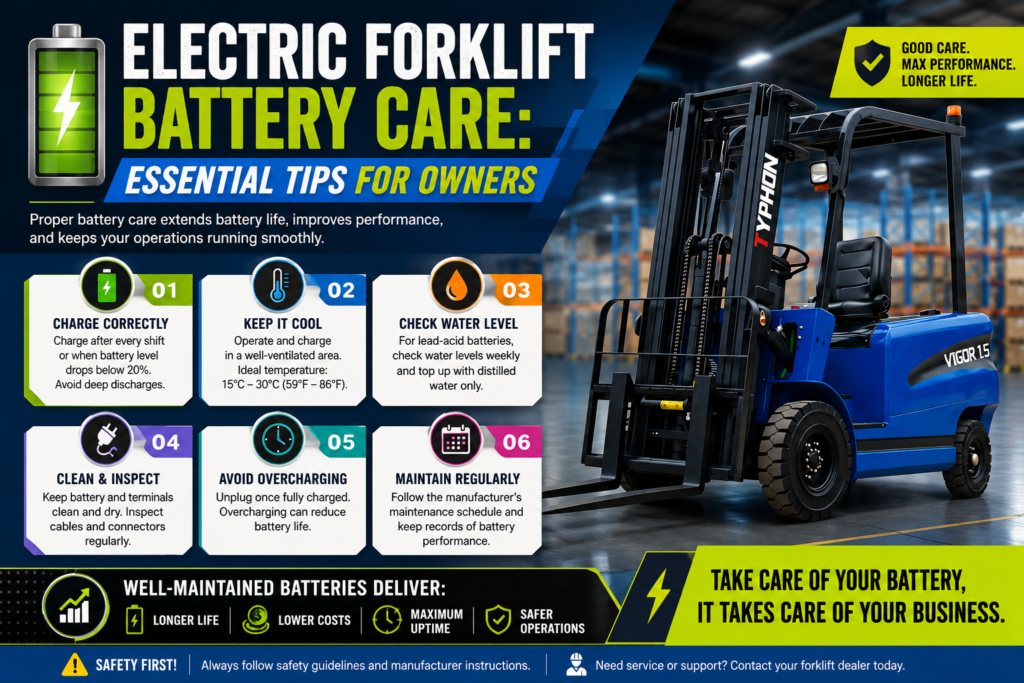
Implement Proper Charging Habits
Your daily charging routine dictates the overall health and longevity of your equipment. To maintain optimal electric forklift battery care, you must never allow the battery to drop below a 20 percent charge capacity. Pushing the battery into a deep discharge state, also known as “deadheading,” damages the internal lead plates and drastically shortens its operational life.
When you connect the battery to the charger, allow it to reach a full 100 percent charge without interruption. Unplugging the unit mid-cycle (known as opportunity charging, unless specifically designed for it like lithium-ion) confuses the battery memory and degrades its long-term capacity. For traditional lead-acid systems, proper electric forklift battery care also involves scheduling regular “equalizing” charges. This specialized overcharge balances the cell voltages and reverses early stages of sulfation, and should be performed exactly according to your manufacturer’s guidelines and the safety standards outlined by the Occupational Safety and Health Administration (OSHA).
Master Watering Practices for Lead-Acid Batteries
If your fleet relies on traditional lead-acid units, precise and timely watering is a non-negotiable step in your electric forklift battery care program. You must add water only after the battery finishes its complete charging cycle and has had time to cool down—never before. Charging expands the internal fluids; adding water beforehand causes the battery to boil over and overflow, leading to dangerous acid spills, equipment corrosion, and permanent capacity loss.
- Use the Right Water: Always use clean, distilled, or deionized water. The minerals found in standard tap water will coat the internal plates and ruin the cells, completely defeating the purpose of your electric forklift battery care routine.
- Fill to the Correct Level: Fill the cells to the precise level indicated by the plastic manufacturer inserts, taking extreme care not to overfill the reservoir.
Maintain Clean and Secure Terminals
Acid buildup and corrosion on battery terminals create harmful electrical resistance. This forces the battery and the forklift’s motor to work significantly harder, generating excess heat and wasting valuable electrical energy.
When conducting routine electric forklift battery care, your team should inspect the cables, connector plugs, and terminals weekly. You must clean away any white or green crystalline residue immediately. Use a specialized acid-neutralizing wash or a simple, homemade mixture of baking soda and water to scrub the top of the unit. Rinse the area gently with clean water and wipe it completely dry. Finally, ensure all cable connections remain perfectly tight and unfrayed to prevent dangerous electrical arcing during operation. For a broader look at machine upkeep, review our internal Forklift Preventative Maintenance Guide.
Control Storage and Operating Temperatures
Extreme temperatures destroy battery performance, making climate control a major factor in effective electric forklift battery care. High heat accelerates internal component wear and causes essential fluids to evaporate rapidly. Conversely, freezing winter temperatures reduce the total power capacity, slow down charge rates, and can even freeze the electrolytes if the battery is severely discharged.
You must store and charge your forklift batteries in a climate-controlled, well-ventilated environment. During heavy warehouse shifts in the summer, monitor the battery temperature closely. Good electric forklift battery care means giving the battery adequate time to rest and cool down after a full charge before placing it back into heavy service.
Prioritize Safety Gear and Handling Equipment
Executing an electric forklift battery care routine requires handling heavy equipment and hazardous chemicals. Industrial batteries can weigh thousands of pounds and contain highly corrosive sulfuric acid.
Always equip your maintenance staff with the proper Personal Protective Equipment (PPE), including acid-resistant gloves, safety goggles, and face shields, as recommended by the National Safety Council (NSC). Furthermore, never attempt to lift a battery manually or with inappropriate tools; always use a dedicated battery hoist, extraction gantry, or specifically designed pallet jack to move batteries safely between the forklift and the charging station.
Monitor Performance and Follow Manufacturer Schedules
You cannot protect what you do not measure. Track your charge cycles, water consumption rates, and daily run times carefully in a dedicated logbook or fleet management software. A sudden drop in shift performance or a rapid, unexplained increase in water consumption signals a developing internal problem.
Always adhere strictly to the maintenance schedule provided by your manufacturer. Routine inspections by trained technicians catch small issues before they require expensive replacements, acting as the ultimate failsafe for your warehouse’s electric forklift battery care program.
By building a consistent, documented maintenance routine, you maximize your equipment’s lifespan and secure total operational efficiency across your entire facility. If you realize your current batteries are beyond repair, explore our Current Electric Forklift Inventory to find reliable replacements for your fleet.


