
Forklift Clamps Guide: Safely Handle Drums, Bales & Cartons
Moving standard pallets across a warehouse floor is a straightforward task. However, your operations become significantly more complex when you introduce irregularly shaped materials. Handling large drums, tightly compressed bales, or massive unpalletized cartons requires specialized equipment. Standard forklift forks simply cannot secure these awkwardly shaped loads without risking severe product damage or endangering your workforce.
Forklift clamps offer the perfect engineered solution for this logistical challenge. By replacing traditional bottom-up lifting with secure lateral pressure, clamps allow you to grip, lift, and transport irregular materials with absolute precision. Equipping your fleet with the right clamp attachment prevents inventory loss, streamlines your workflows, and drastically improves facility safety.
This comprehensive guide breaks down everything you need to know about forklift clamps. We will explore the different types available, their specific industrial applications, and the undeniable financial benefits they bring to your operations. You will also learn the critical safety and maintenance protocols required to protect your team and your equipment investment.
The Challenge of Irregular Materials
Warehouses and distribution centers handle a diverse range of products. When materials do not conform to standard pallet dimensions, your operators face immediate handling difficulties. Attempting to force the wrong tool to do the job always leads to operational bottlenecks.
Why Standard Forks Fail
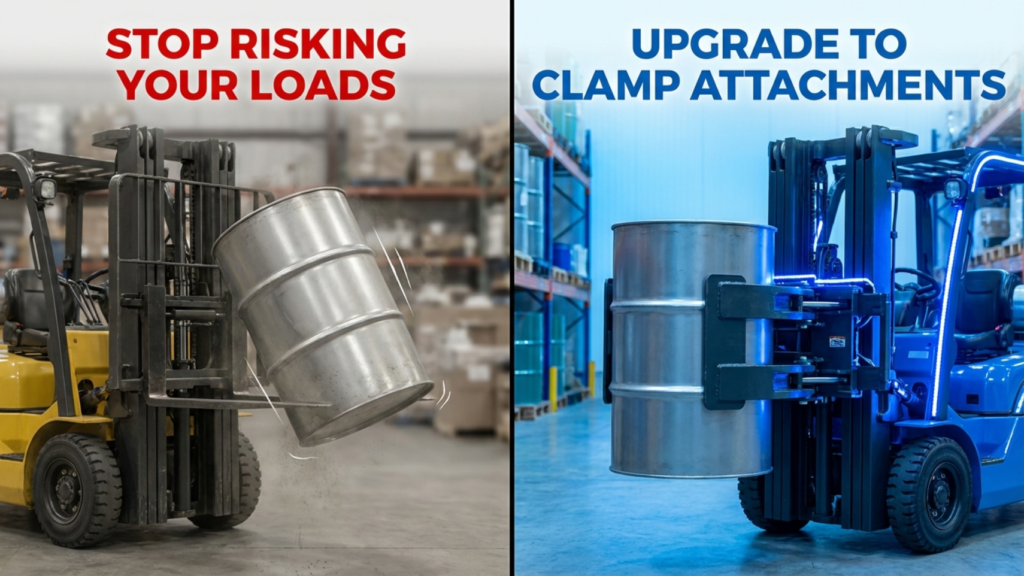
Standard forklift forks are designed exclusively to slide under a flat, stable base. They rely on gravity to keep the load secured on the carriage. When an operator tries to lift a cylindrical drum or a soft bale of cotton with standard forks, the physics work against them.
The load lacks a stable footprint, causing it to roll, shift, or slide off the forks during transit. Furthermore, the sharp steel edges of traditional forks easily puncture cardboard cartons and tear protective packaging. This misalignment between the equipment and the material creates constant hazards on your loading dock.
The True Cost of Material Damage
Damaged inventory directly impacts your profitability. When a 55-gallon drum of liquid chemical falls from a forklift, you lose the product and incur massive clean-up costs. You also face potential regulatory fines and facility downtime.
Similarly, crushing a high-value appliance because it slipped off standard forks wipes out your profit margin for that entire shipment. Upgrading to a specialized forklift clamp eliminates these risks. It provides the exact gripping force needed to secure the load, protecting your bottom line and maintaining your commitment to customer satisfaction.
Types of Forklift Clamps and Their Applications
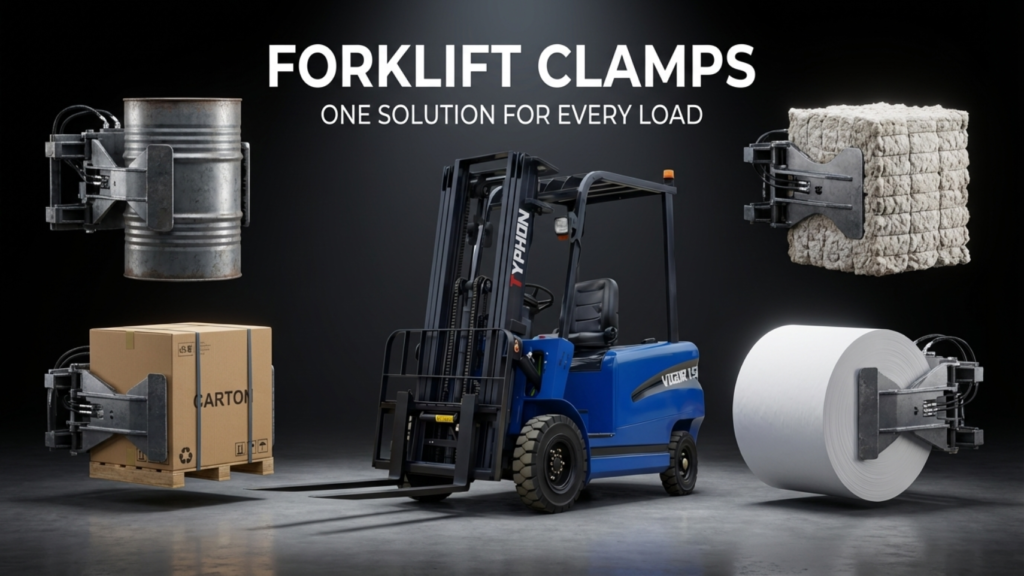
No single clamp handles every type of irregular material. Manufacturers engineer specific clamps to interact safely with the unique physical properties of different loads. Understanding these variations ensures you select the correct tool for your exact inventory.
Drum Clamps
Chemical plants, petroleum refineries, and food processing facilities handle thousands of cylindrical drums daily. Drum clamps feature curved, heavy-duty arms that match the exact radius of standard industrial drums.
These attachments grip the drum securely around its center, applying uniform pressure to prevent slipping. Some advanced models can handle two or four drums simultaneously, massively increasing your material handling throughput. Many drum clamps also include a forward-dumping rotation feature, allowing operators to pour liquids safely without leaving the cabin.
Bale Clamps
The recycling, agriculture, and textile industries process highly compressed materials bound by wire or heavy plastic straps. Bales of cardboard, scrap metal, cotton, or hay lack rigid internal structures.
Bale clamps utilize thick, durable steel arms designed to squeeze the sides of the bale. The lateral pressure holds the compressed material together during transit. The arms are typically tapered at the front, allowing operators to slide between tightly stacked bales without tearing the binding wires. This capability allows you to stack bales closely together, maximizing your storage density.
Carton Clamps
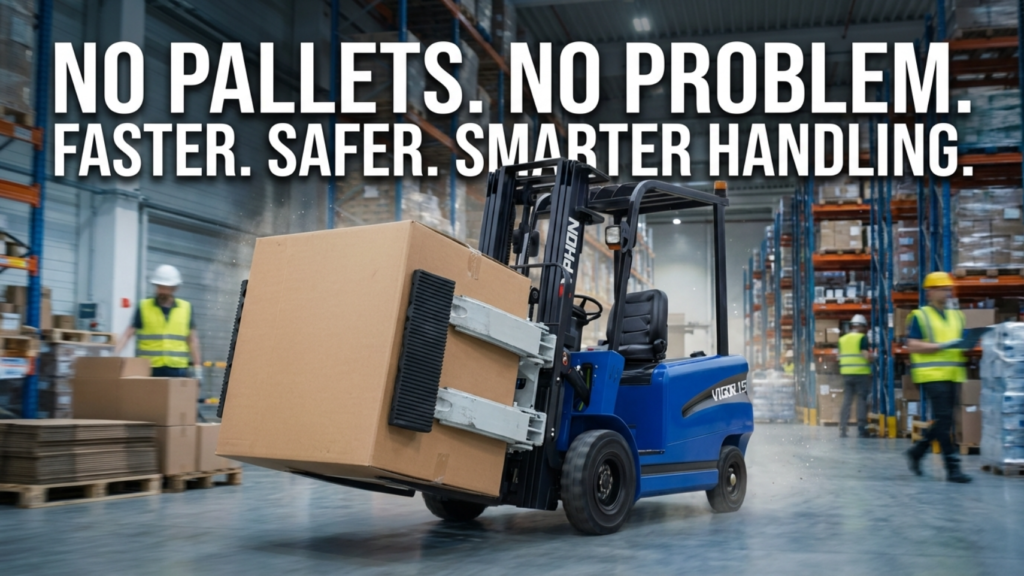
High-volume distribution centers dealing with appliances, electronics, and packaged consumer goods often move away from wooden pallets entirely. Carton clamps make this palletless handling system possible.
They feature large, flat aluminum or steel pads coated with specialized, high-friction rubber. The pads press flat against the sides of a large cardboard box or a stack of smaller cartons. The hydraulic pressure holds the carton securely, allowing the operator to lift it directly. This system saves massive amounts of money otherwise spent on purchasing, repairing, and storing wooden pallets.
Paper Roll Clamps
The paper manufacturing and printing industries move massive rolls of paper weighing thousands of pounds. These rolls are easily crushed, and the outer layers tear effortlessly if handled improperly.
Paper roll clamps feature specialized curved pads that apply perfectly distributed pressure around the circumference of the roll. They prevent the roll from slipping while ensuring the delicate paper remains pristine. These clamps frequently feature a 360-degree rotation capability, allowing operators to pick up a roll resting horizontally and stand it vertically for storage or press feeding.
Core Benefits of Upgrading to Clamps
Investing in forklift clamps transforms your material handling capabilities. These attachments offer tangible operational advantages that quickly offset their initial purchase price.
Eliminating the Need for Pallets
Purchasing and maintaining a fleet of wooden pallets represents a major ongoing operational expense. Pallets break, splinter, and take up valuable vertical space in your racking systems.
Carton and bale clamps allow you to implement a fully palletless workflow. You eliminate the cost of buying pallets and the labor costs associated with sorting and repairing them. This transition creates a cleaner, more efficient facility.
Maximizing Storage Space
When you remove pallets from the equation, you instantly gain cubic volume in your warehouse. Pallets typically add five to six inches of height to every stored load. Over a five-tier racking system, that equals nearly three feet of wasted vertical space.
Clamps allow you to stack materials directly on top of one another. You can fit more inventory into your existing footprint, delaying the need for costly facility expansions. Bale clamps, in particular, allow you to wedge materials closely together, eliminating the required side-clearance gaps needed for traditional fork maneuvering.
Boosting Operational Efficiency
Handling irregular loads with standard forks forces operators to move slowly and cautiously. They often require spotters or manual labor to help secure awkward items with straps or chains.
Forklift clamps eliminate this operational friction. The operator approaches the load, engages the hydraulic clamp, and moves the material immediately. This seamless process drastically reduces your cycle times. Faster loading and unloading operations mean you can process more trucks per shift, keeping your supply chain flowing smoothly.
Critical Safety Considerations
While clamps provide massive operational benefits, they fundamentally alter the physics and operation of your forklift. You must manage these mechanical changes proactively to guarantee a safe working environment.
Managing Load Capacity and Center of Gravity
Every clamp attachment adds significant weight to the front carriage of your forklift. Furthermore, the thickness of the clamp frame pushes the load center further away from the mast.
This combination instantly reduces the maximum safe lifting capacity of your machine. A forklift rated for 5,000 pounds may only safely lift 3,500 pounds once a heavy bale clamp is installed. You must have a certified professional calculate the new capacity and install an updated data plate in the cabin. Operating without consulting this updated plate invites catastrophic forward tip-overs.
Applying Correct Hydraulic Pressure
Clamps rely on hydraulic pressure to secure the load. If the pressure is too low, the heavy material will slip through the pads and fall to the floor. If the pressure is too high, the clamp will crush the carton or warp the metal drum.
You must install a three-position hydraulic pressure relief valve on the forklift. This allows operators to toggle between preset pressures based on the fragility and weight of the load. Calibrating this pressure correctly is the key to preventing product damage.
Operator Training Requirements
Driving a forklift equipped with a clamp is a specialized skill. Operators accustomed to standard forks must unlearn old habits and adapt to new hydraulic controls.
Provide comprehensive, hands-on training for every new attachment you introduce. Operators must learn how to center the clamp precisely over the load to prevent unequal pressure distribution. They must also understand how the added front weight changes the vehicle’s turning radius and braking distance. Proper training protects your inventory, your machinery, and your personnel.
Maintenance Best Practices for Forklift Clamps
A clamp attachment operates under immense physical stress. Routine maintenance ensures the equipment delivers reliable performance and prevents sudden mechanical failures on your dock.
Daily Visual Inspections
Your operators must inspect the clamp attachment at the beginning of every shift. They should check the contact pads for excessive wear, missing rubber, or deep gouges.
Instruct them to look closely at the structural steel for hairline fractures or bending. The pivot pins and bushings take the brunt of the lateral force, so operators must verify these components remain secure and well-lubricated. If an operator spots any structural compromise, you must pull the attachment from service immediately.
Hydraulic System Checks
The hydraulic cylinders and hoses are the lifeblood of the clamp. Operators must check all hydraulic connections for leaks, drips, or cracked hoses.
A small hydraulic leak leads to a gradual loss of clamping pressure during transit, which can cause a suspended load to drop unexpectedly. Ensure your maintenance team follows the manufacturer’s schedule for changing the hydraulic fluid and replacing worn seals. Clean, well-maintained hydraulics guarantee strong, consistent clamping force.
Choosing the Right Clamp for Your Fleet
Selecting the correct clamp attachment requires a careful analysis of your daily workflows. You need equipment that integrates seamlessly with your existing vehicles and perfectly matches your inventory.
Evaluating Material Weight and Density
Start by auditing the specific materials your team handles. Note the maximum weight, the exact dimensions, and the fragility of the packaging.
If you handle dense, heavy bales of scrap metal, you need a high-capacity clamp with reinforced steel arms. If you move delicate consumer electronics in cardboard boxes, you need a highly sensitive carton clamp with thick, padded contact surfaces. Matching the clamp to the material density ensures safe, damage-free handling.
Compatibility with Existing Equipment
Not every clamp works with every forklift. Clamps require auxiliary hydraulic functions to power the opening and closing of the arms.
If your current forklift only features a basic lift-and-tilt hydraulic setup, you will need to install an additional hydraulic valve and hose routing before attaching a clamp. Always consult with a trusted equipment provider to verify that your forklift possesses the correct carriage class, hydraulic flow rate, and counterweight capacity to support your chosen attachment.
Maximize Your Material Handling Potential
Handling irregular materials does not have to be a dangerous or inefficient process. By equipping your fleet with specialized forklift clamps, you empower your team to move drums, bales, and unpalletized cartons with total confidence and precision.
Upgrading to clamps allows you to ditch expensive wooden pallets, maximize your vertical storage space, and drastically accelerate your loading cycles. Most importantly, it creates a significantly safer environment for your workforce by securing awkward loads properly. Evaluate your warehouse inventory today to identify where a clamp attachment can eliminate your logistical bottlenecks. Partner with a reliable material handling expert to source the exact equipment you need to optimize your fleet and secure your operational success.
Comments
Add a Review
Your email address will not be published. Required fields are marked*


Annette1613
https://shorturl.fm/OufMP
Lachlan701
https://shorturl.fm/BPVG3