
Technology Features: New vs Used Electric Forklift Capabilities
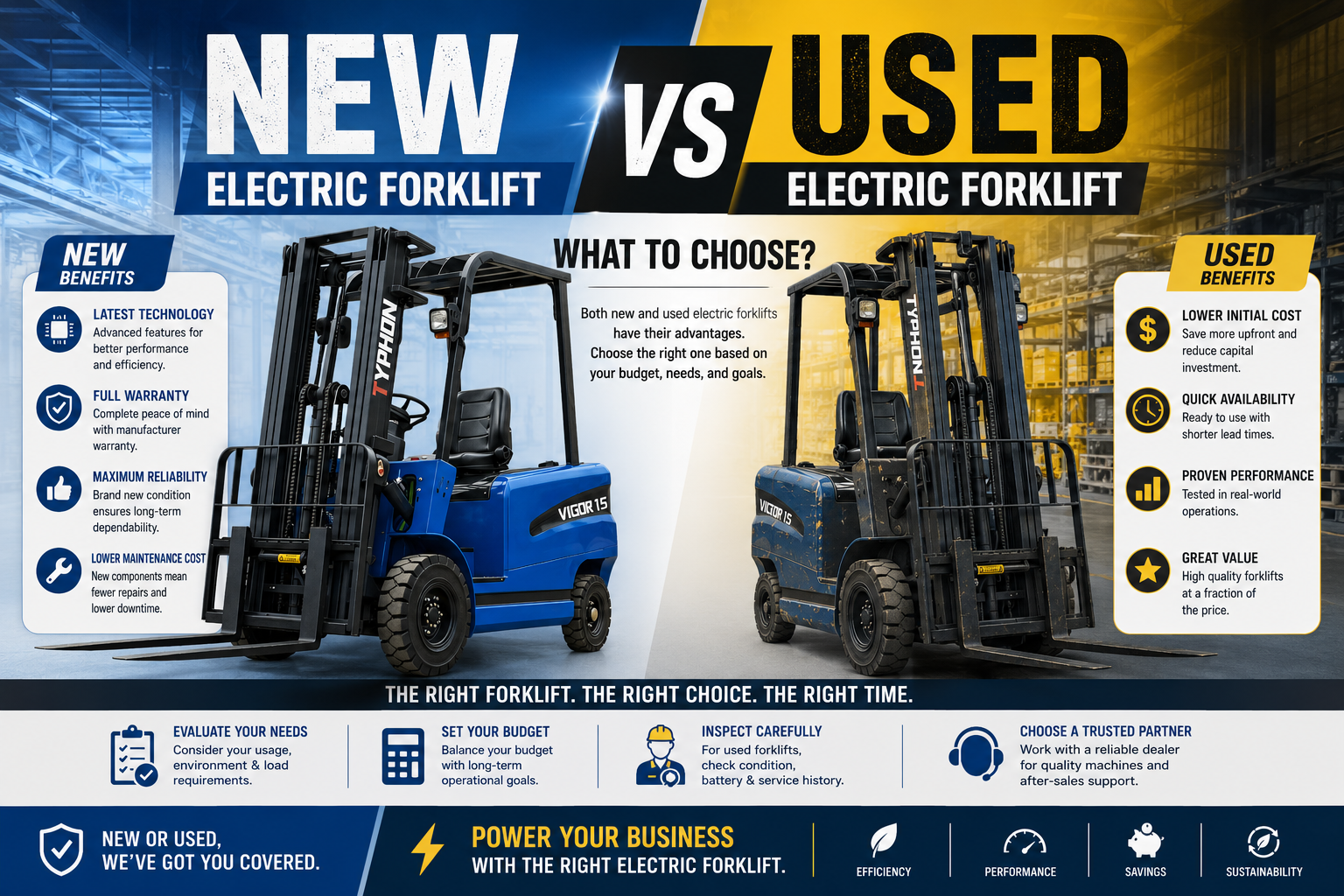
New vs Used Electric Forklift: What to Choose
Expanding your material handling fleet requires a strategic financial approach. Choosing between a new and a used electric forklift directly impacts your operational budget and your daily warehouse productivity. You need reliable equipment that handles your specific workload without draining your capital.
Making the right choice means looking past the initial price tag. You must evaluate the battery condition, maintenance history, warranty coverage, and long-term energy efficiency. This guide breaks down the core decision factors to help you select the exact equipment your operation demands.
Evaluating Upfront Cost and Total Cost of Ownership
A used electric forklift provides immediate financial relief through a significantly lower upfront purchase price. This allows you to deploy equipment quickly while preserving capital for other business investments.
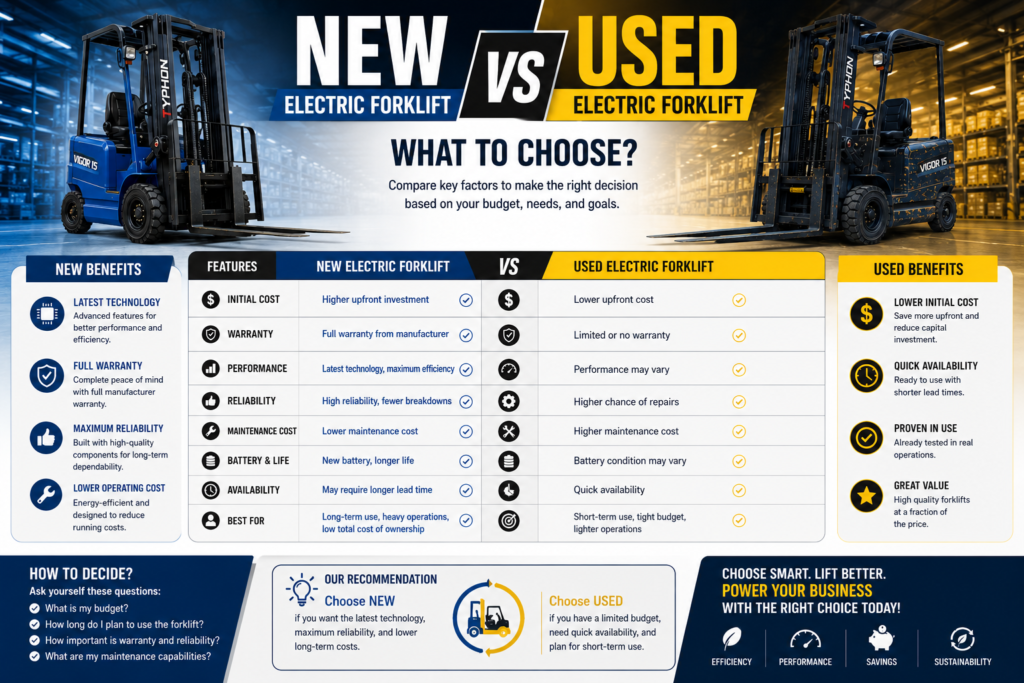
However, you must calculate the total cost of ownership (TCO) over the machine’s expected lifespan. New machines carry higher initial costs but generally deliver lower ongoing maintenance expenses. They also provide superior energy efficiency, which reduces your daily utility bills. Over a five-to-seven-year period, the lower operating costs of a new machine often offset the higher purchase price.
Battery Condition and Expected Lifespan
The battery represents a massive portion of an electric forklift’s total value. When you evaluate a used machine, the battery condition serves as your most critical inspection point. Traditional lead-acid batteries degrade over time, holding less charge and requiring longer cooling periods. You must request a formal battery discharge test before buying a used model to confirm how much operational life remains.
New electric forklifts eliminate this uncertainty. They come with brand-new batteries that guarantee maximum run time. Many new models also feature advanced lithium-ion battery technology. Lithium-ion batteries charge faster, require zero daily maintenance, and last significantly longer than their lead-acid counterparts.
Maintenance History and Downtime Risk
Unexpected downtime halts your warehouse operations and delays customer shipments. When buying a used forklift, you assume a higher risk of mechanical wear. You must review the complete maintenance history to ensure previous owners followed factory service intervals.
Purchasing a new electric forklift secures your operation against unpredictable breakdowns. New machines include comprehensive factory warranties that cover major components, motors, and electrical systems. This warranty coverage provides peace of mind and protects your maintenance budget from unexpected repair bills during the critical first few years of operation.
Technology Features and Energy Efficiency
Manufacturers constantly upgrade their equipment to improve safety and performance. New electric forklifts feature the latest ergonomic controls, which reduce operator fatigue and increase shift productivity. They also include advanced safety features, such as automatic speed reduction during cornering and integrated presence sensors.
Furthermore, new models utilize highly efficient AC drive motors and regenerative braking systems. These technologies capture energy and feed it back into the battery, extending the operating time between charges. While used models still perform well, they often lack the advanced telemetry systems that help fleet managers track usage rates and schedule preventative maintenance efficiently.
Matching Your Operation Size and Shift Demands
Your daily workload dictates the type of machine you need.
If you run a demanding, multi-shift operation where the forklift runs constantly, you need a new machine. A new electric forklift delivers the guaranteed uptime, fast charging capabilities, and relentless reliability necessary to keep a high-volume warehouse moving smoothly.
If you operate a smaller facility, or if your team only uses the forklift for a few hours during a single shift, a high-quality used machine makes excellent financial sense. A single-shift operation places much less stress on the battery and the lifting components, allowing a used forklift to perform reliably for years.
Pros and Cons Summary
To simplify your decision, review these core advantages and disadvantages:
New Electric Forklift
- Pros: Maximum battery life, comprehensive warranty coverage, latest safety technology, and superior energy efficiency.
- Cons: Higher upfront purchase price and potential lead times for delivery.
Used Electric Forklift
- Pros: Lower initial capital investment, immediate availability, and excellent value for single-shift operations.
- Cons: Unknown previous wear, shorter remaining battery lifespan, and higher risk of unexpected maintenance costs.
Secure the Right Equipment for Your Warehouse
Your material handling equipment must align perfectly with your business goals. A new electric forklift provides maximum uptime and advanced technology for high-demand facilities. A used electric forklift offers a cost-effective solution for lighter duty cycles and budget-conscious operations.
Assess your daily shift demands, evaluate your maintenance capabilities, and set a clear budget. By understanding your exact operational needs, you can invest in the right electric forklift with total confidence.
New vs Used Electric Forklift: What to Choose
Expanding your material handling fleet requires a strategic financial approach. Choosing between a new vs used electric forklift directly impacts your operational budget and your daily warehouse productivity. You need reliable equipment that handles your specific workload without draining your capital.
Making the right choice in the new vs used electric forklift debate means looking past the initial price tag. You must evaluate the battery condition, maintenance history, warranty coverage, and long-term energy efficiency. This guide breaks down the core decision factors to help you evaluate every new vs used electric forklift scenario and select the exact equipment your operation demands.
Evaluating Upfront Cost in a New vs Used Electric Forklift
When weighing a new vs used electric forklift, a used model provides immediate financial relief through a significantly lower upfront purchase price. This allows you to deploy equipment quickly while preserving capital for other business investments.
However, to truly resolve the new vs used electric forklift question for your business, you must calculate the total cost of ownership (TCO) over the machine’s expected lifespan.
- New Machines: Carry higher initial costs but generally deliver lower ongoing maintenance expenses. They also provide superior energy efficiency, which reduces your daily utility bills.
- The Breakeven Point: Over a five-to-seven-year period, the lower operating costs of a new machine often offset the higher purchase price. For help calculating these operational expenses, explore our internal Total Cost of Ownership Calculator.
Battery Condition: A Key Factor in the New vs Used Electric Forklift Choice
The battery represents a massive portion of the machine’s total value, making it the most vital component in any new vs used electric forklift assessment.
When you evaluate the used side of the new vs used electric forklift market, the battery condition serves as your most critical inspection point. Traditional lead-acid batteries degrade over time, holding less charge and requiring longer cooling periods. You must request a formal battery discharge test before buying a used model to confirm how much operational life remains, ensuring compliance with standards outlined by the Occupational Safety and Health Administration (OSHA).
Alternatively, a new electric forklift eliminates this uncertainty. They come with brand-new batteries that guarantee maximum run time. Many new models also feature advanced lithium-ion battery technology. Lithium-ion batteries charge faster, require zero daily maintenance, and last significantly longer than their lead-acid counterparts.
Maintenance History and Downtime Risk for a New vs Used Electric Forklift
Unexpected downtime halts your warehouse operations and delays customer shipments. When comparing a new vs used electric forklift, you assume a higher risk of mechanical wear with the used model. You must review the complete maintenance history to ensure previous owners followed factory service intervals. For more on this, read our Forklift Preventative Maintenance Guide.
Purchasing a new electric forklift secures your operation against unpredictable breakdowns. New machines include comprehensive factory warranties that cover major components, motors, and electrical systems. This warranty coverage provides peace of mind and protects your maintenance budget from unexpected repair bills during the critical first few years of operation.
Technology Features: New vs Used Electric Forklift Capabilities
Manufacturers constantly upgrade their equipment to improve safety and performance. In the new vs used electric forklift discussion, new models consistently feature the latest ergonomic controls, which reduce operator fatigue and increase shift productivity. They also include advanced safety features, such as automatic speed reduction during cornering and integrated presence sensors.
Furthermore, new models utilize highly efficient AC drive motors and regenerative braking systems. These technologies capture energy and feed it back into the battery, extending the operating time between charges. While used models still perform well, they often lack the advanced telemetry systems that help fleet managers track usage rates—a growing trend highlighted by the Material Handling Industry (MHI).
Matching Shift Demands to Your New vs Used Electric Forklift
Your daily workload dictates the type of machine you need when choosing a new vs used electric forklift:
- Multi-Shift, High-Volume Operations: If you run a demanding operation where the forklift runs constantly, you need a new machine. A new electric forklift delivers the guaranteed uptime, fast charging capabilities, and relentless reliability necessary to keep a high-volume warehouse moving smoothly.
- Single-Shift, Lighter Operations: If you operate a smaller facility, or if your team only uses the forklift for a few hours during a single shift, a high-quality used machine makes excellent financial sense. A single-shift operation places much less stress on the battery and lifting components, allowing a used forklift to perform reliably for years.
Pros and Cons Summary: New vs Used Electric Forklift
To simplify your new vs used electric forklift decision, review these core advantages and disadvantages side-by-side:
| Equipment Type | Key Advantages (Pros) | Potential Drawbacks (Cons) |
| New Electric Forklift | • Maximum battery life • Comprehensive warranty coverage • Latest safety technology • Superior energy efficiency | • Higher upfront purchase price • Potential manufacturing lead times for delivery |
| Used Electric Forklift | • Lower initial capital investment • Immediate availability • Excellent value for single-shift operations | • Unknown previous wear & tear • Shorter remaining battery lifespan • Higher risk of maintenance costs |
Secure the Right New vs Used Electric Forklift for Your Warehouse
Your material handling equipment must align perfectly with your business goals. Deciding on a new vs used electric forklift comes down to application: a new electric forklift provides maximum uptime and advanced technology for high-demand facilities, while a used electric forklift offers a cost-effective solution for lighter duty cycles and budget-conscious operations.
Assess your daily shift demands, evaluate your maintenance capabilities, and set a clear budget. By understanding your exact operational needs, you can navigate the new vs used electric forklift market and invest in the right machine with total confidence. Explore our Current Electric Forklift Inventory today to find the perfect match for your facility.


