
How do forklifts integrate into modern digital warehouse workflows?
Why Forklifts Are Essential in Logistics and Shipping
Forklifts in logistics are the ultimate game-changer when a freight truck backs into your loading dock with forty pallets that need to be unloaded before the next delivery arrives in an hour. Your team is doing it by hand, pallet by pallet, and the clock is winning. Behind that truck, two more are already circling the lot. In logistics, moments like these decide whether you hit your numbers or spend the day playing catch-up. A forklift turns that scramble into a smooth, steady operation, lifting and moving in seconds what a crew would struggle with for an hour.
A truck backs into the dock with forty pallets that need to be unloaded before the next delivery arrives in an hour. Your team is doing it by hand, pallet by pallet, and the clock is winning. Behind that truck, two more are already circling the lot. In logistics, moments like these decide whether you hit your numbers or spend the day playing catch-up. A forklift turns that scramble into a smooth, steady operation, lifting and moving in seconds what a crew would struggle with for an hour.
Warehouses, distribution centers, manufacturing facilities, and shipping yards all depend on a constant flow of materials. Every delay at the loading dock can create a ripple effect, slowing inventory movement, order fulfillment, and outbound shipments. A forklift keeps materials moving efficiently, helping operations stay organized even during peak demand.
Beyond speed, forklifts improve how goods are handled throughout the facility. Instead of relying on manual lifting that increases the risk of damaged products and worker fatigue, operators can transport heavy or palletized loads safely and accurately. The result is a more productive workflow, better use of labor, and a logistics operation that stays on schedule from receiving to shipping.
Speed Up Loading and Unloading
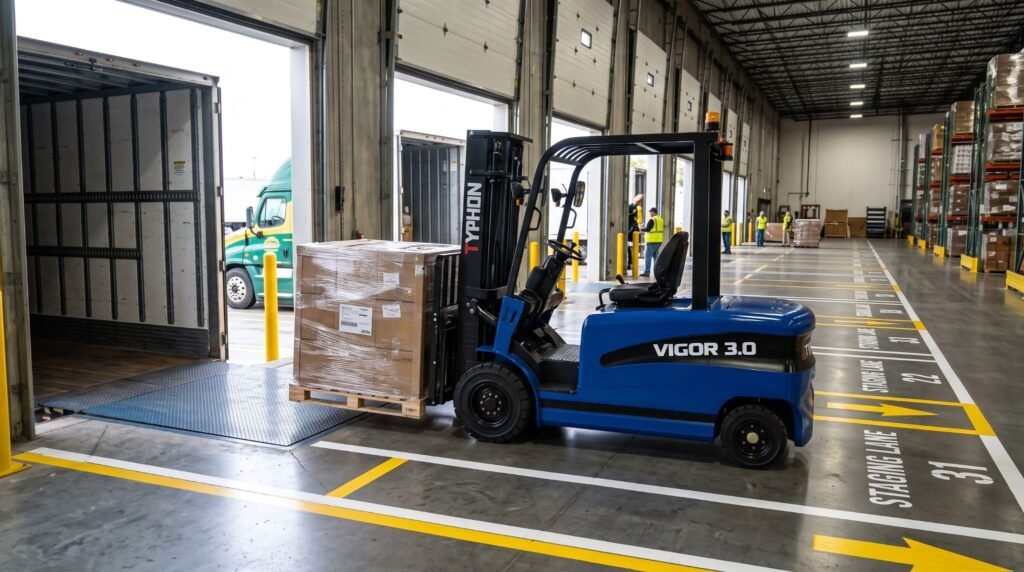
The dock is where time either gets saved or lost. Every trailer that sits too long, every pallet moved by hand, and every delay backs up the whole operation. A forklift keeps freight moving so trucks turn around fast and your schedule stays intact.
Modern forklifts are designed to handle palletized freight quickly and precisely, allowing operators to load, unload, and position materials with minimal downtime. By reducing manual handling and shortening truck turnaround times, businesses can process more shipments each day while keeping docks clear and operations running efficiently.
Turn Trailers Around Faster
A forklift unloads a full trailer in a fraction of the time manual labor takes. Slide the forks under a pallet, lift, and move on. What once took a crew most of an hour becomes a few quick trips, and drivers spend less time waiting on your dock.
Faster turnaround means fewer trucks stacked up in the yard and lower detention fees when carriers aren’t left idling. That speed ripples through the entire supply chain, from receiving to shipping.
Keep the Dock Flowing
Standing freight is stalled freight. A forklift keeps goods moving efficiently between the loading dock, staging areas, and storage locations without disrupting the workflow. By staging inbound pallets close to their designated storage zones and preparing outbound orders before trucks arrive, businesses can reduce loading times, minimize delays, and maintain a steady pace throughout the day.
To maximize productivity, match the forklift’s capacity to your typical pallet weights and keep aisles and dock lanes clear so operators can travel safely without unnecessary interruptions. A well-organized material handling process turns the loading dock from a bottleneck into a smooth, continuous operation, helping trucks stay on schedule while improving overall warehouse efficiency.
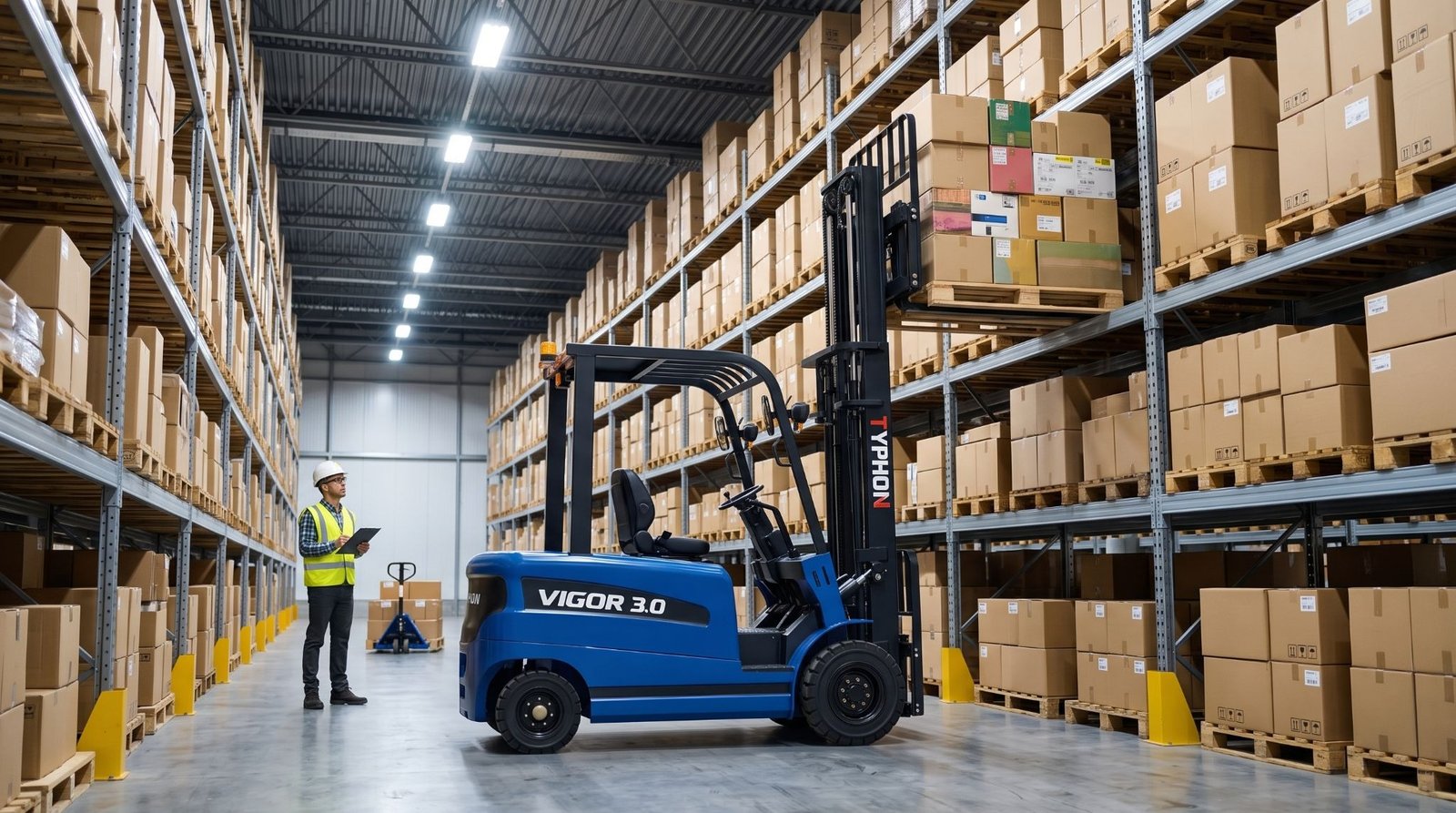
Maximize Warehouse Space With Vertical Storage
Floor space is expensive, and most warehouses have more room than they think, straight up. A forklift lets you build storage vertically instead of sprawling outward, so you fit more inventory into the same footprint.
With the right lift height and load capacity, forklifts make it easy to access high racks safely and efficiently. Vertical storage not only increases warehouse capacity without expanding the building but also improves organization by keeping inventory accessible, reducing aisle congestion, and making better use of every square foot.
Stack Higher, Store More
Manual handling caps your storage at whatever a person can safely reach. A forklift removes that limit, placing and retrieving pallets several racks high with precision.
That vertical reach can double or triple your usable storage without adding a single square foot to the building. For a growing operation, that’s the difference between expanding your lease and expanding your capacity.
Organize for Fast Retrieval
A forklift makes vertical storage practical by allowing operators to safely access materials stored on high racks while maximizing available warehouse space. An organized racking system works best when fast-moving inventory is placed at easily accessible lower levels, slower-moving items are stored higher up, aisles are sized to accommodate the forklift’s turning radius, and rack locations are clearly labeled for accurate picking.
By improving access to stored inventory and making better use of vertical space, forklifts help increase storage capacity, reduce picking time, and create a more efficient warehouse layout without expanding the building’s footprint.
Reduce Labor Costs and Worker Injury Risk
Every load lifted by hand carries two hidden costs: the hours it eats and the toll it takes on your people. Manual material handling is slow, expensive, and one of the leading causes of workplace injury. A forklift addresses all three at once.
By taking over the heavy lifting, forklifts reduce physical strain on workers while allowing fewer people to move larger loads more efficiently. This helps lower the risk of lifting-related injuries, minimizes downtime from workplace incidents, and enables employees to focus on higher-value tasks that keep operations productive.
Do More With Fewer Hands
One operator on a forklift moves loads that would take several workers hauling by hand. That frees your team for skilled tasks like picking, packing, and quality checks instead of grinding through heavy lifting.
Fewer people tied to raw material movement means lower labor costs and a crew that stays productive through a full shift instead of burning out by midday.
Protect Your People
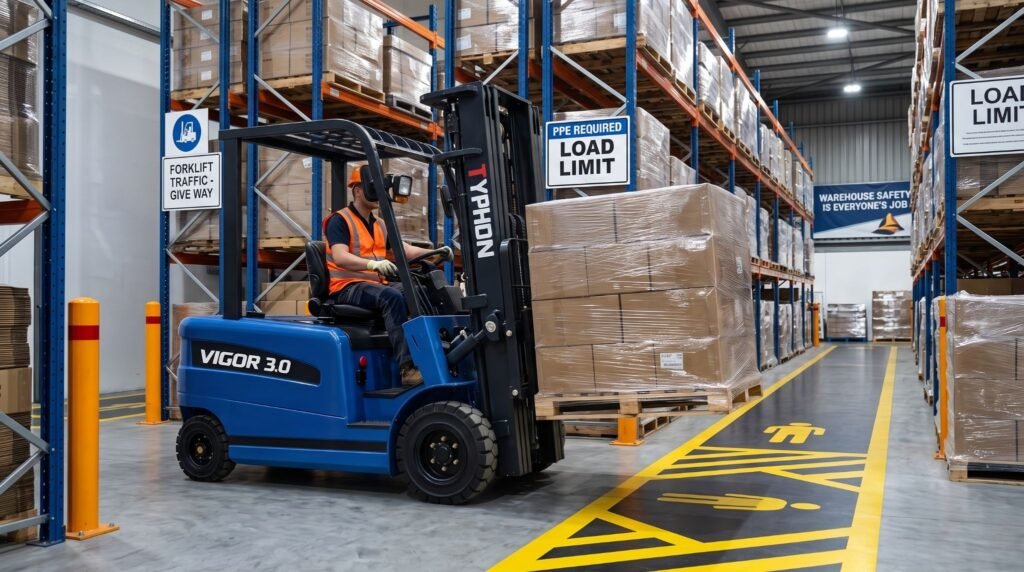
Back strains, crushed hands, and repetitive-motion injuries are common in workplaces where heavy materials are moved by hand. Each incident can lead to lost productivity, higher operating costs, and extended recovery time for employees. A forklift significantly reduces the need for manual lifting by handling heavy, awkward, and stacked loads safely and efficiently, creating a more controlled work environment.
Safety depends on more than just the machine itself. Proper operator training, regular equipment maintenance, and clearly separated pedestrian walkways all help reduce the risk of workplace accidents. By replacing physically demanding manual handling with efficient material movement, a forklift protects both your workforce and your business while keeping daily operations running smoothly.
Match the Forklift Type and Attachment to the Job
Not every logistics task looks the same, and neither do forklifts. From tight warehouse aisles to outdoor yards to specialty freight, the right machine and attachment make all the difference. Choosing well turns one tool into the backbone of your operation.
Common attachments such as fork positioners, side shifters, carton clamps, and rotators allow a single forklift to handle a wider variety of loads without changing equipment. Matching the right configuration to your workflow improves handling efficiency, reduces product damage, and helps operators complete tasks safely across different work environments.
Pick the Right Forklift for Your Space
Different work environments require different types of forklifts, so choosing the right machine is essential for safe and efficient operation. Counterbalance forklifts are well suited for general indoor and outdoor material handling, reach trucks excel in narrow aisles and high racking, pallet jacks and walkie stackers are ideal for short-distance, low-level transport, rough-terrain forklifts perform well on uneven outdoor surfaces, and electric models provide clean, quiet operation in indoor facilities.
Selecting a forklift that matches your workspace, load requirements, and operating conditions helps improve productivity, enhances maneuverability, and ensures the equipment is well suited to the tasks performed each day.
Add Attachments for Specialized Freight
Standard forks are only the beginning. With the right attachments, a forklift can handle a much wider variety of materials and applications. Side shifters improve load positioning without repositioning the truck, fork extensions support longer or oversized loads, clamp attachments securely handle drums, cartons, and paper rolls, and rotators make it easy to dump or invert containers.
Matching the appropriate attachment to the job improves handling efficiency, reduces unnecessary equipment changes, and expands the forklift’s capabilities across a wide range of warehouse and logistics tasks.
1. Speed Up Loading and Unloading Times with Forklifts in Logistics
Conclusion
A forklift earns its place in logistics by solving the problems that slow every operation down: unloading freight fast, opening up vertical storage, cutting the labor costs and injury risks of manual handling, and adapting to nearly any task with the right type and attachment. Together, those strengths keep docks clear, inventory organized, and your team safe and productive.
The key is matching the forklift and attachments to the work you do most, then putting the machine where the bottlenecks are. Do that, and a forklift pays you back in faster turnaround, reclaimed space, lower labor costs, and fewer injuries on the floor.
As your operation grows, the right forklift becomes more than a piece of equipment; it becomes a long-term investment in productivity and scalability. Choosing a model with the appropriate lift capacity, power source, and compatible attachments ensures it can adapt as your warehouse, inventory, and shipping demands evolve. Work with a trusted equipment specialist to find a forklift that supports both your current workflow and your future business goals.
Frequently Asked Questions
How much weight can a forklift safely lift?
Capacity varies by model, but many warehouse forklifts handle between 3,000 and 5,000 pounds, with larger industrial units lifting far more. Always check the machine’s data plate for its rated capacity, and remember that lifting higher or using attachments can reduce the safe limit.
What safety measures should a warehouse follow when using forklifts?
Keep pedestrian and forklift traffic separated where possible, use clear floor markings and signage, and enforce speed limits indoors. Require daily equipment inspections, ensure loads are stable and within capacity, and keep aisles clear. Consistent maintenance and clear communication between operators and staff prevent most incidents.
How do forklifts fit into a modern warehouse workflow?
Forklifts connect every stage of the operation, from unloading trucks to putting stock away, replenishing pick locations, and staging outbound orders. Paired with a warehouse management system and clear rack labeling, they keep inventory moving smoothly from the dock to the shelf and back out the door.
What powers most warehouse forklifts?
Warehouse forklifts commonly run on electric batteries, propane, or diesel. Electric models suit indoor use for their clean, quiet operation, while propane and diesel deliver strong power for heavier loads and outdoor work. The right choice depends on your environment, ventilation, and duty cycle.
How can I keep a forklift running reliably?
Perform daily pre-shift inspections of tires, forks, hydraulics, and warning systems, and log any issues right away. Follow the manufacturer’s service intervals for fluids, filters, and battery care. Preventive maintenance reduces unexpected downtime, extends the machine’s life, and keeps your operation moving without costly interruptions.
Conclusion
A forklift earns its place in logistics by solving the problems that slow every operation down: unloading freight fast, opening up vertical storage, cutting the labor costs and injury risks of manual handling, and adapting to nearly any task with the right type and attachment. Together, those strengths keep docks clear, inventory organized, and your team safe and productive.
The key is matching the forklift and attachments to the work you do most, then putting the machine where the bottlenecks are. Do that, and a forklift pays you back in faster turnaround, reclaimed space, lower labor costs, and fewer injuries on the floor.
As your operation grows, the right fleet setup becomes more than a piece of equipment; it becomes a long-term investment in productivity and scalability. Choosing a model with the appropriate lift capacity, power source, and compatible attachments ensures it can adapt as your warehouse, inventory, and shipping demands evolve. Work with a trusted equipment specialist to find a forklift that supports both your current workflow and your future business goals. To build a highly resilient warehouse layout, be sure to view our internal guide on how to optimize warehouse floor plans alongside expanding your fleet layout.
Frequently Asked Questions
How much weight can a forklift safely lift?
Capacity varies by model, but many warehouse forklifts handle between 3,000 and 5,000 pounds, with larger industrial units lifting far more. Always check the machine’s data plate for its rated capacity, and remember that lifting higher or using attachments can reduce the safe limit.
What safety measures should a warehouse follow when using forklifts?
Keep pedestrian and forklift traffic separated where possible, use clear floor markings and signage, and enforce speed limits indoors. Require daily equipment inspections, ensure loads are stable and within capacity, and keep aisles clear. Consistent maintenance and clear communication between operators and staff prevent most incidents.
How do forklifts fit into a modern warehouse workflow?
Forklifts connect every stage of the operation, from unloading trucks to putting stock away, replenishing pick locations, and staging outbound orders. Paired with a warehouse management system and clear rack labeling, they keep inventory moving smoothly from the dock to the shelf and back out the door.
What powers most warehouse forklifts?
Warehouse forklifts commonly run on electric batteries, propane, or diesel. Electric models suit indoor use for their clean, quiet operation, while propane and diesel deliver strong power for heavier loads and outdoor work. The right choice depends on your environment, ventilation, and duty cycle.
Heavy duty forklifts in logistics handling palletized freight at a warehouse loading dock


